Moral understanding Normal Worksheets for Ages 3-9
5 filtered results
-
From - To
Explore our engaging Moral Understanding Normal Worksheets designed specifically for children ages 3-9! These worksheets promote essential values such as empathy, sharing, and kindness through fun and interactive activities. Perfect for early learners, our resources encourage young minds to grasp the importance of making good choices and understanding the feelings of others. Ideal for both classroom settings and home learning, these worksheets help foster social-emotional development in a playful, effective manner. Quickly download and print these valuable tools to support your child's moral growth and instill positive behavior patterns from an early age. Encourage meaningful conversations and connections today!
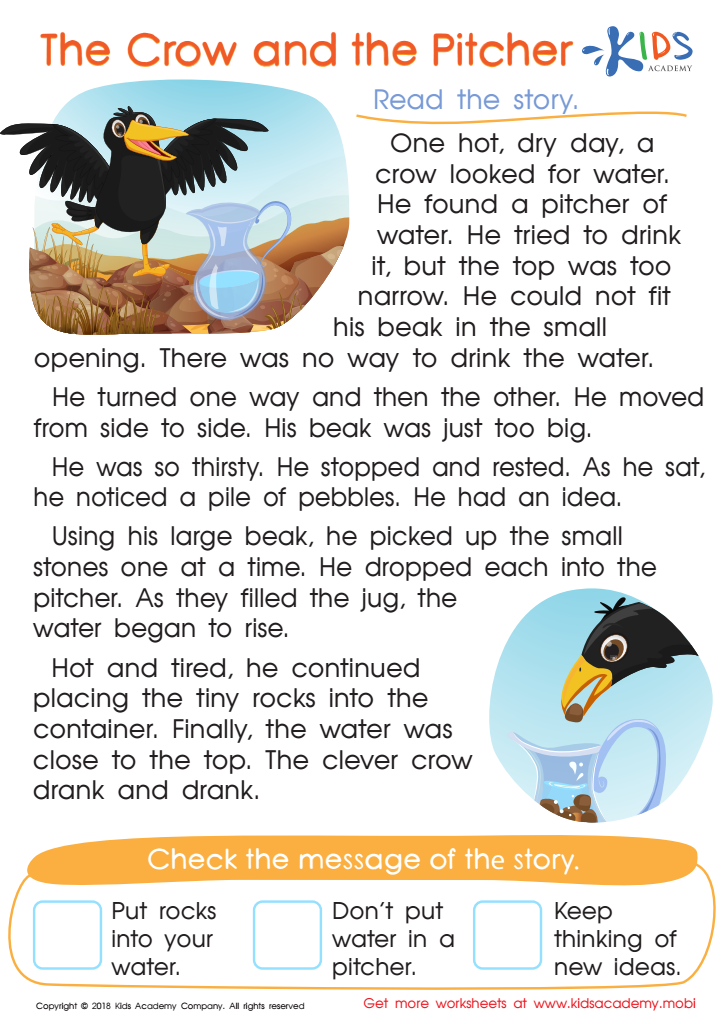
The Crow and the Pitcher Worksheet
 Assign to My Students
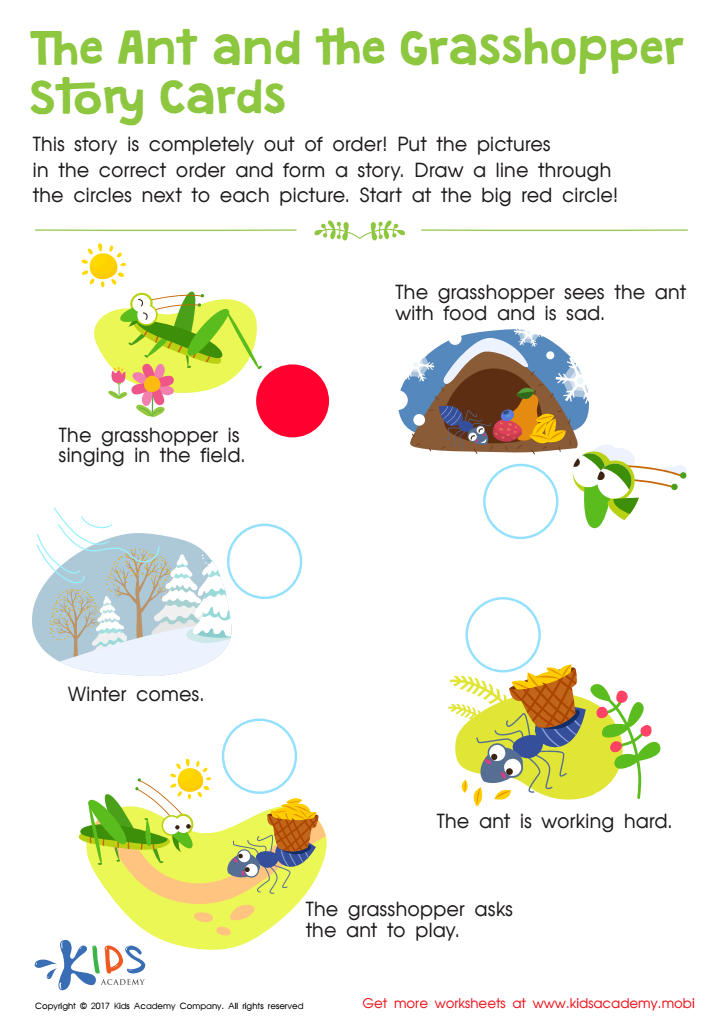
The Ant and The Grasshopper Worksheet
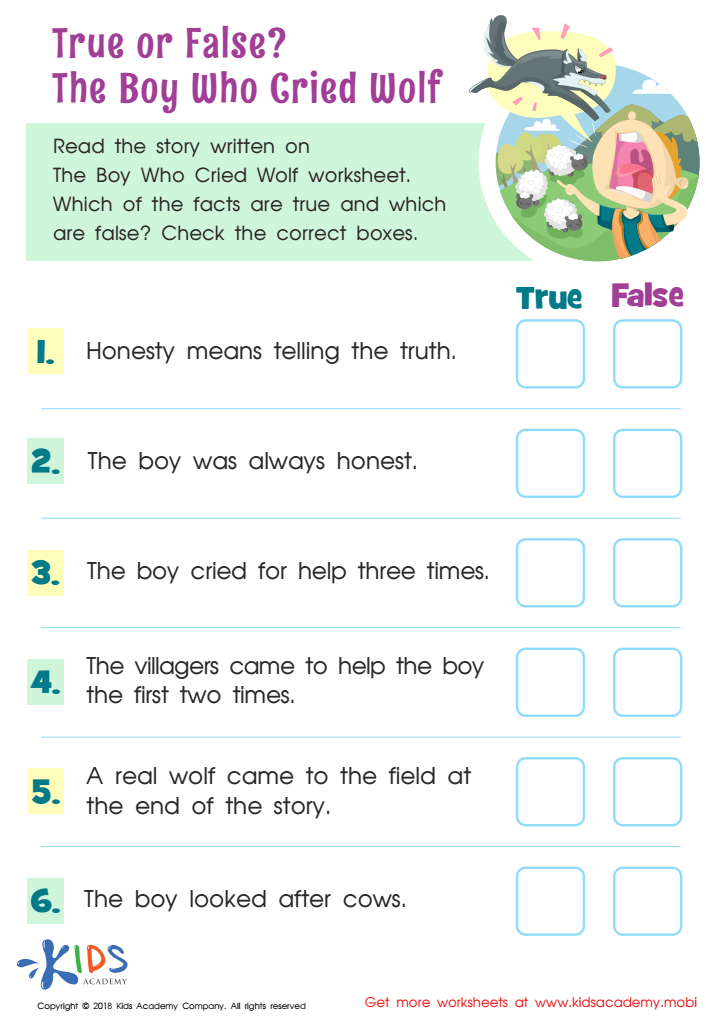
True or False? The Boy Who Cried Wolf Worksheet
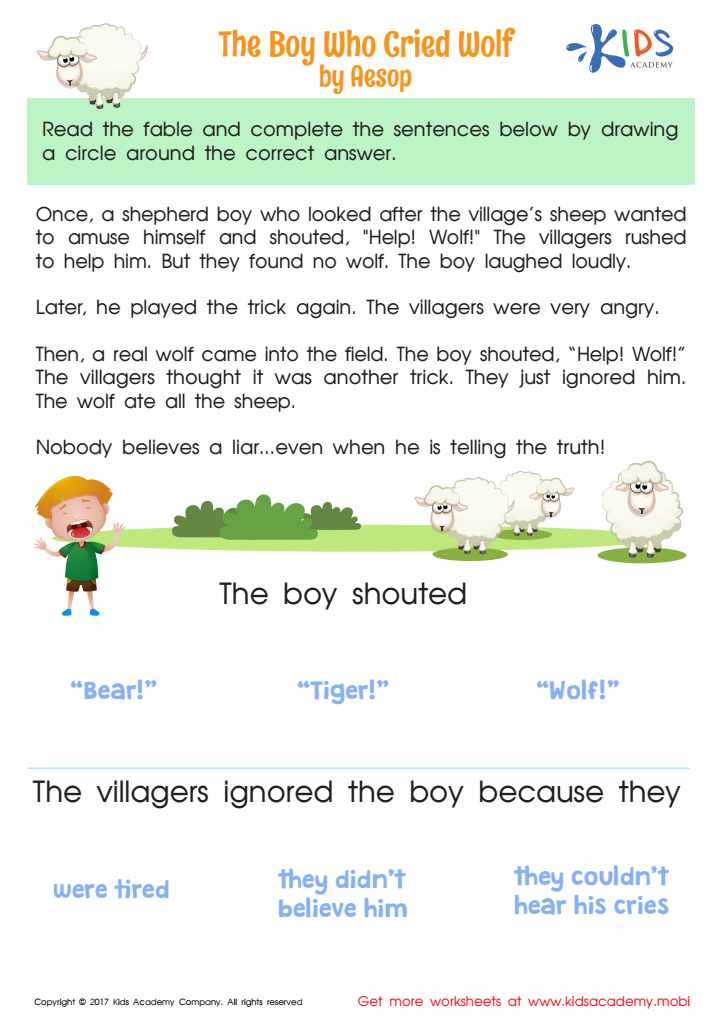
The Boy Who Cried Wolf Worksheet
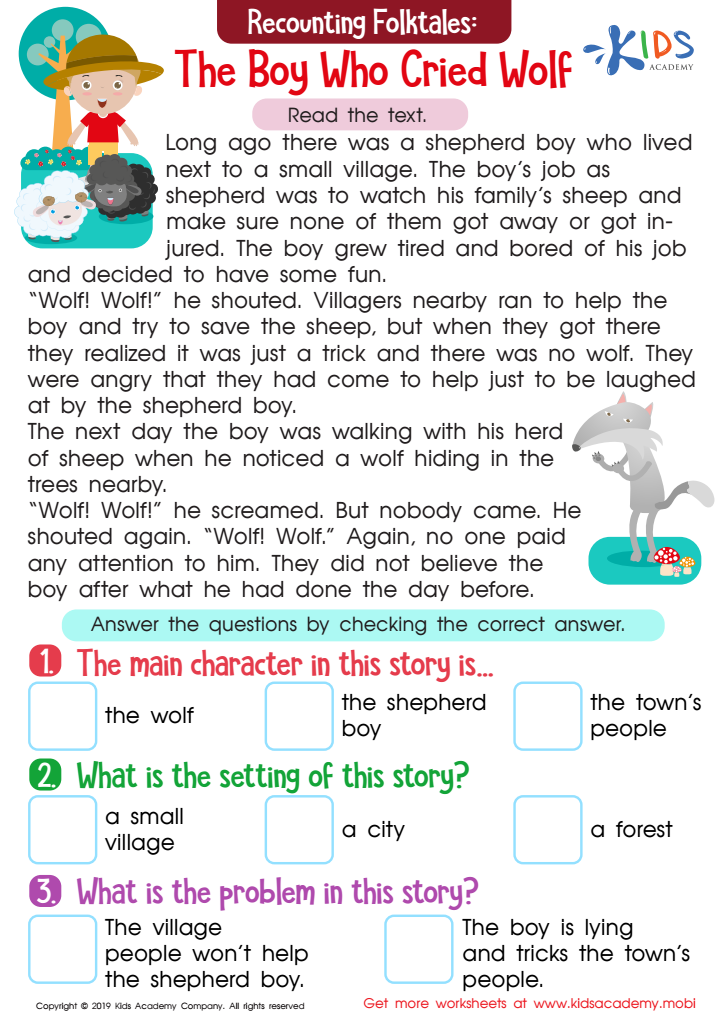
The Boy Who Cried Wolf Part 1 Worksheet






.jpg)

Moral understanding develops essential skills in children aged 3-9, laying the groundwork for their future social interactions and personal growth. Firstly, children in this age range are highly impressionable and begin to form concepts of right and wrong, empathy, and justice. By fostering moral understanding, parents and teachers can cultivate compassionate, respectful individuals who appreciate diverse perspectives.
Additionally, moral development plays a crucial role in emotional regulation. Children who understand moral values are better equipped to manage their emotions, resolve conflicts, and develop positive relationships with peers. Learning moral lessons can also enhance a child’s decision-making abilities, enabling them to navigate challenges they will encounter.
Educators and parents can create a supportive environment that encourages discussions about values and ethical behavior. This approach helps reinforce lessons learned and affirms children’s understanding as they face real-life situations. Ultimately, prioritizing moral understanding in early education not only contributes to well-adjusted, thoughtful individuals but also promotes a healthier classroom and community atmosphere. Instilling these values early leads to responsible, caring adults who contribute positively to society. Hence, supporting moral development is essential for shaping empathetic, ethical citizens in an increasingly complex world.








