
Phonetics understanding Normal Worksheets for Ages 3-9
3 filtered results
Difficulty Level
Grade
Age
-
From - To
Subject
Activity
Standards
Enhance your child's literacy journey with our "Phonetics Understanding Normal Worksheets" designed for ages 3-9. These engaging worksheets focus on developing phonetic skills through fun activities that promote sound recognition and word formation. Tailored to foster early reading abilities, children will explore vowel sounds, consonant blends, and more in an interactive way. Each worksheet encourages creativity while building foundational skills necessary for advanced literacy. Perfect for at-home learning or classroom settings, our resources ensure an enjoyable learning experience. Start nurturing your child's love for reading today with our vibrant, printable phonetics worksheets! Visit us now to download and inspire!
Favorites
With answer key
Interactive
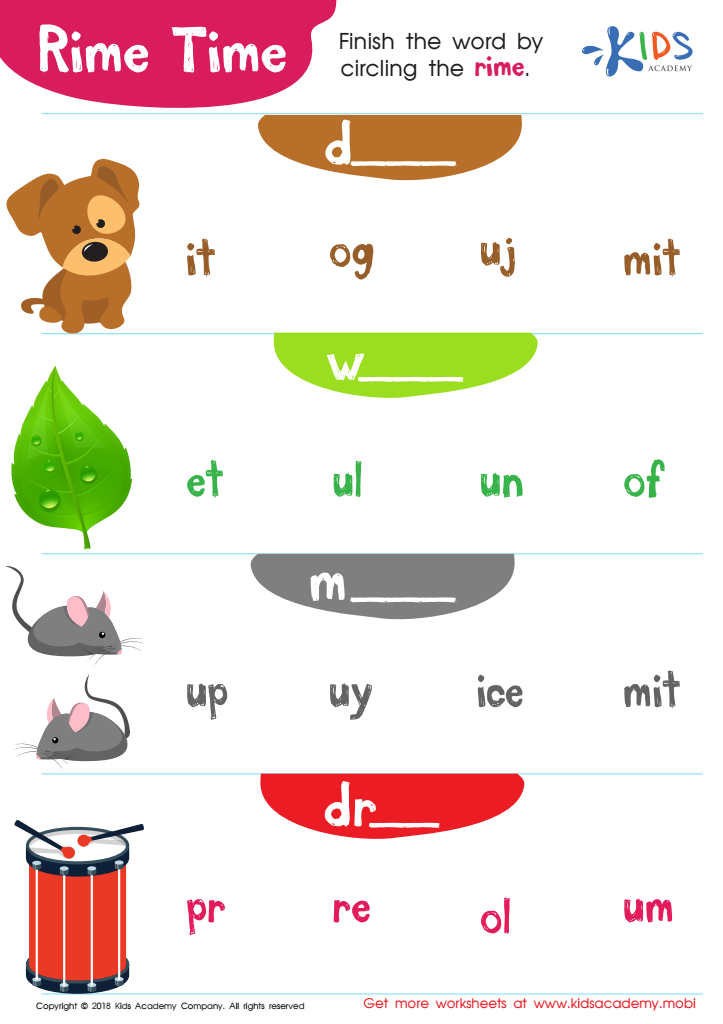
Rime Time Worksheet
This free PDF worksheet helps new and emerging readers identify rimes (the letters after initial consonants) and practice fine motor skills. Kids trace the correct rimes for each picture and increase their fluency and decoding skills with each one!
 Assign to My Students
Rime Time Worksheet
Worksheet
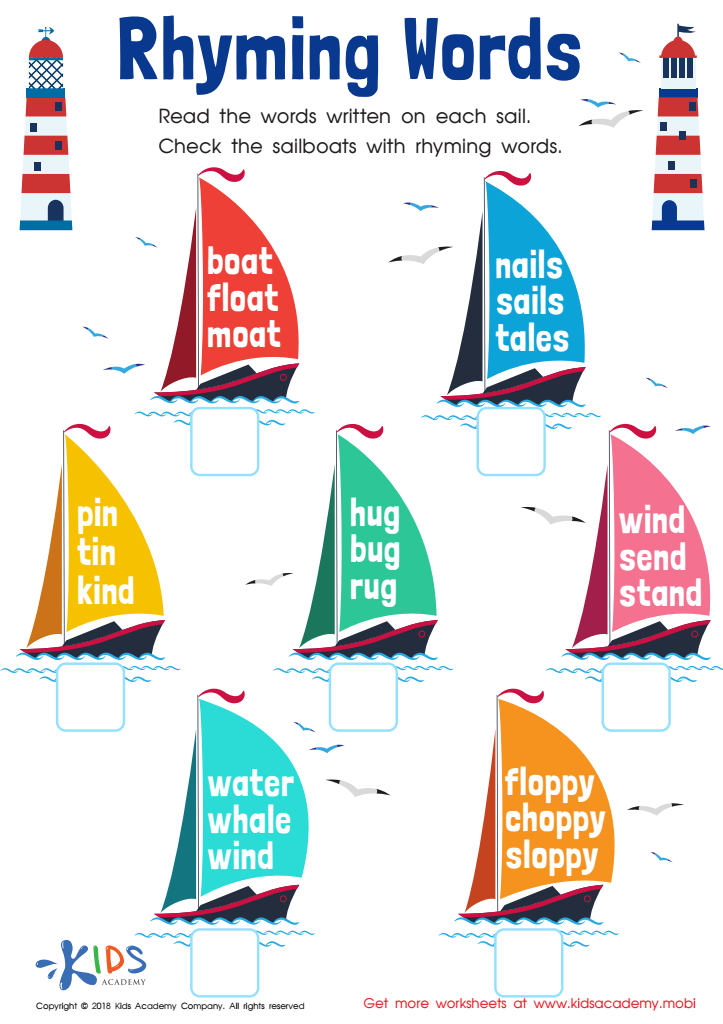
Rhyming Words Worksheet
Does your child know about rhyming words? Get them interested in poetry and explain that these words have similar sounds when pronounced. Read the words on each sailboat to your child and ask them to identify the rhyming pairs. Guide them to check the sailboats.
Rhyming Words Worksheet
Worksheet
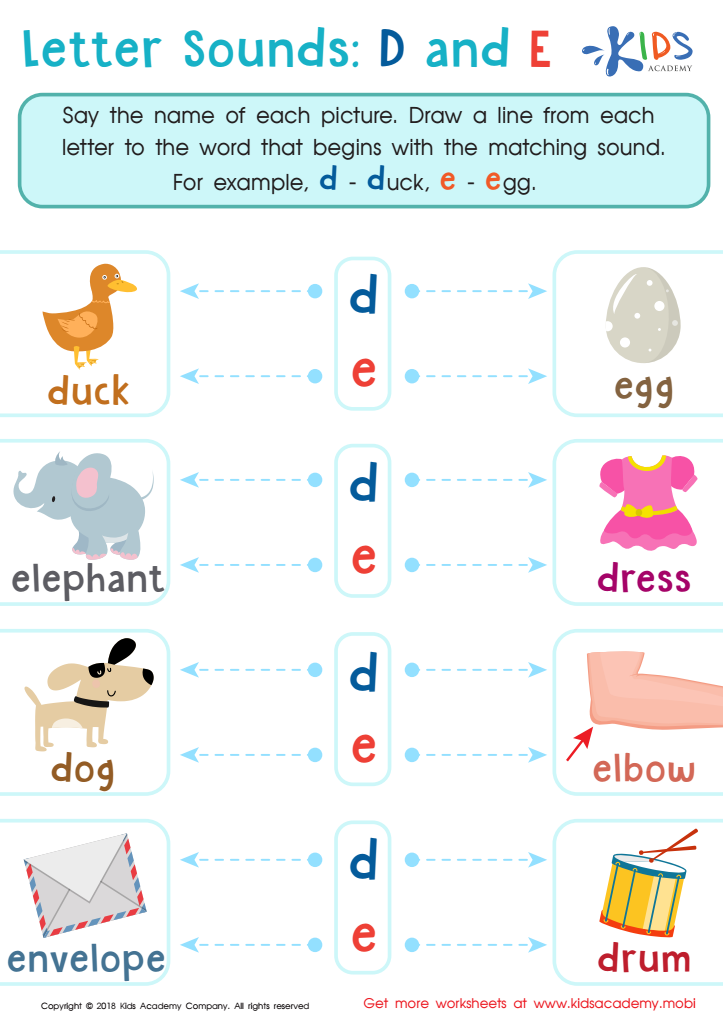
Letter D and E Sounds Worksheet
Kids can use picture clues and visual discrimination to name cheerful pics and isolate the beginning sound. This free PDF worksheet will help them develop phonological awareness, differentiate between "D" and "E", and hone fine-motor skills. It'll also boost their confidence as they become readers.
Letter D and E Sounds Worksheet
Worksheet
Join Kids Academy for Free
Who is primarily going to use this learning content?








Understanding phonetics is vital for parents and teachers of children aged 3-9 because it lays the foundation for reading and language development. Phonetics teaches children the relationship between sounds and their corresponding letters, enabling them to decode words more effectively. When children grasp phonetic principles, they can more easily sound out unfamiliar words, improving their reading fluency and comprehension.
Additionally, phonetic awareness enhances children's speaking and listening skills. By recognizing individual sounds in words, children become more proficient in pronunciation, which builds their confidence in communication. This understanding also aids in spelling, as children learn to associate sounds with letters.
Moreover, early phonetics education fosters a love for reading and learning. When children successfully decode words, they are more likely to engage with texts, promoting literacy skills that extend beyond the classroom.
For parents, supporting phonetic learning at home strengthens their child's educational journey. For teachers, incorporating phonetics into their curriculum facilitates smoother transitions from early literacy to more advanced reading skills. Therefore, prioritizing phonetics is essential for nurturing proficient, enthusiastic readers and communicators.








