
Phonics development Normal Worksheets for Ages 3-9
3 filtered results
Difficulty Level
Grade
Age
-
From - To
Subject
Activity
Standards
Discover engaging Phonics Development Worksheets tailored for children ages 3-9! Our worksheets are designed to foster essential phonics skills through fun and interactive activities. Tailored for early learners, these worksheets promote letter recognition, sound blending, and decoding skills, ensuring a solid foundation for reading. Kids can explore a variety of formats, including tracing, matching, and colorful illustrations, making learning enjoyable and effective. Perfect for home or classroom use, our resources cater to diverse learning styles while encouraging independence and confidence. Download and inspire your young learners to develop a love for reading today with our phonics worksheets!
Favorites
With answer key
Interactive
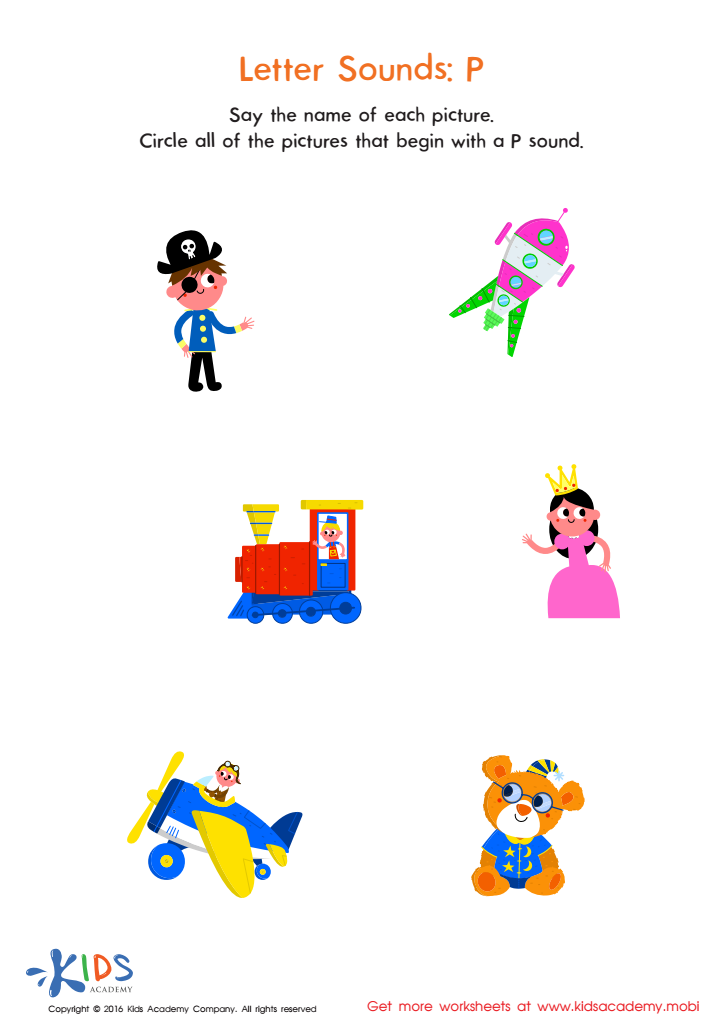
Letter P Sound Worksheet
Think P! Kids practice phonics with this fun letter P worksheet. With delightful illustrations, they'll sound out simple words and get closer to reading.
 Assign to My Students
Letter P Sound Worksheet
Worksheet
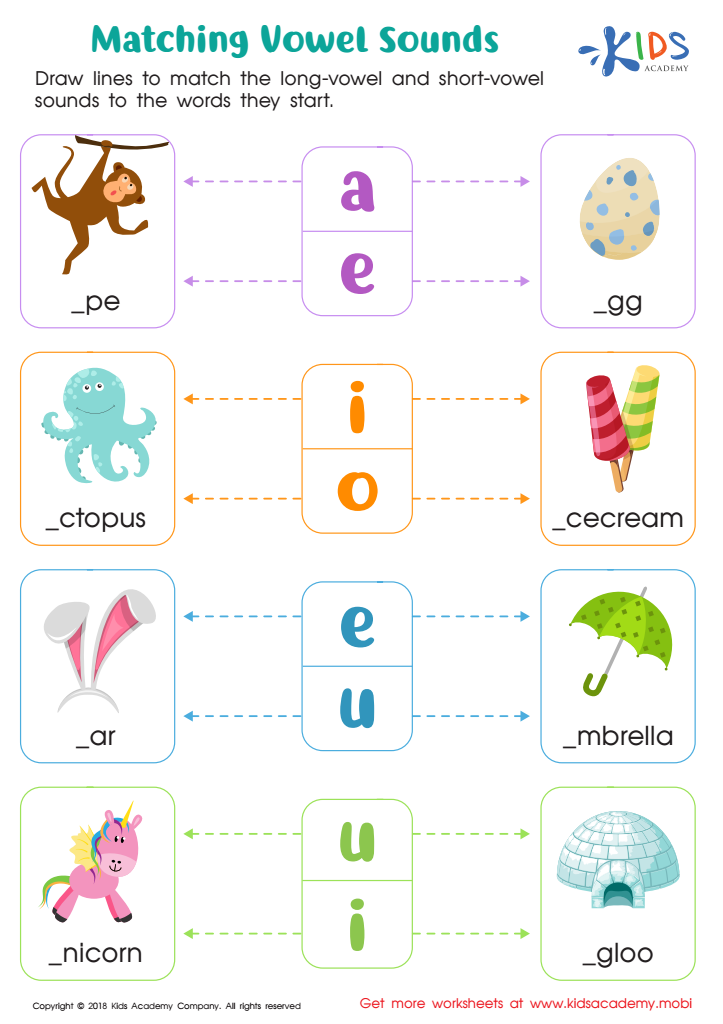
Matching Vowel Sounds Worksheet
Teach your child phonics with a fun worksheet! Ask your child to name a vowel sound and listen if it's long or short. Differentiating between long and short vowel sounds can be tricky, but this matching worksheet makes it easy for kids to understand. Have fun and master phonics - the worksheet will help them understand the difference between long and short vowel sounds!
Matching Vowel Sounds Worksheet
Worksheet
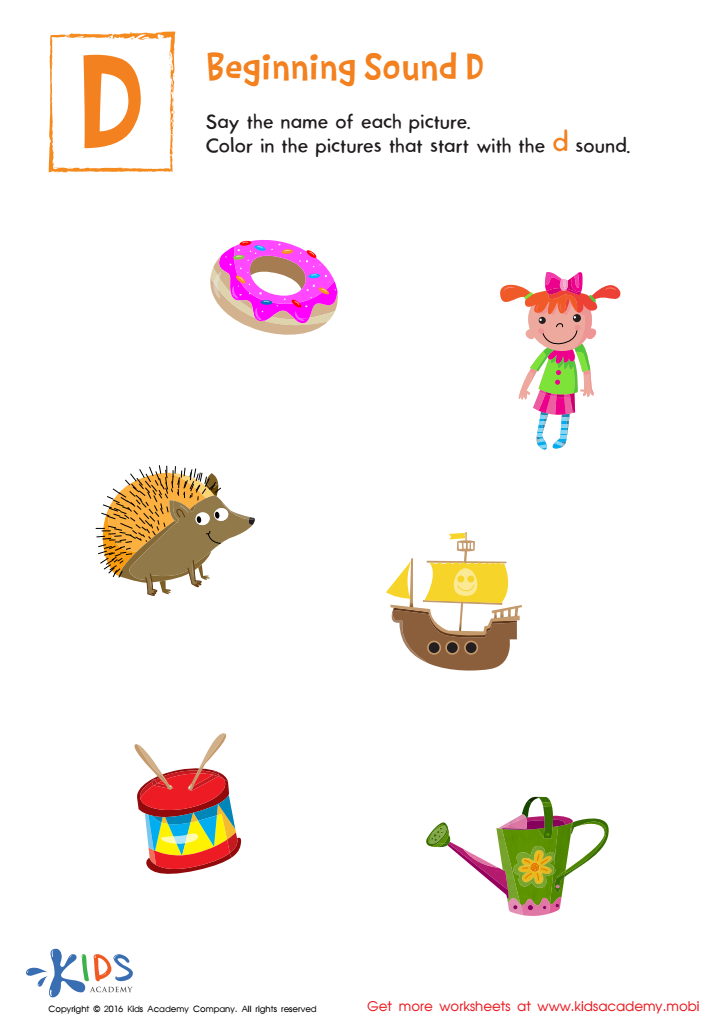
Beginning Sound D Worksheet
Reinforce phonics with this vibrant beginning sound d worksheet! Pictures help kids identify words beginning with 'd' and develop early reading skills. Sounding out each word increases literacy!
Beginning Sound D Worksheet
Worksheet
Join Kids Academy for Free
Who is primarily going to use this learning content?







Phonics development is crucial for children aged 3-9, as it serves as the foundation for their literacy skills. Understanding phonics— the relationship between letters and their sounds— empowers young learners to decode words, a skill necessary for reading fluency and comprehension. Early exposure to phonics helps to build a child’s confidence and enthusiasm toward reading, leading to better academic outcomes.
Moreover, phonics instruction encourages children to recognize patterns in language, enhancing their ability to spell and write. This is vital during the early years, when children are transitioning from learning to read to reading to learn.
Parents and teachers who prioritize phonics can help prevent literacy struggles later on. Research shows that disparities in reading skills can be noticeable as early as the first grade, making early intervention essential. By fostering phonics skills, adults can create a supportive learning environment that nurtures a love for reading, benefiting children's cognitive and emotional development.
Investing time and resources into phonics development can set children on a path toward lifelong literacy success, ultimately contributing to their overall educational experience and future opportunities. Thus, parents and teachers play a critical role in this fundamental aspect of early education.








