Sound Association Normal Worksheets for Ages 3-9 - Page 2
27 filtered results
-
From - To
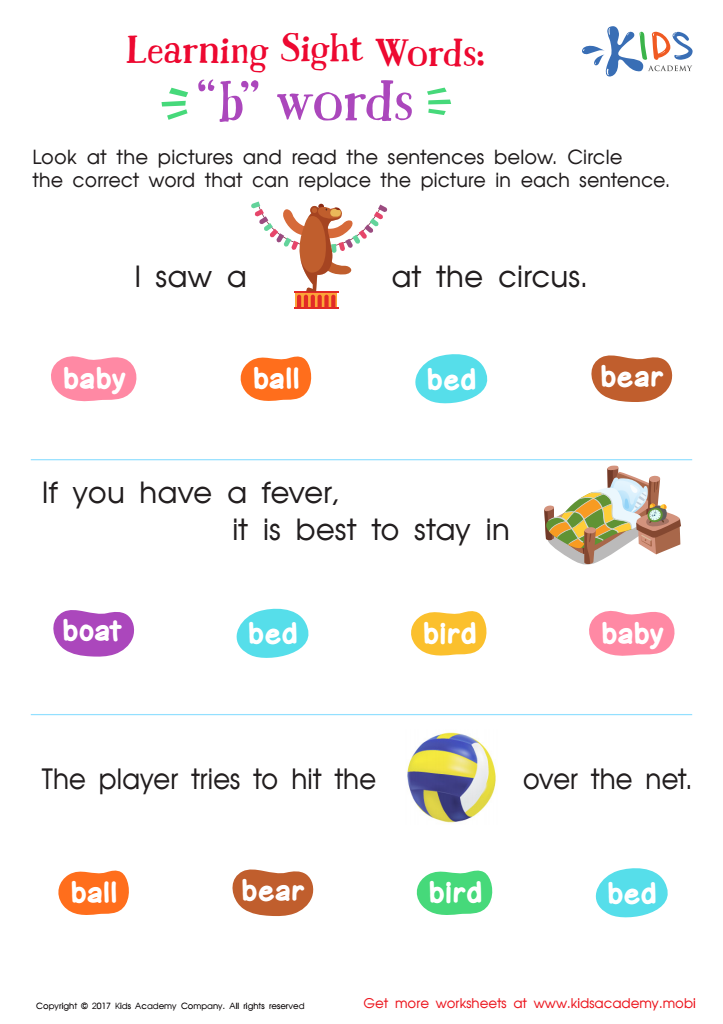
"B" Words Printable Sight Words Worksheet
 Assign to My Students
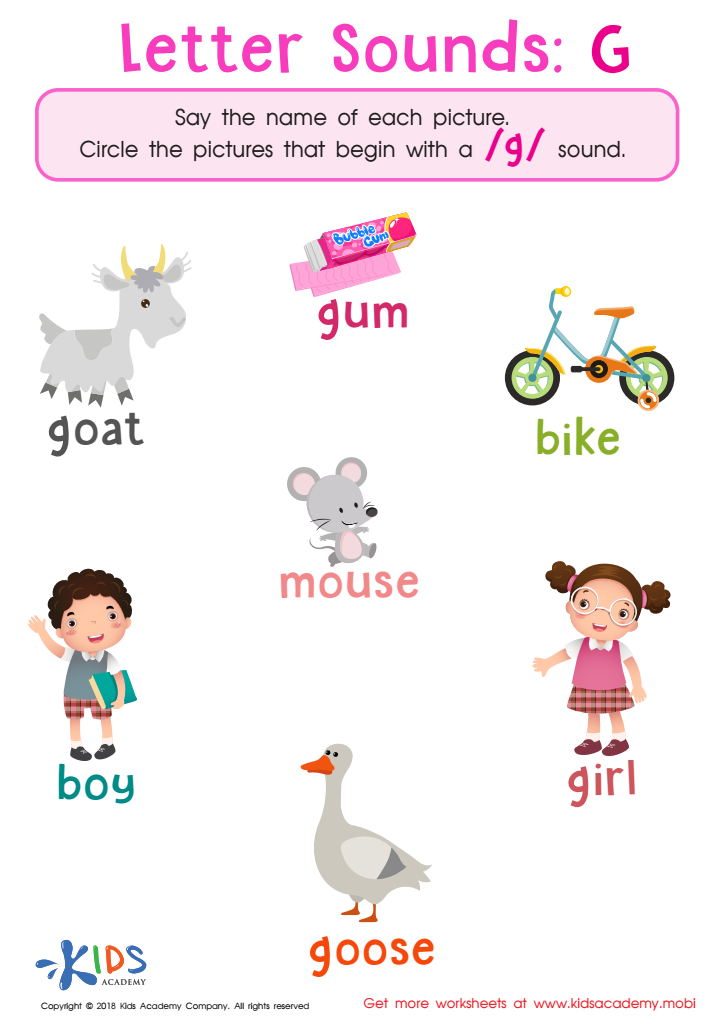
Letter G Sounds Worksheet
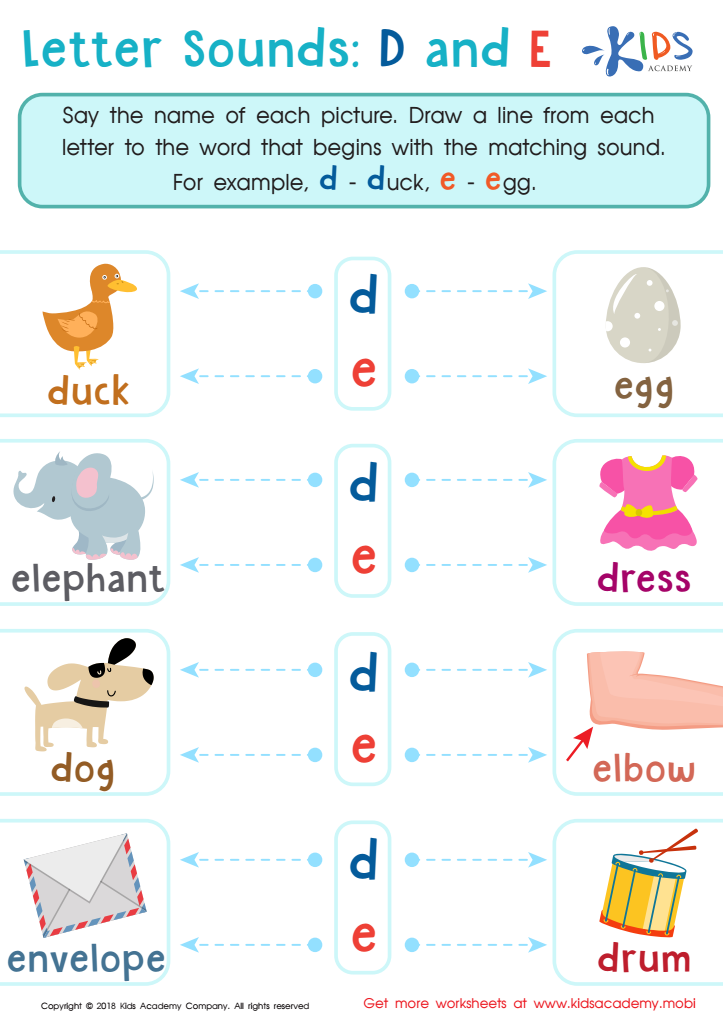
Letter D and E Sounds Worksheet








Sound association is crucial for children aged 3-9 as it lays the foundation for literacy and language skills. During this formative period, young minds are highly adaptable, making it the prime time to establish connections between sounds and corresponding letters. This early understanding is vital for several reasons.
Firstly, sound association aids in phonemic awareness, the ability to hear and manipulate the smallest units of sound in speech. This skill is a predictor of reading success and is essential for decoding words while reading. Children who have strong phonemic awareness can blend sounds to form words and segment words into individual sounds, which are fundamental skills for fluent reading and spelling.
Secondly, developing sound association enhances vocabulary and comprehension. When children understand the relationship between sounds and letters, they can independently decode new words they encounter in texts. This ability not only builds their vocabulary but also boosts their confidence and enjoyment in reading, fostering a lifelong love for learning.
Moreover, sound association contributes to better communication skills. As children learn to connect sounds with letters, they gain clarity in pronunciation and articulation, aiding effective verbal expression and listening skills.
In summary, prioritizing sound association from ages 3-9 equips children with critical reading and language skills, setting them up for future academic success and confident communication. Therefore, parents and teachers should actively engage in activities that develop these foundational skills.








