Understanding economics Normal Worksheets for Ages 3-9
3 filtered results
-
From - To
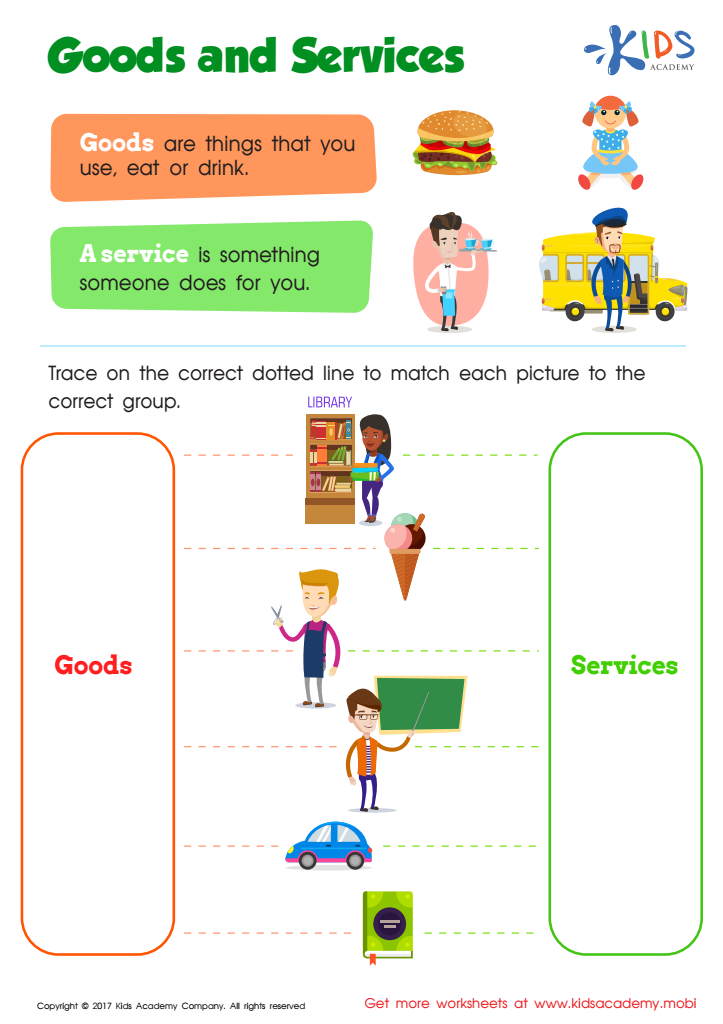
Welcome to our “Understanding Economics Normal Worksheets” page, designed specifically for children aged 3-9! Our engaging worksheets introduce young learners to fundamental economic concepts in a fun and relatable way. Through colorful illustrations and interactive activities, kids will explore the basics of money, trade, and resource management, fostering critical thinking skills early on. These age-appropriate materials promote hands-on learning and spark curiosity about everyday economic principles. Perfect for home or classroom use, our worksheets encourage creativity while helping children build a strong foundation in understanding their economic environment. Start your child’s journey into the world of economics today!
 Assign to My Students
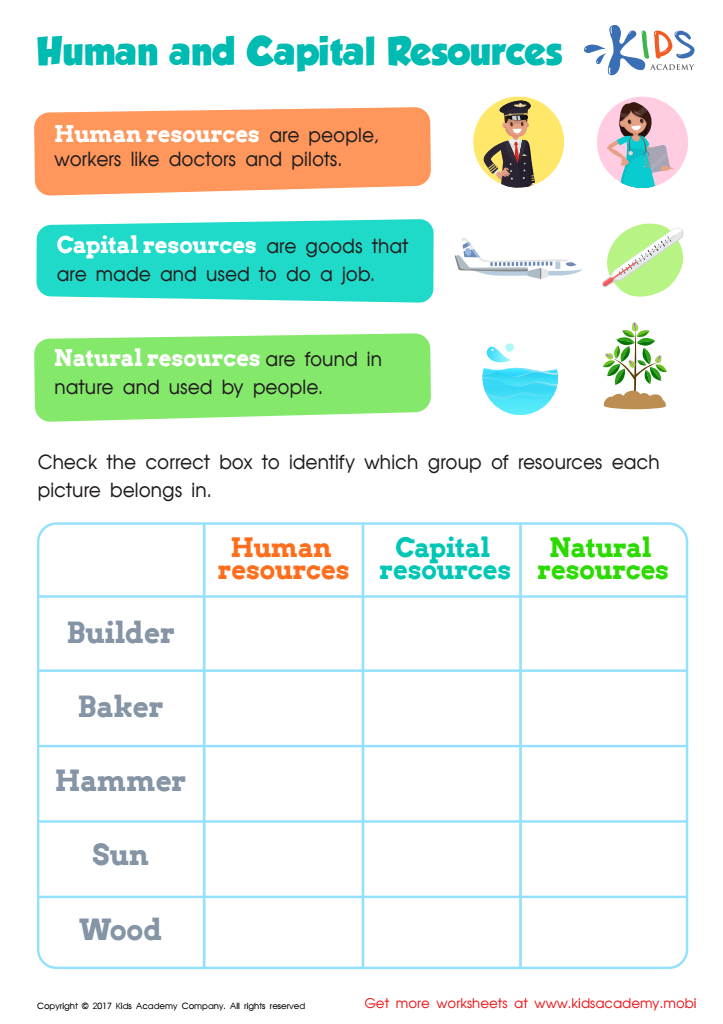
Human and Capital Resources Worksheet
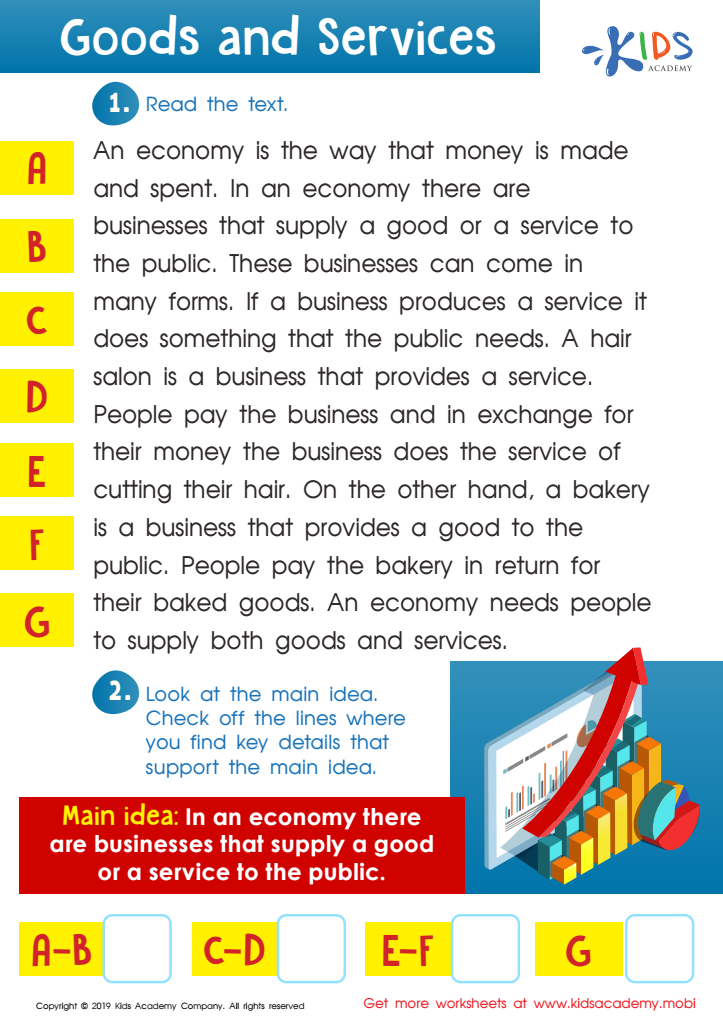
Goods and Services Worksheet








Understanding basic economic concepts is crucial for children aged 3-9 as it lays the foundation for their future financial literacy and decision-making skills. Early exposure to economics helps young learners comprehend the importance of resources, sharing, and making choices. For parents and teachers, introducing these concepts in a playful and engaging manner fosters essential skills such as critical thinking, problem-solving, and collaboration.
By incorporating lessons on needs vs. wants, saving for goals, and the value of money, children can better grasp the realities of their everyday experiences, like why they can't always have everything they want. This age group is particularly receptive to learning through storytelling, play, and simple games, making it an ideal time to introduce economic principles organically.
Moreover, instilling a sense of financial awareness in young minds encourages responsible decision-making as they grow. Understanding economics equips children with the tools to navigate their personal finances, make informed consumer choices, and appreciate the value of work. Ultimately, parents and teachers who prioritize economic literacy contribute to raising financially savvy individuals who can thrive in an increasingly complex world. By fostering these skills early, we empower children for a successful and sustainable future.








