Understanding light sources Normal Worksheets for Ages 3-9
4 filtered results
-
From - To
Discover the fascinating world of light sources with our engaging Normal Worksheets tailored for children ages 3-9. These interactive resources foster early learning by helping young minds comprehend the different types of light sources, both natural and artificial. Ideal for home or classroom settings, our worksheets feature colorful illustrations and stimulating activities that capture children's attention while promoting critical thinking skills. Encourage exploration and creativity as kids identify, sort, and categorize various light sources. With easy-to-follow instructions, these worksheets make understanding light an enjoyable adventure. Perfect for parents and educators aiming to build foundational knowledge in science. Start exploring today!
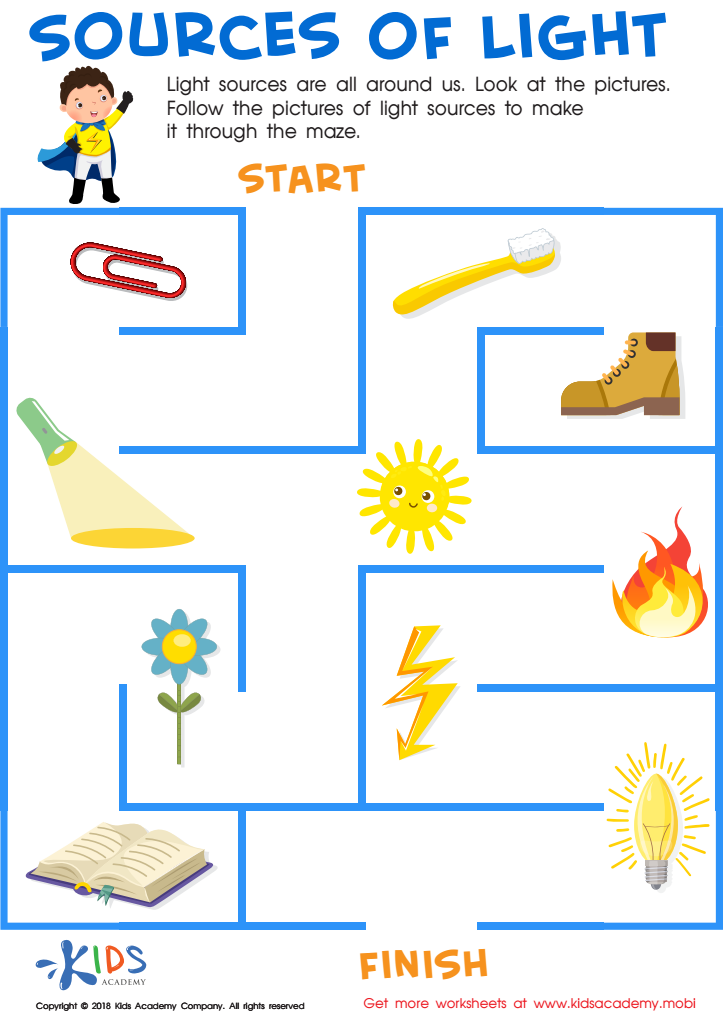
Sources of Light Worksheet
 Assign to My Students
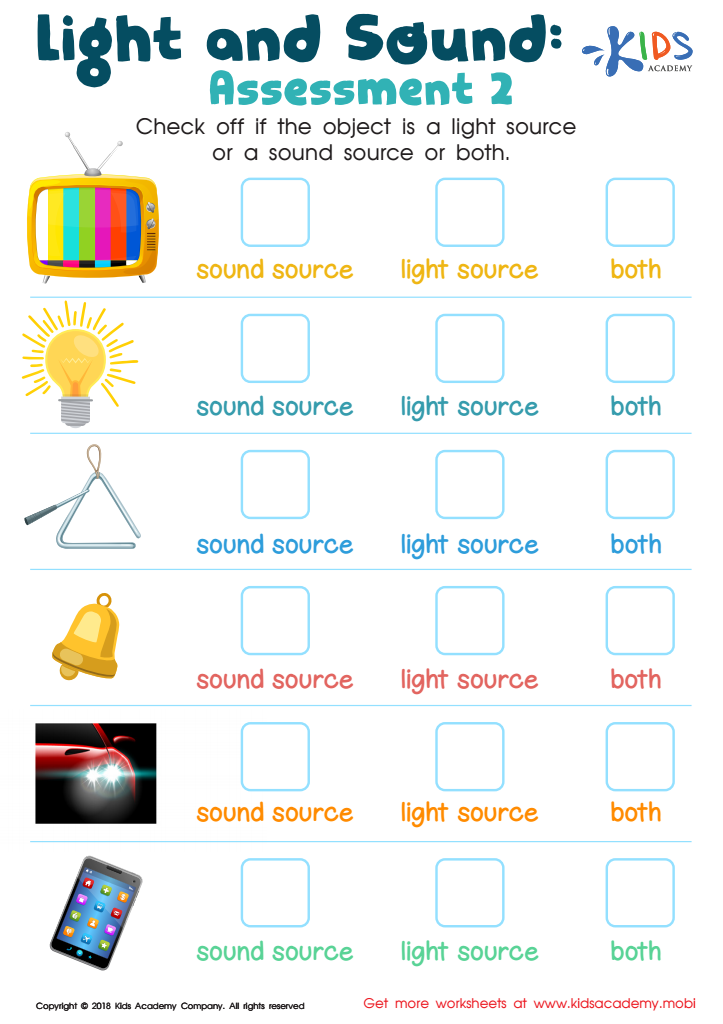
Light and Sound: Assessment 2 Worksheet
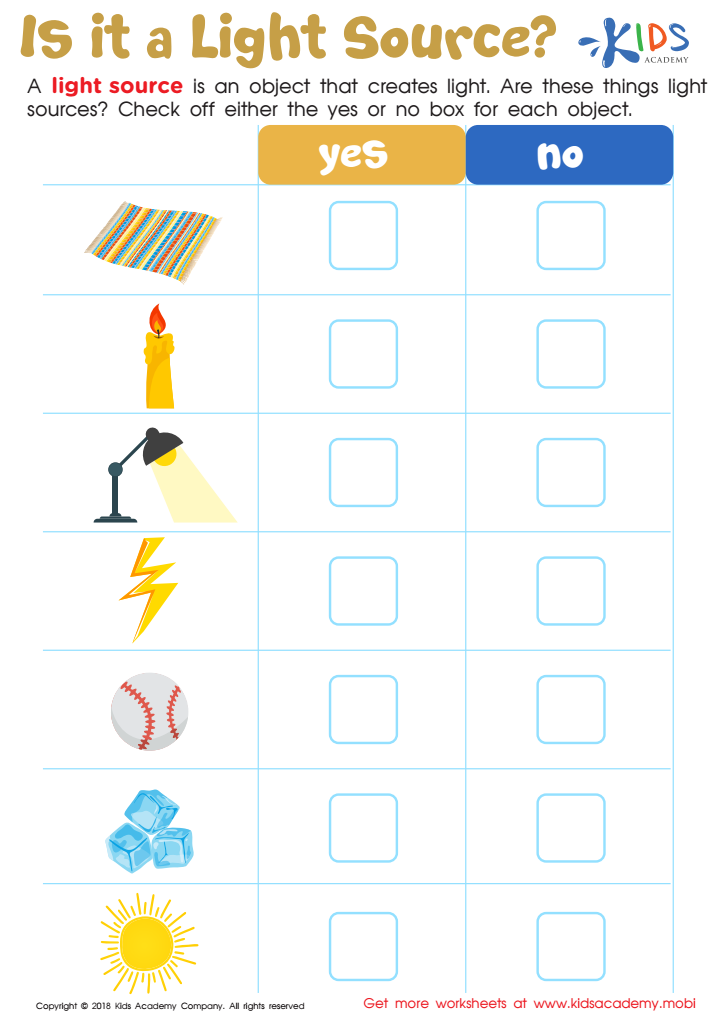
Is It a Light Source? Worksheet
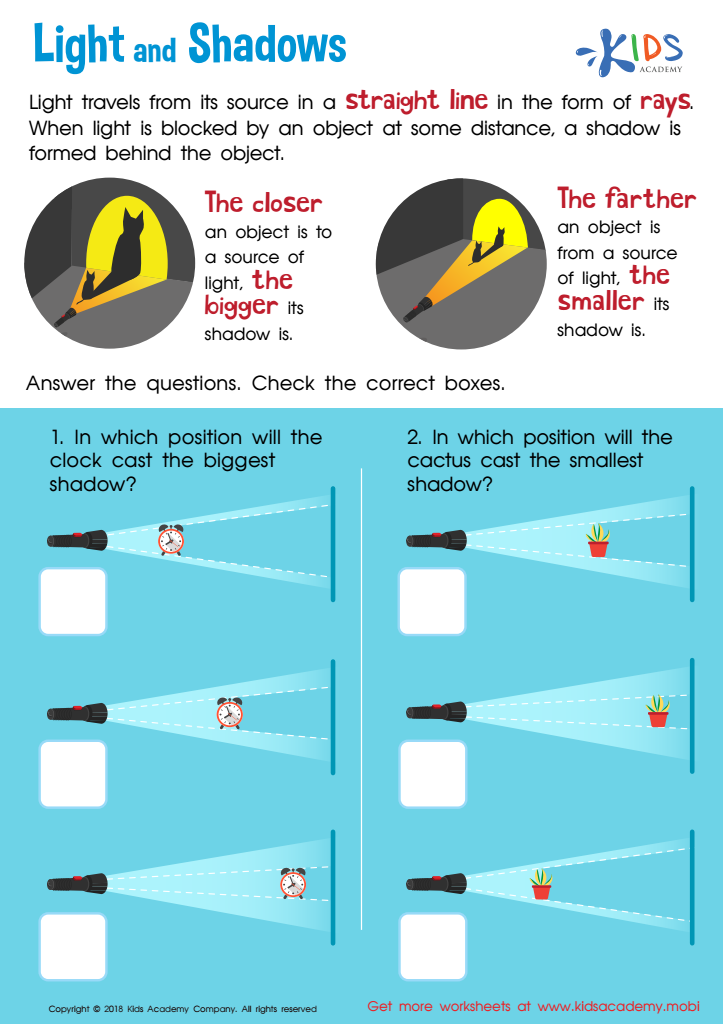
Light and Shadow Worksheet for Grade 3








Understanding light sources is essential for children aged 3-9 as it lays the foundation for fundamental scientific concepts. At this young age, children are naturally curious about the world around them, and exploring light sources sparks that curiosity. When parents or teachers engage in discussions or activities about light sources—like the sun, lamps, and flashlights—they are helping children develop critical thinking skills, observation, and reasoning.
Learning about light sources helps children differentiate between natural (like sunlight) and artificial light, fostering their comprehension of how light interacts with the environment. Activities such as shadow play or exploring reflection can enhance sensory experiences, promote hands-on learning, and improve cognitive development.
Moreover, understanding light is crucial for safety. Educating young children about how to use light sources properly—including realities like electricity—can instill a mindfulness about their surroundings.
Beyond science, discussing light sources can encourage creativity. Art projects involving light or discussing how light affects colors can boost expression and imagination.
Overall, nurturing this understanding fosters a sense of exploration and lays the groundwork for future STEM learning, making it a valuable topic for parents and educators in the growth of young learners.








