Understanding perspectives Normal Worksheets for Ages 3-9
3 filtered results
-
From - To
Unlock the world of understanding perspectives with our engaging worksheets designed specifically for children ages 3-9. These resources encourage young learners to explore different viewpoints and develop empathy through fun, interactive activities. With vibrant illustrations and age-appropriate exercises, our worksheets make learning enjoyable and impactful. Kids will enhance critical thinking and comprehension skills while recognizing how different people perceive the same situation. Perfect for both classroom and at-home learning, these worksheets provide valuable insights into social interactions and emotional intelligence. Empower your child's growth and self-awareness through understanding perspectives—a key life skill for their future!
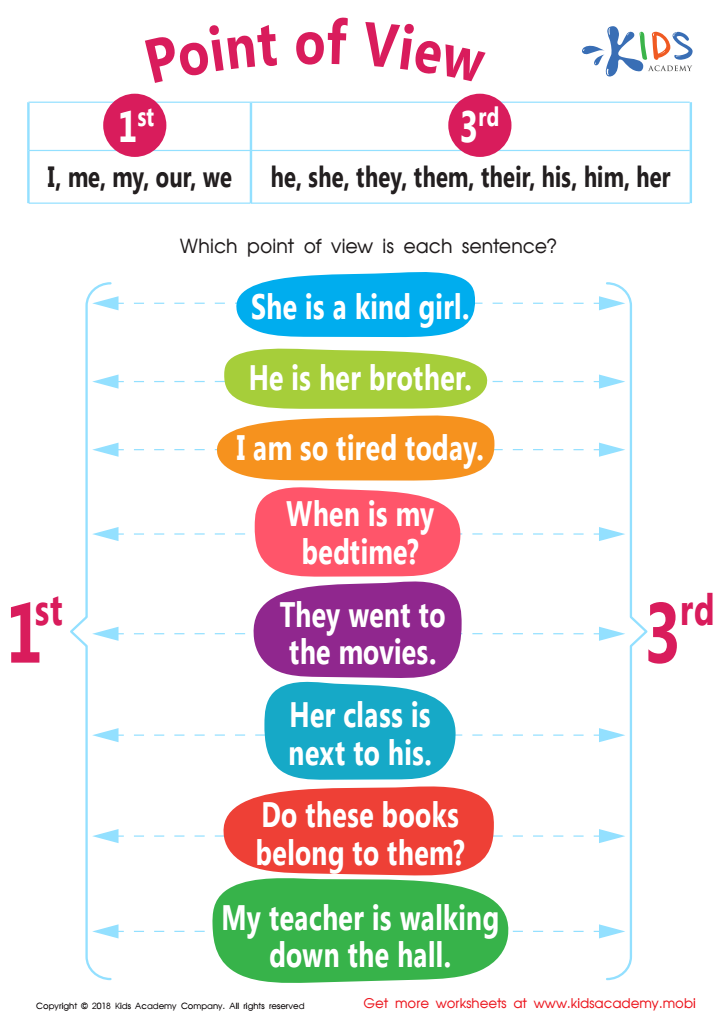
Point of View Worksheet
 Assign to My Students
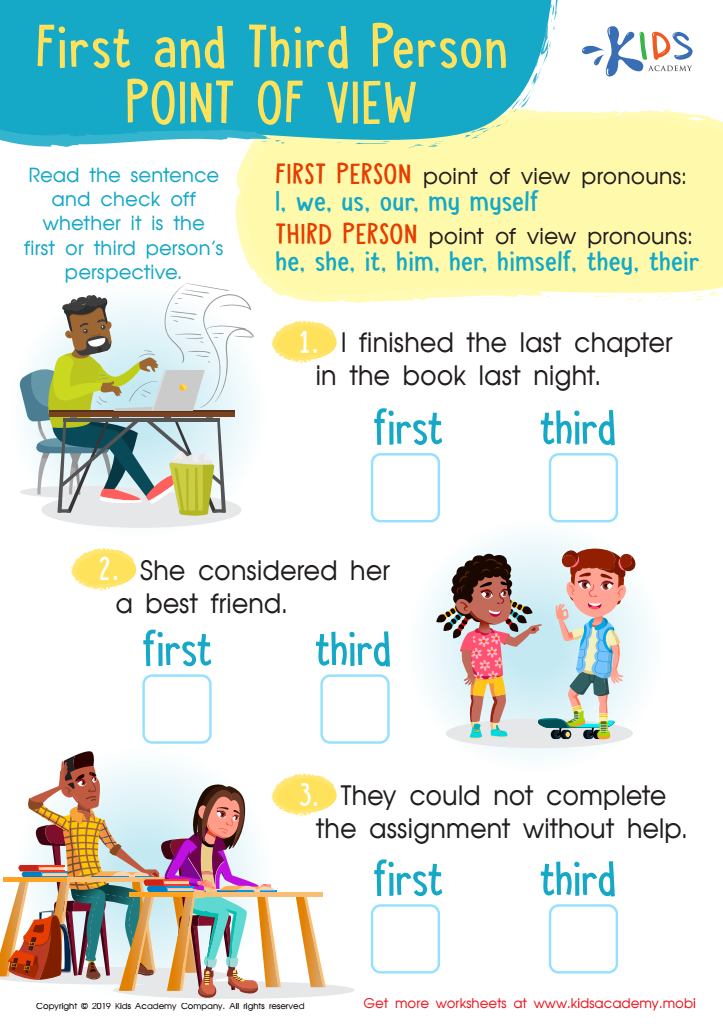
First and Third Person Point of View Worksheet
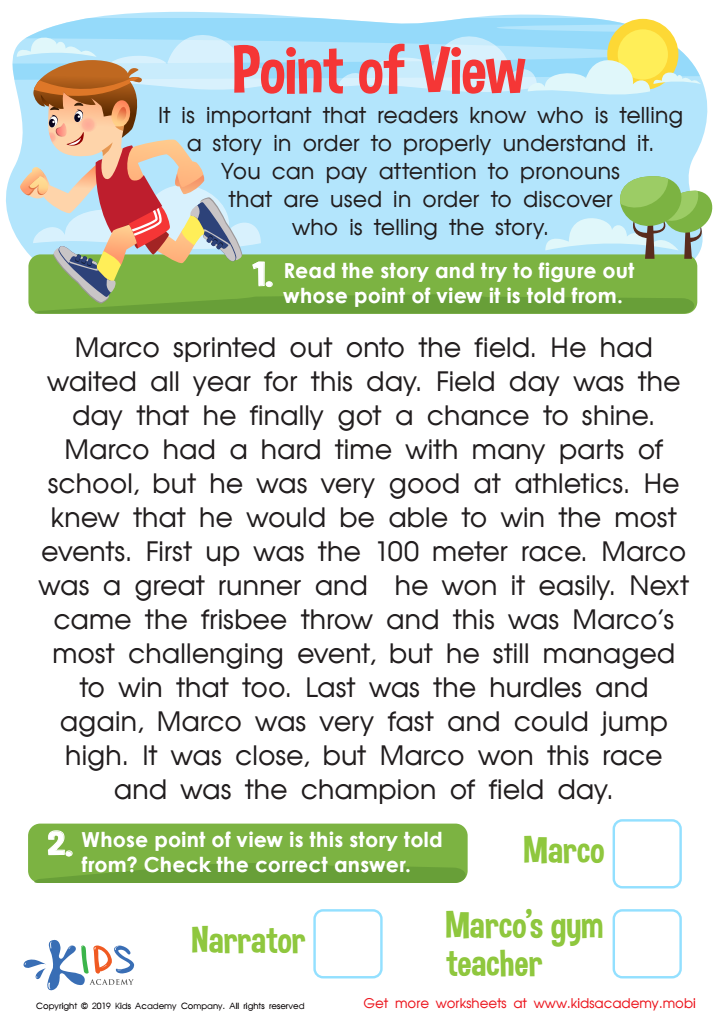
Point of View Worksheet




Understanding perspectives is crucial for children aged 3-9 as it lays the foundation for social skills, emotional regulation, and empathy. At this developmental stage, children are learning to interact with their peers, and understanding different viewpoints can significantly enhance these interactions. When children grasp that others may think or feel differently, they become more adept at navigating conflicts, expressing themselves verbally, and negotiating solutions.
Parents and teachers play a vital role in nurturing this understanding. Through stories, role-playing, and discussions about feelings and situations, adults can model and encourage perspective-taking. This skill empowers children to build healthier relationships, as they learn to appreciate diversity in thoughts and emotions. Moreover, fostering this ability promotes self-awareness and emotional intelligence, equipping children to manage their reactions and approach challenges with empathy.
Promoting understanding perspectives also contributes to a positive classroom and home environment. When children feel heard and valued, they are more likely to engage in cooperative play and collaboration with others. Overall, emphasizing this skill not only benefits individual development but also nurtures a more compassionate and inclusive society. Parents and teachers should see understanding perspectives as a cornerstone of childhood education and a pathway towards harmonious social interactions.








