
Understanding plant growth Normal Worksheets for Ages 3-9
3 filtered results
Difficulty Level
Grade
Age
-
From - To
Subject
Activity
Standards
Discover our engaging "Understanding Plant Growth" worksheets designed for children aged 3-9. These printables offer age-appropriate activities that fuse fun with learning, guiding young botanists to explore the fascinating world of plant life. Each worksheet is crafted to nurture curiosity, enhance observation skills, and build a strong foundation in biology. From coloring activities to simple science experiments, children will understand plant life cycles, parts of plants, and the essentials of growth. Perfect for parents and teachers, these worksheets make learning interactive and enjoyable, fostering a lifelong interest in nature and science.
Favorites
With answer key
Interactive
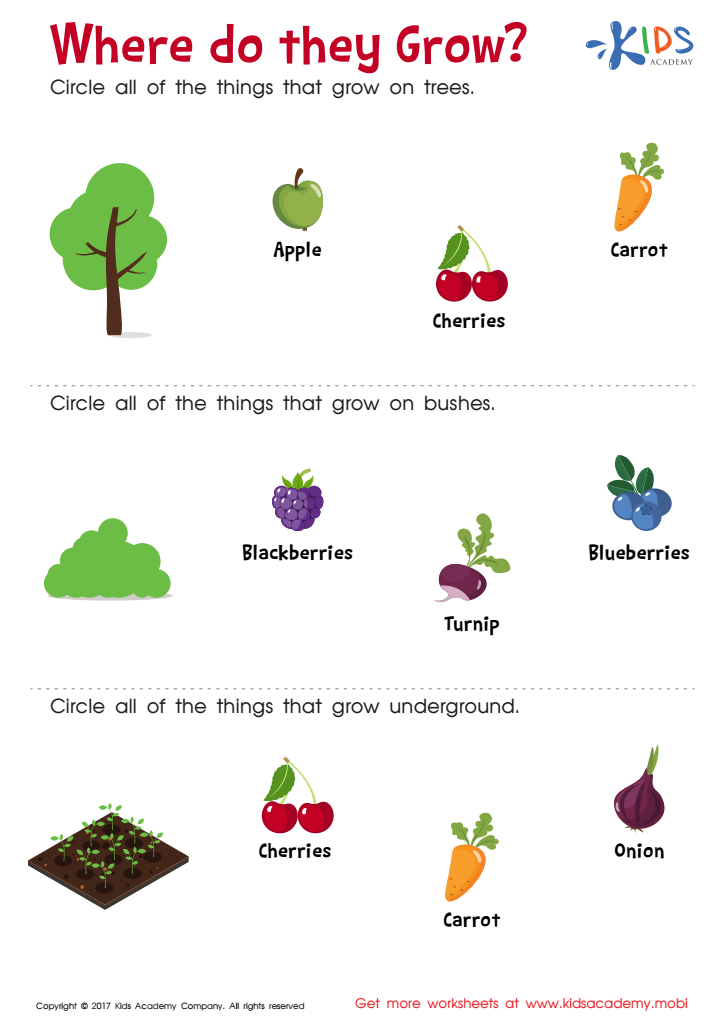
Where Do They Grow Worksheet
With this worksheet, your child can learn about apples, cherries, and blueberries and gain important science skills.
 Assign to My Students
Where Do They Grow Worksheet
Worksheet
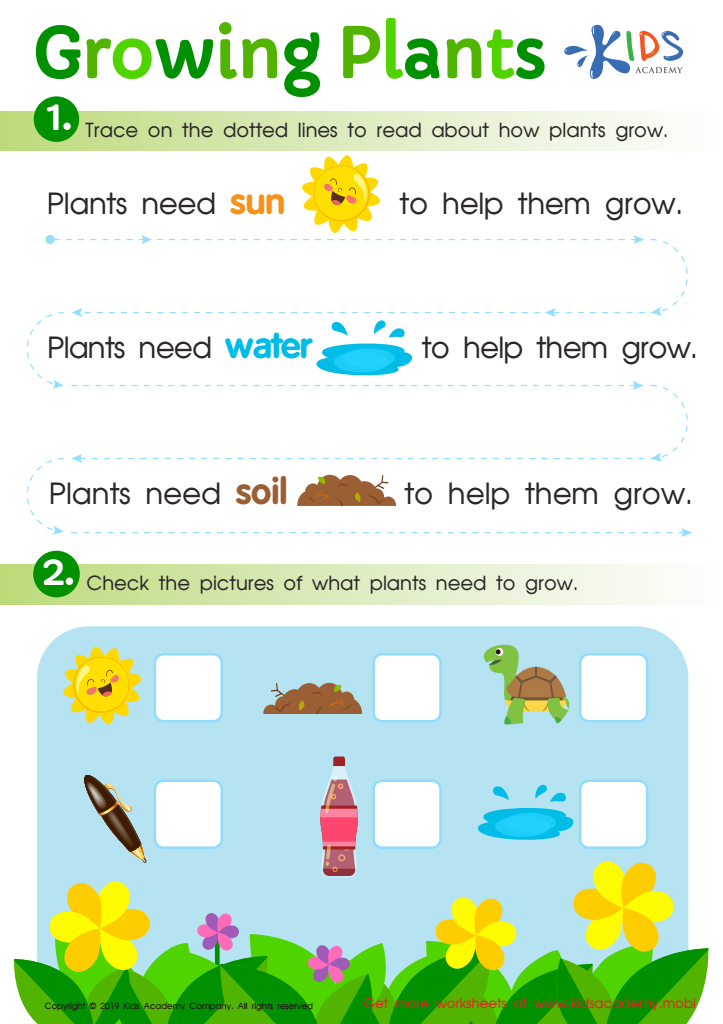
Growing Plants Worksheet
Young gardeners and scientists can learn about what helps plants grow with this fun PDF worksheet. Kids will trace lines to practice left-to-right patterning and use pictures from the rebus story to guide them. Learn that plants need sunshine, water and soil, then check off pictures of what each plant needs. It's an engaging and educational way to help their plants become big and strong.
Growing Plants Worksheet
Worksheet
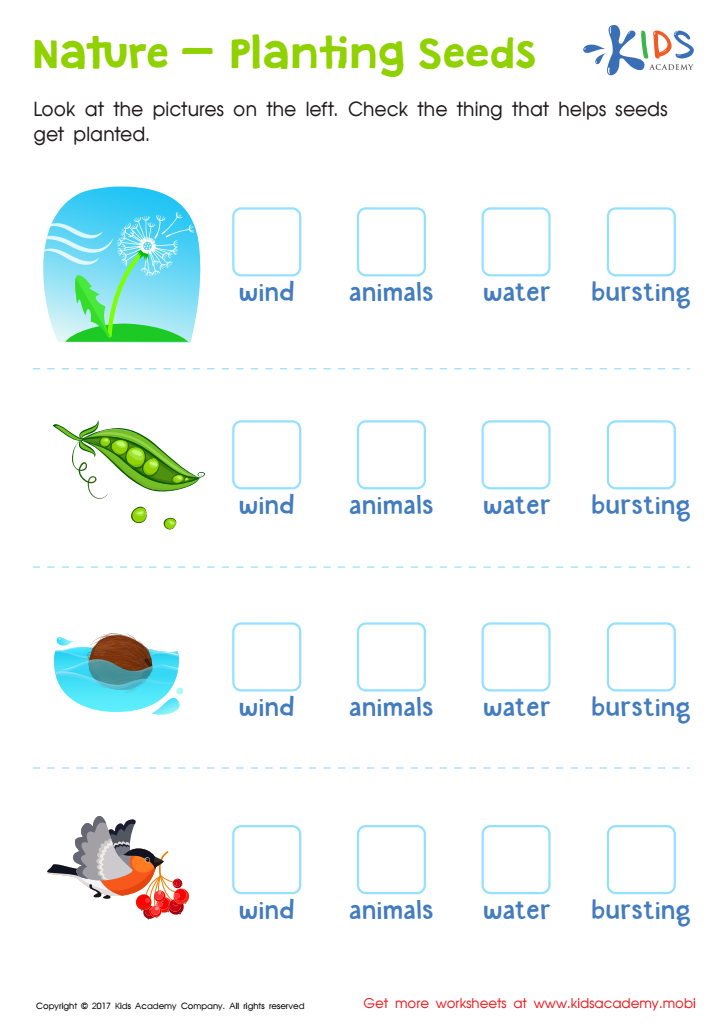
Nature Planting Seeds Worksheet
Help your child explore the fascinating cycle of plants and seeds with this worksheet. They'll learn how plants grow and how seeds travel to the ground. Challenge them to identify the right way each seed gets planted!
Nature Planting Seeds Worksheet
Worksheet
Join Kids Academy for Free
Who is primarily going to use this learning content?



.jpg)




Understanding plant growth is vital for both parents and teachers working with children aged 3-9. This foundational knowledge serves as a gateway to instill an enduring curiosity and appreciation for the natural world. Engaging young minds in plant growth education fosters a sense of responsibility, as children learn how their actions—like watering and ensuring sunlight—directly influence plant health. This stewardship extends to larger ecological concepts, teaching sustainability at an early age.
Moreover, learning about plants tangibly connects to critical thinking and observational skills. As children monitor growth stages, they practice patience, nurture prediction skills, and note changes over time. This boosts cognitive development, offering a concrete way to understand abstract ideas like life cycles, interdependence in ecosystems, and the importance of environmental care.
From a social standpoint, gardening or classroom plant projects promote teamwork, communication, and empathy—key aspects for interpersonal development. Additionally, such activities often require physical involvement, aiding in fine motor skills and recognizing the importance of staying active.
For educators and parents, prioritizing plant growth studies aligns with a holistic approach to education, where the lessons span various intellectual and emotional skills integral to early childhood development. This enriches a child's learning environment, making the educational experience well-rounded and impactful.








