Understanding syllables Normal Worksheets for Ages 3-9
5 filtered results
-
From - To
Unlock your child's phonemic awareness with our "Understanding Syllables Normal Worksheets" designed for ages 3-9! These engaging, printable worksheets help young learners recognize and manipulate syllables, a fundamental skill for reading and writing success. Each activity is crafted to be fun and educational, promoting essential language development through interactive tasks. With vibrant illustrations and age-appropriate challenges, children will learn to count, divide, and blend syllables effectively. Perfect for parents and educators, our resources offer a seamless way to enhance literacy skills while keeping learning enjoyable. Dive into the world of syllables today and watch your child flourish in their literacy journey!
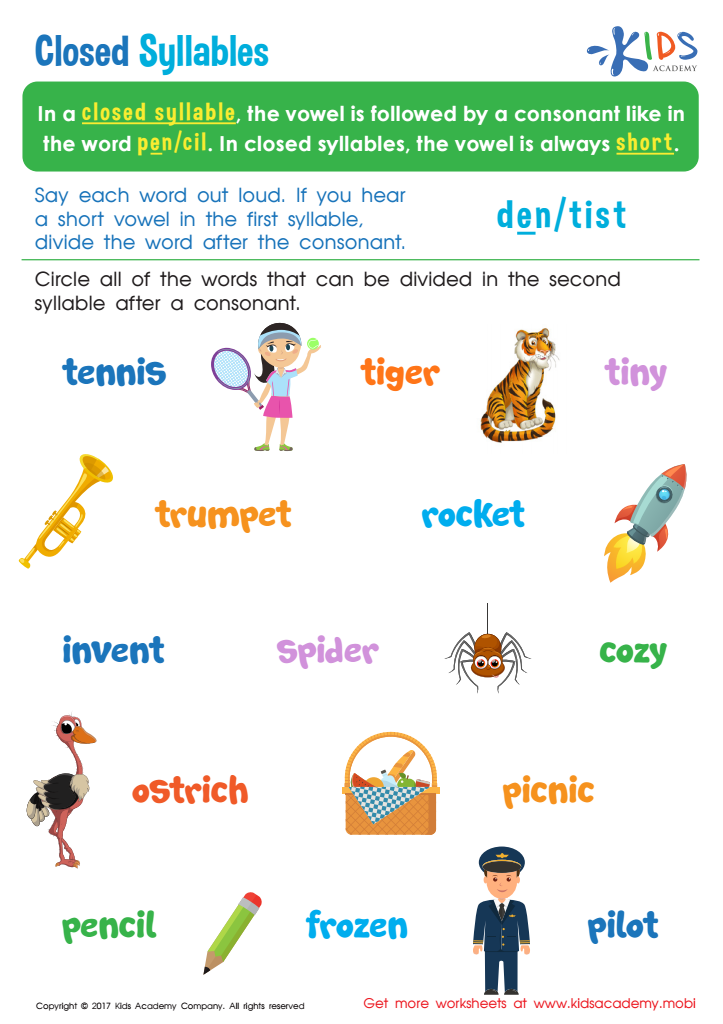
Closed Syllable Spelling Worksheet
 Assign to My Students
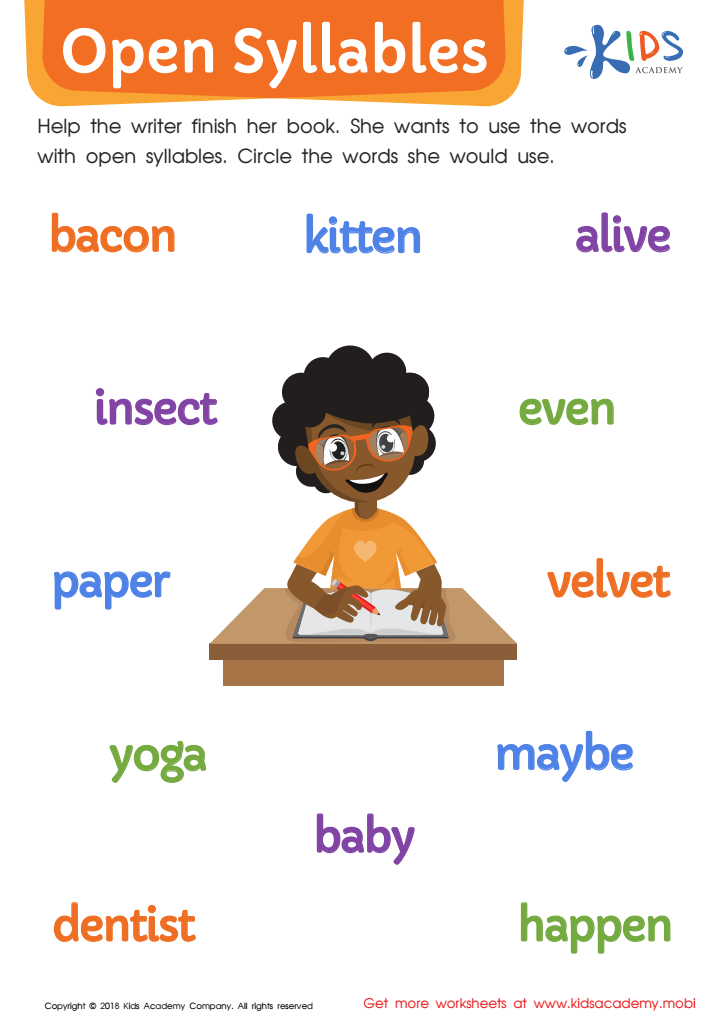
Open Syllables Worksheet
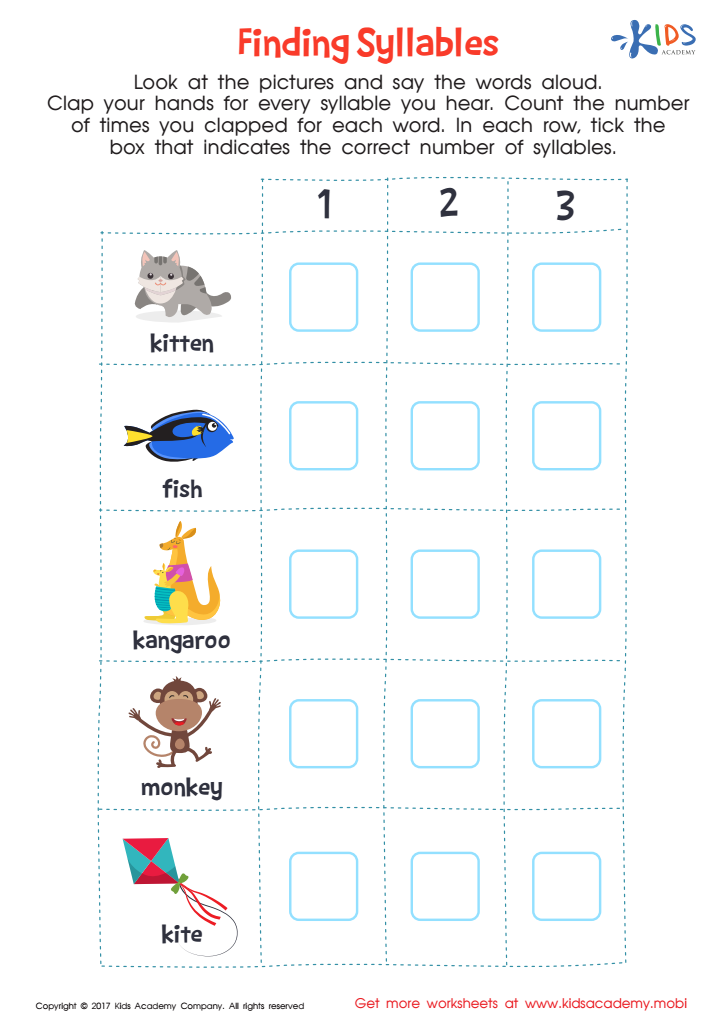
Finding Syllables Word Structure Worksheet
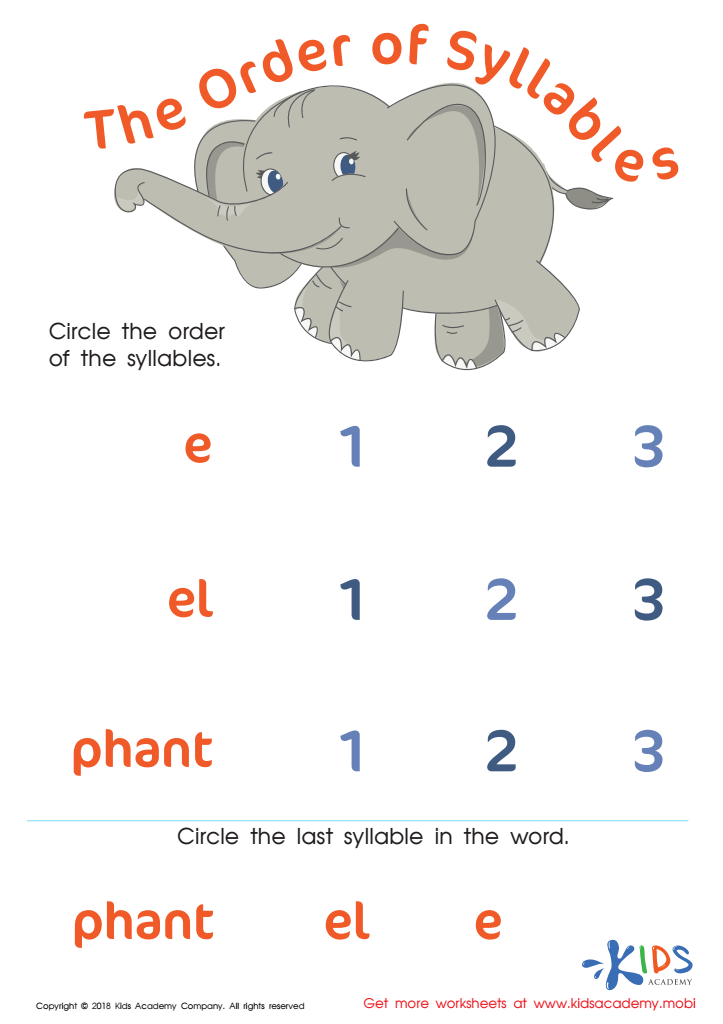
The Order of Syllables Worksheet
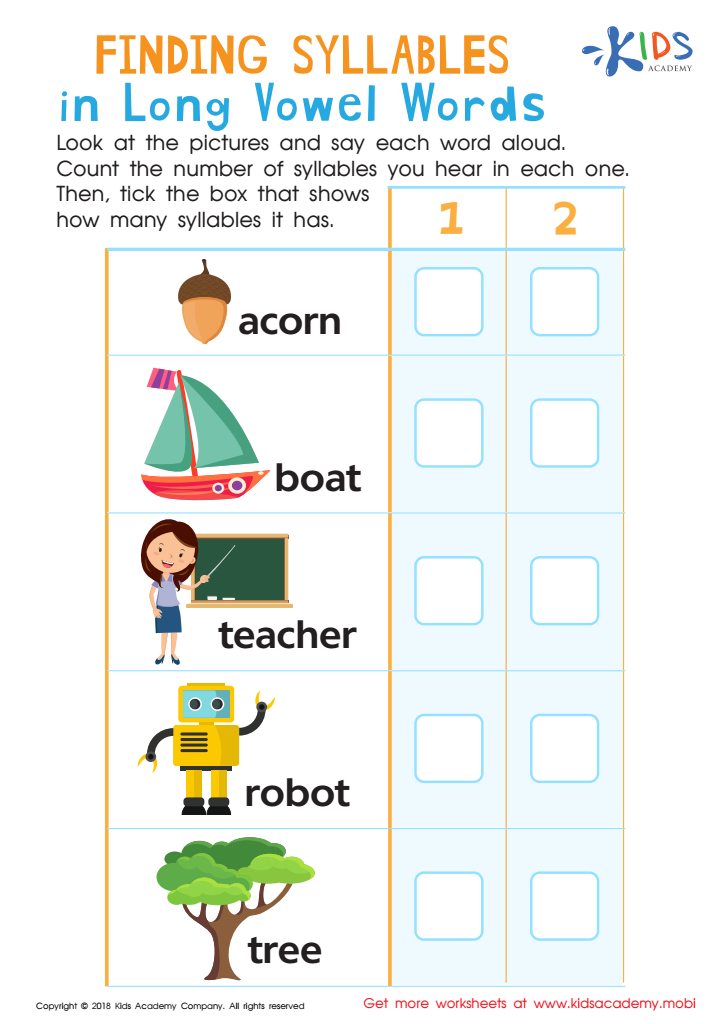
Finding Syllables in Long Vowel Words Worksheet








Understanding syllables is crucial for children aged 3-9 as it lays the foundation for language development and literacy skills. Syllables are the building blocks of words, and recognizing them helps children with pronunciation, spelling, and reading. When young learners grasp the concept of syllables, they can break down words into manageable parts, making it easier to decode unfamiliar words they encounter in books or during conversation.
For parents and teachers, fostering syllable awareness can enhance vocabulary acquisition, as children learn to identify rhythmic patterns in speech. Engaging kids in playful activities, such as clapping out syllables or using songs and rhymes, can make learning enjoyable and interactive. This early phonemic awareness also facilitates better writing skills, as children begin to segment and manipulate sounds in words.
Furthermore, understanding syllables supports developmental milestones, contributing to confident communication. When children can articulate their thoughts clearly, they strengthen social interactions, which is vital for emotional and cognitive growth. By prioritizing syllable understanding, parents and teachers equip children with essential skills that will benefit them in reading, writing, and effective communication throughout their academic journey and beyond.








