
Understanding times tables Normal Worksheets for Ages 3-9
3 filtered results
Difficulty Level
Grade
Age
-
From - To
Subject
Activity
Standards
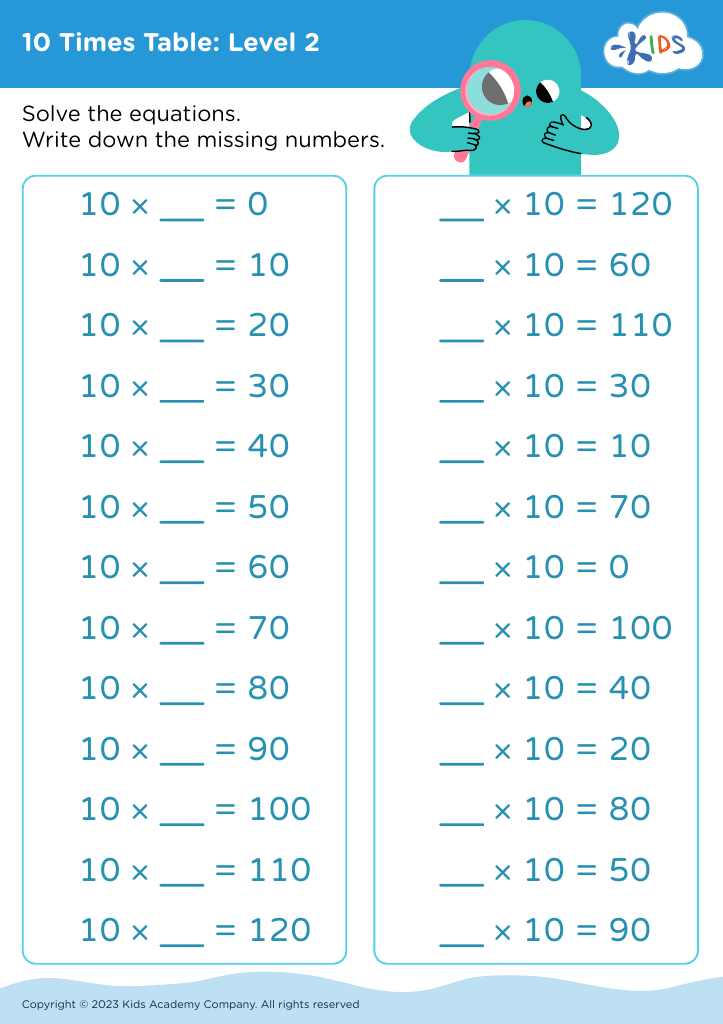
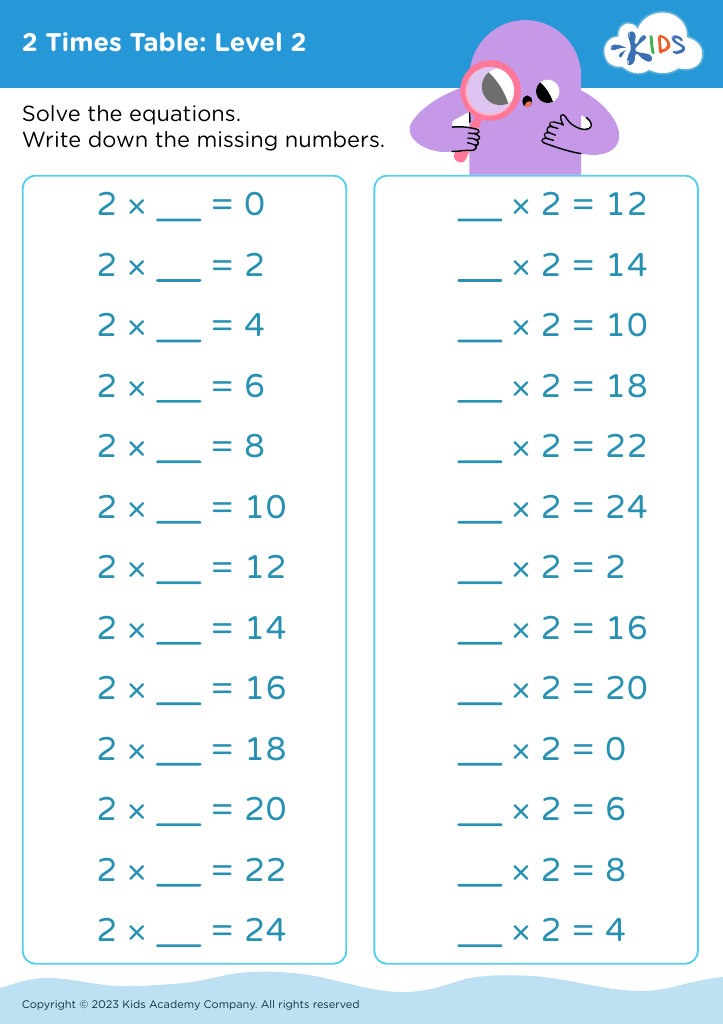
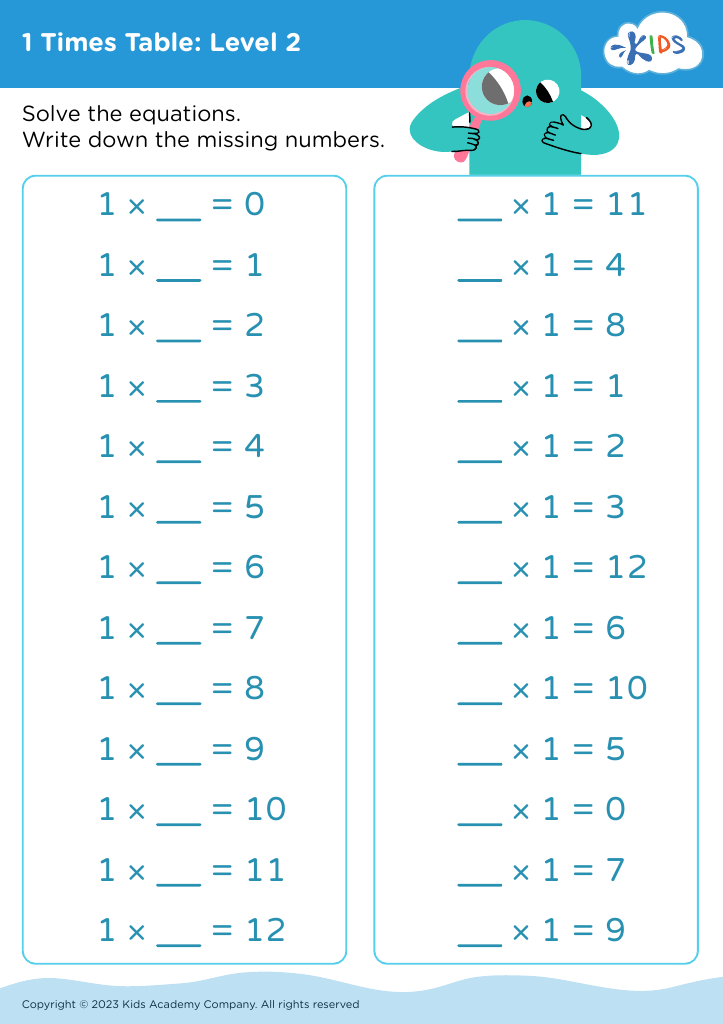
Welcome to our comprehensive resource on understanding times tables for children aged 3-9! This collection of normal worksheets is designed to make learning multiplication fun and engaging. Our age-appropriate worksheets encourage young learners to grasp essential math concepts through interactive activities and vibrant illustrations. With a variety of exercises tailored to different skill levels, children will build a solid foundation in multiplication, enhancing their confidence and arithmetic abilities. Whether at home or in the classroom, these worksheets provide an excellent platform for mastering times tables. Explore our engaging content and empower your child’s mathematical journey today!
Favorites
With answer key
Interactive
Join Kids Academy for Free
Who is primarily going to use this learning content?





.jpg)


Understanding times tables is essential for children aged 3-9 as it lays the foundation for their further development in mathematics. For parents and teachers, cultivating this understanding is crucial for several reasons.
Firstly, mastering times tables enhances children’s number fluency, which is vital for problem-solving and mental math. It helps them confidently tackle basic arithmetic, pivotal for day-to-day life and more complex math concepts later on.
Secondly, early exposure to times tables promotes a positive attitude towards math. When kids grasp these concepts early, they are less likely to develop a math anxiety and more likely to engage enthusiastically with the subject.
Additionally, understanding times tables assists in cognitive development. Recognizing patterns and relationships among numbers fosters critical thinking skills. Children learn how to connect different aspects of math, which ultimately enriches their overall intelligence and reasoning abilities.
Furthermore, this foundational skill is linked to academic performance. A solid grounding in multiplication contributes to success in other subjects, including science and technology.
Ultimately, encouraging a strong understanding of times tables during these formative years supports lifelong learning, equipping children with tools they need for academic achievement and everyday problem-solving.








