Visual discrimination skills Normal Worksheets for Ages 3-9
5 filtered results
-
From - To
Enhance your child's visual discrimination skills with our expertly designed worksheets for ages 3-9 at Kids Academy! These engaging activities help children identify differences in shapes, sizes, patterns, and colors—crucial skills for reading and math development. Our worksheets foster attention to detail, cognitive growth, and problem-solving abilities through fun games and exercises. Perfect for parents and educators, these resources support early learning in an interactive and enjoyable way. Visit our website to explore our range of printable worksheets and give your child the tools they need for academic success and confidence.
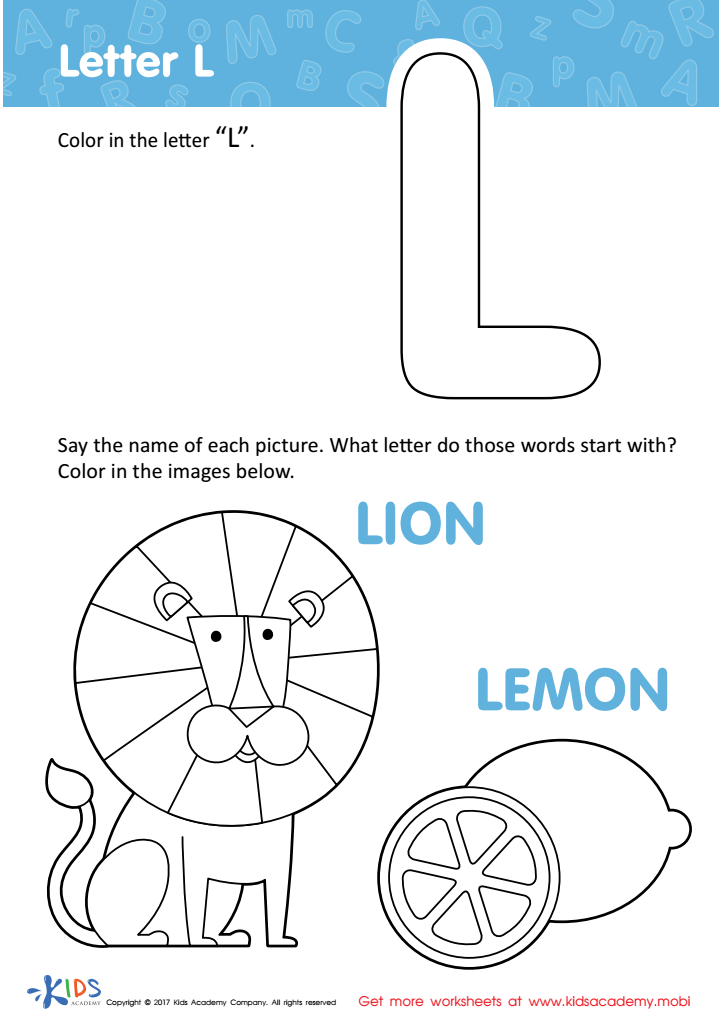
Letter L Coloring Sheet
 Assign to My Students
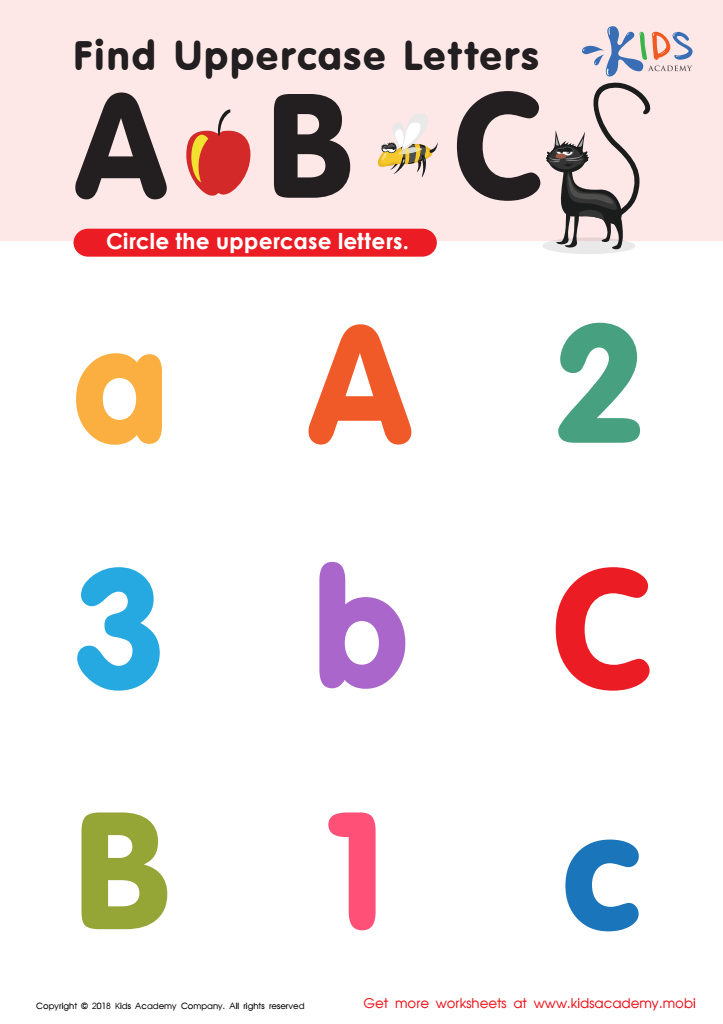
Find Uppercase Letters A, B, and C Worksheet
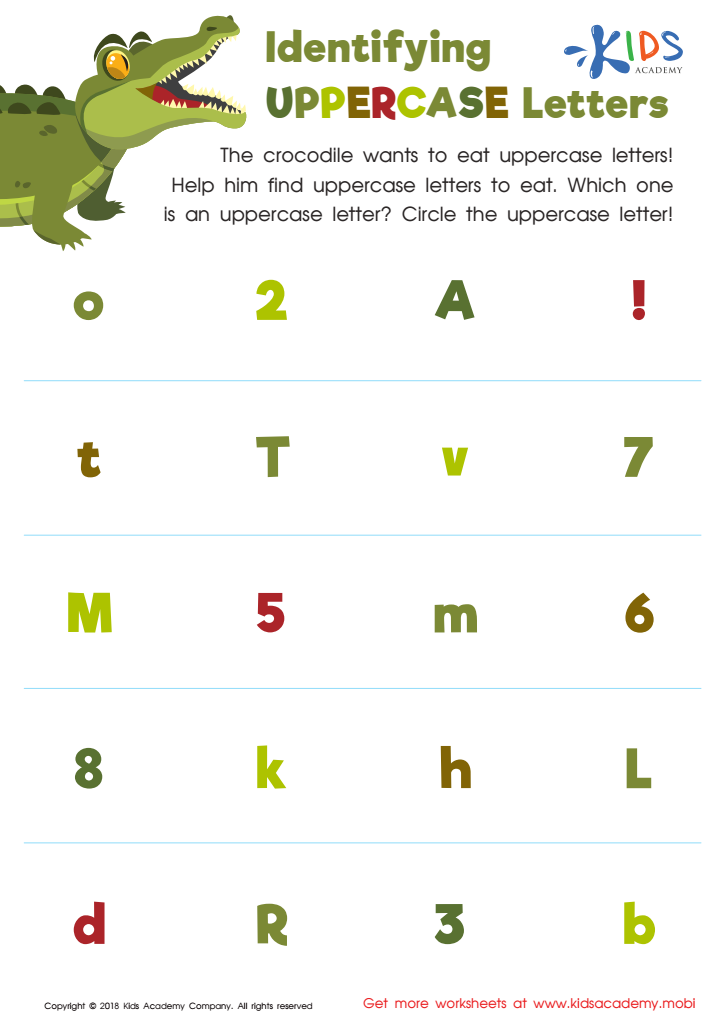
Identifying Uppercase Letters Worksheet
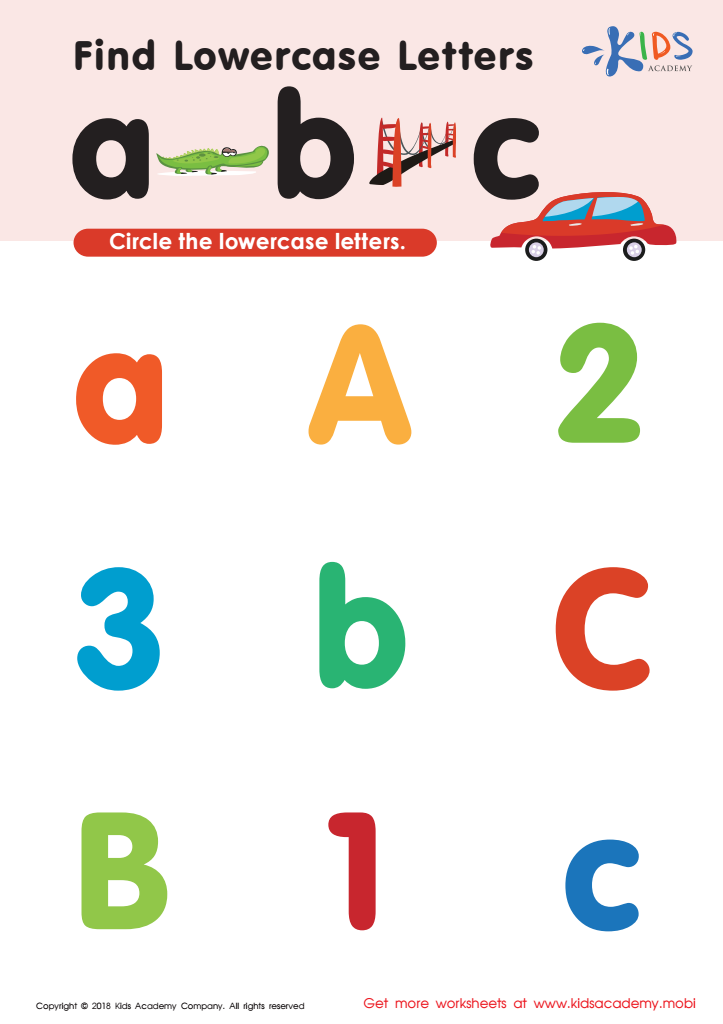
Find lowercase letters a b c Worksheet
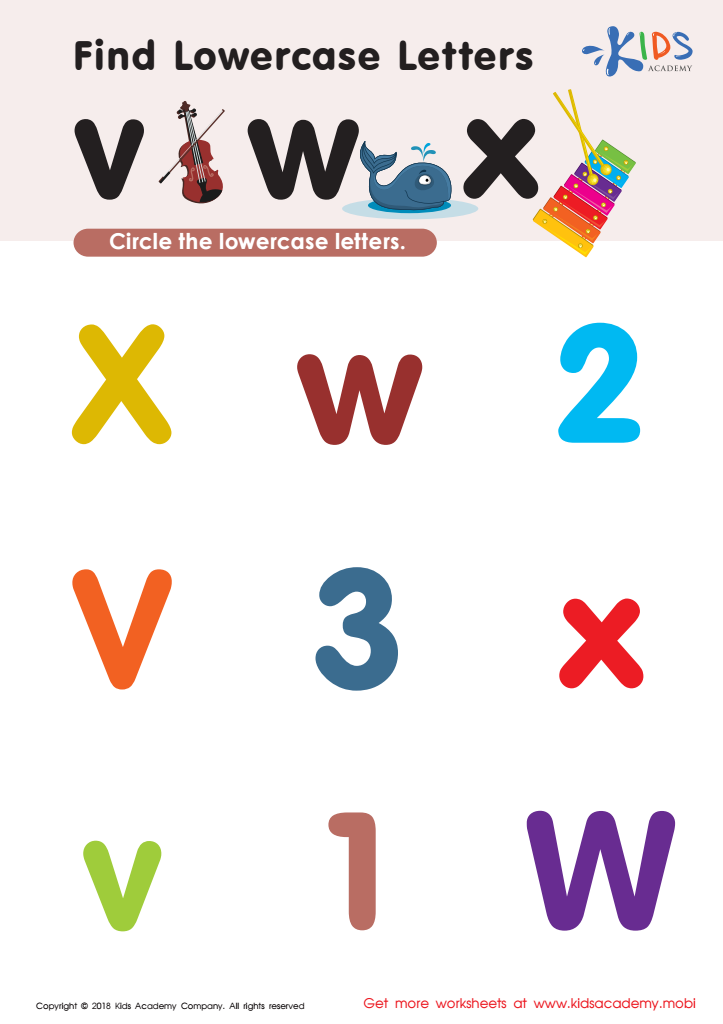
Find Lowercase Letters v w x Worksheet








Visual discrimination skills are crucial during the developmental years of children aged 3-9 as they can significantly influence a child's academic success and daily functioning. Parents and teachers should prioritize these skills to ensure a strong foundation for learning.
Firstly, visual discrimination, which is the ability to differentiate between different shapes, patterns, letters, and numbers, lays the groundwork for essential academic skills. For instance, distinguishing between similar-looking letters like 'b' and 'd' is critical for reading and writing proficiency. Strong visual discrimination abilities help children avoid confusion, leading to better reading fluency and comprehension.
Moreover, these skills are vital for problem-solving and critical thinking. Tasks like puzzles, sorting objects, and recognizing sequences boost cognitive development and enhance a child’s ability to analyze and interpret visual information accurately. These skills are indirectly related to mathematical abilities as well, helping in understanding concepts of shapes, sizes, patterns, and numerical arrangements.
From a social standpoint, well-developed visual discrimination helps children navigate their environments more safely and confidently. They become adept at recognizing faces, reading facial expressions, and understanding visual cues in everyday interactions, promoting better social integration and communication.
Therefore, fostering strong visual discrimination skills at this age sets children up for academic achievement and important life skills, making it something that all parents and teachers should actively support.








