Visual interpretation Normal Worksheets for Ages 3-9
5 filtered results
-
From - To
Explore our expertly crafted Visual Interpretation Normal Worksheets designed for children ages 3-9. These engaging activities aim to enhance essential learning skills by focusing on visual discrimination, memory, and critical thinking. By interpreting pictures, shapes, and patterns, kids improve their observation and comprehension abilities in a fun, interactive way. Each worksheet is tailored to captivate young learners’ attention and foster accurate visual analysis, crucial for academic success. Perfect for both classroom use and homeschooling, these printable resources make it easy to support your child's education in a stimulating environment. Unlock their potential today with Kids Academy!
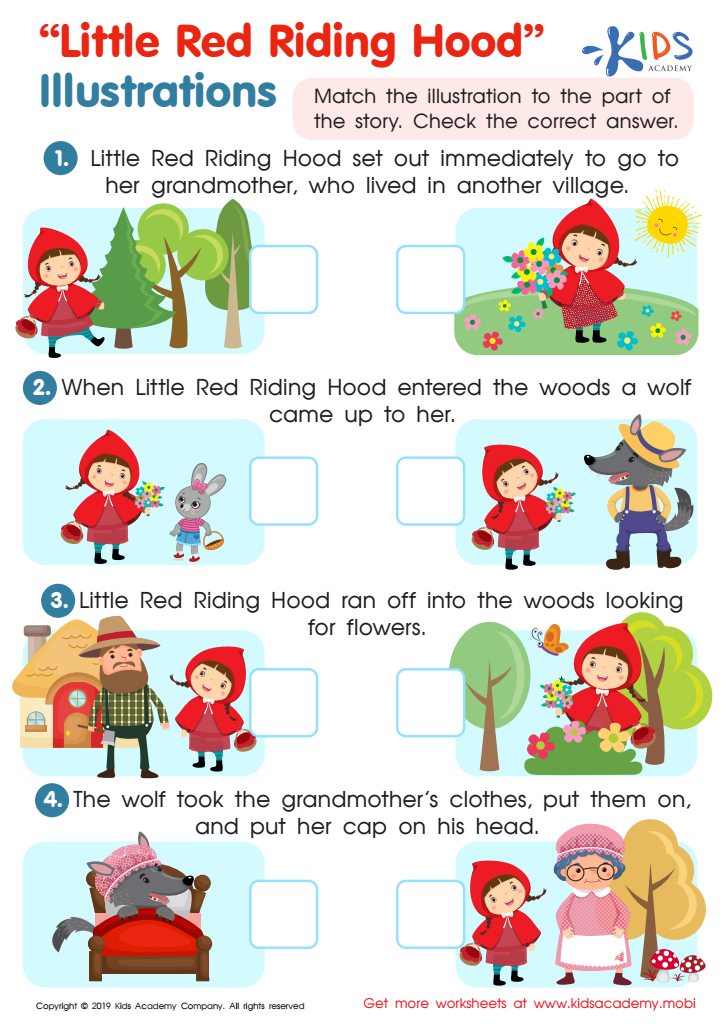
Little Red Riding Hood: Illustrations Worksheet
 Assign to My Students
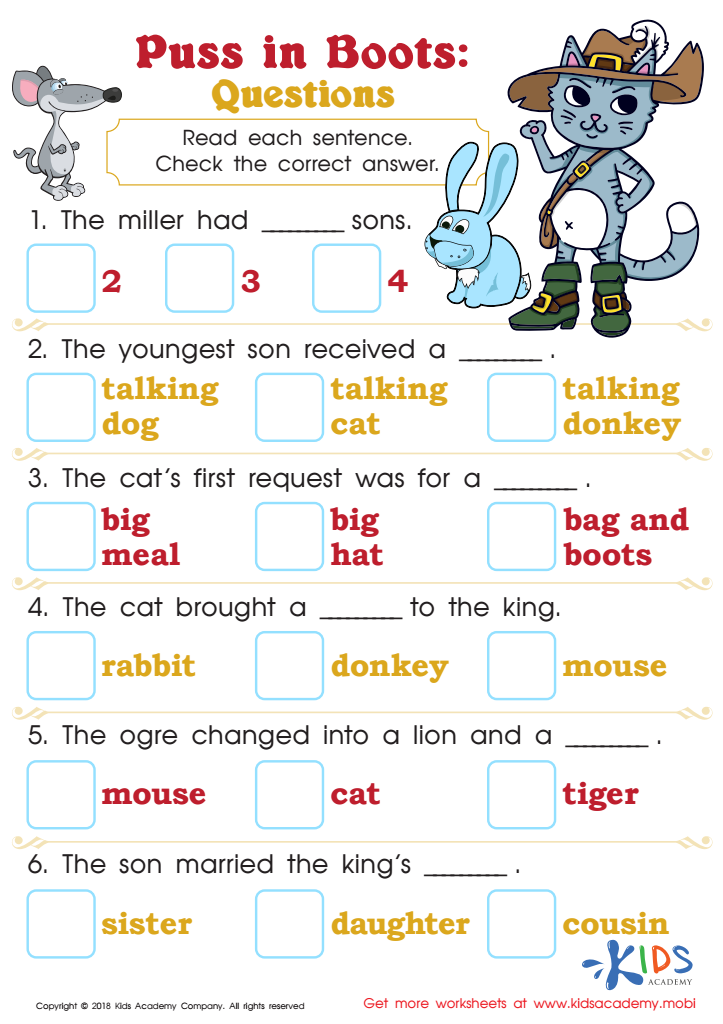
Puss in Boots: Questions Worksheet
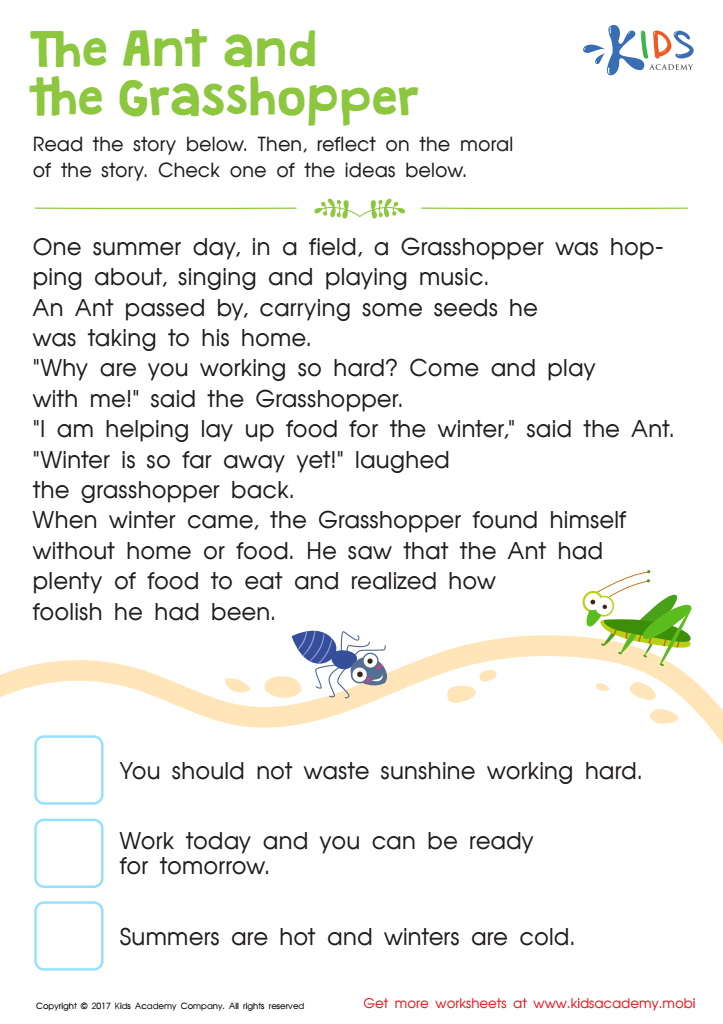
The Ant and The Grasshopper Printable
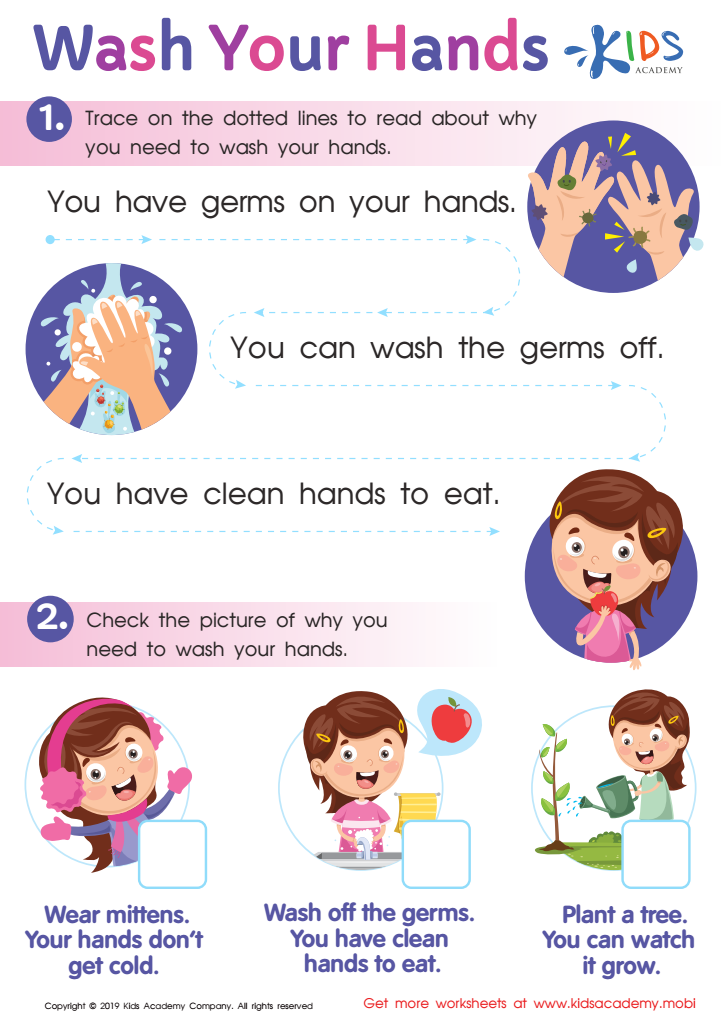
Wash Your Hands Worksheet
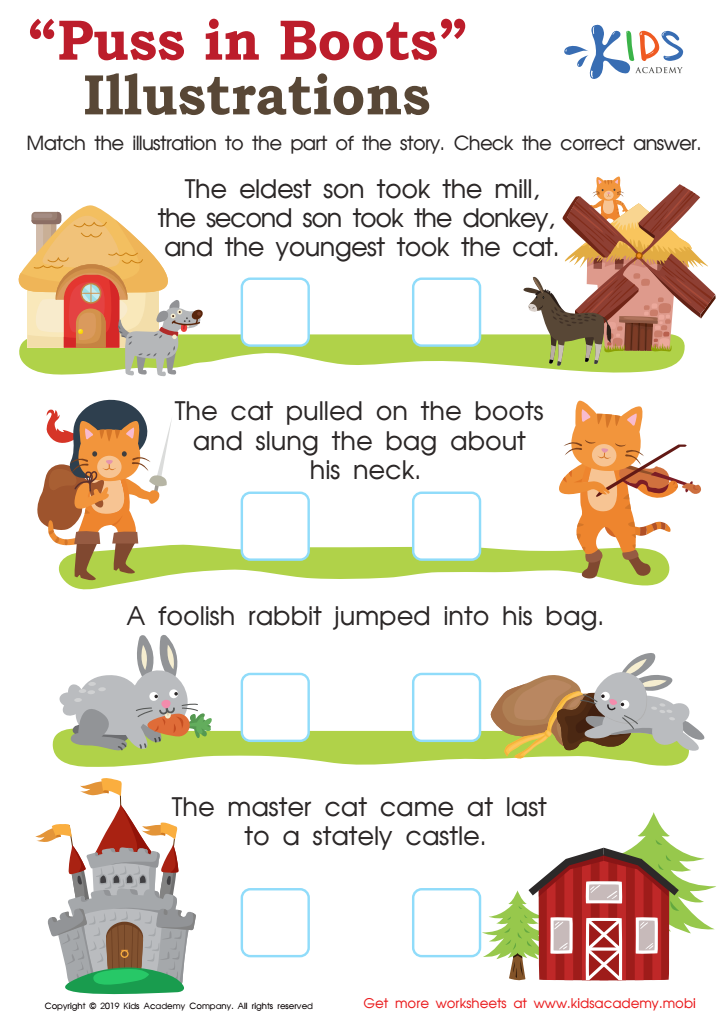
Puss in Boots Illustrations Worksheet








Parents and teachers should care about visual interpretation for children ages 3-9 because this skill is crucial for early cognitive, academic, and social development. Visual interpretation—the ability to see, understand, and analyze visual information—helps young children make sense of the world around them. At this age, children are developing critical foundational skills such as literacy and numeracy, both of which are closely linked to their ability to interpret visual information from books, pictures, and other visual media.
In terms of cognitive development, strong visual interpretation skills enhance a child’s problem-solving abilities and improve their memory and attention span. Academically, children learn to extract information and meaning from written texts as well as from graphs, charts, and diagrams, laying the groundwork for success in subjects like reading, math, and science. Socially, being able to read and respond to visual cues such as facial expressions and body language is essential for effective communication and relationship-building.
Neglecting the development of visual interpretation skills can put children at a disadvantage in school settings and daily life. By focusing on activities that enhance visual skills—such as puzzles, drawing, and interactive reading—parents and teachers can help ensure that children develop the comprehensive abilities they need for future success.








