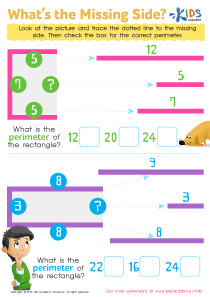
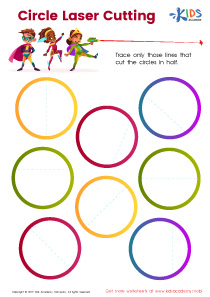
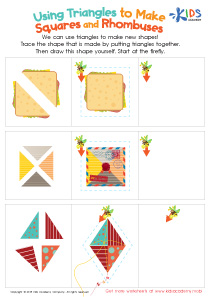
Reading comprehension Normal 2D Shapes Worksheets for Ages 3-9
4 filtered results
-
From - To
Discover our engaging Reading Comprehension Normal 2D Shapes Worksheets designed specifically for children ages 3-9! These worksheets not only introduce young learners to fundamental 2D shapes, such as circles, squares, and triangles, but also enhance their reading skills through fun, interactive activities. Each worksheet combines shape identification with comprehension questions, enabling students to connect visual learning with critical thinking. Ideal for homeschooling or classroom use, our resource promotes early literacy and math skills in a playful and effective way. Help your child build confidence in reading and shape recognition with our colorful and educational worksheets today!
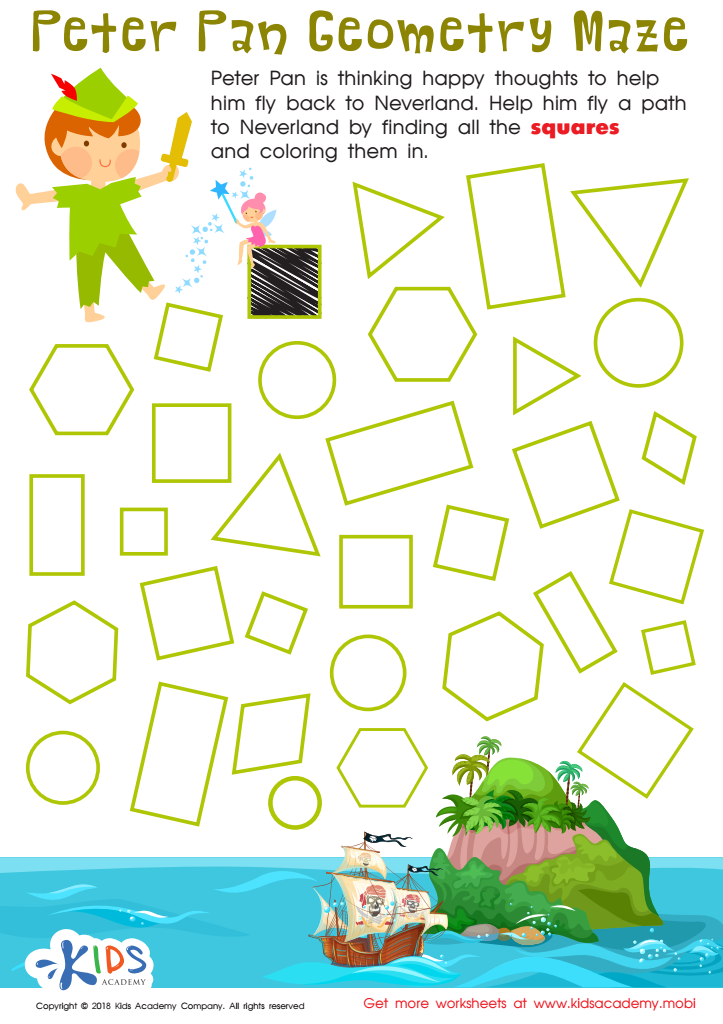
Peter Pan Worksheet
 Assign to My Students











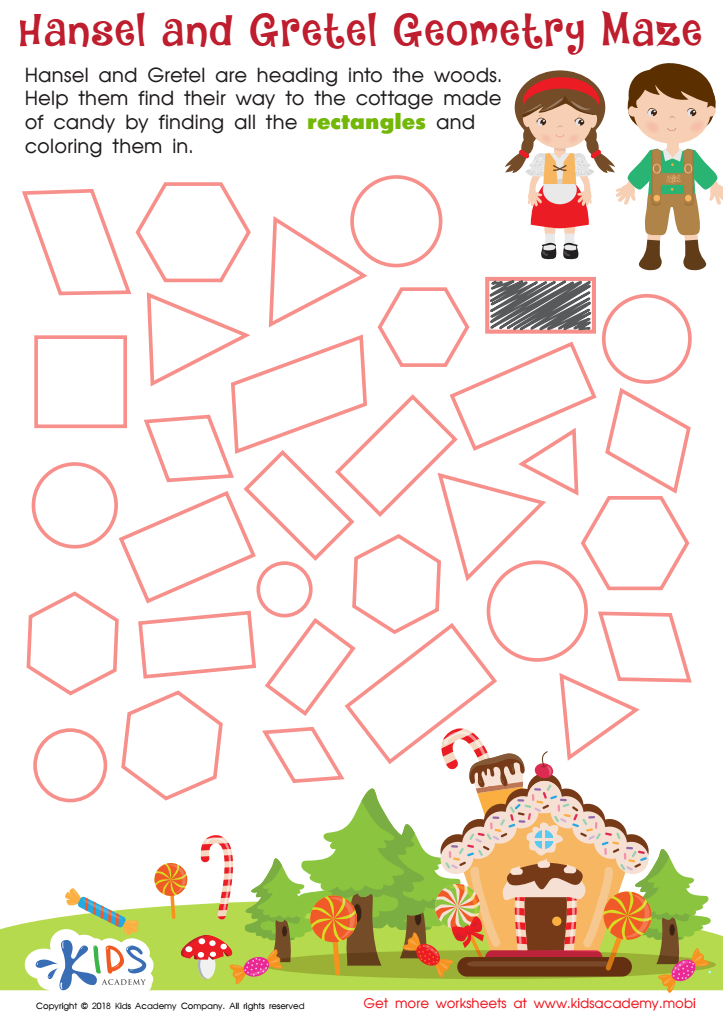
Hansel and Gretel Geometry Maze Worksheet
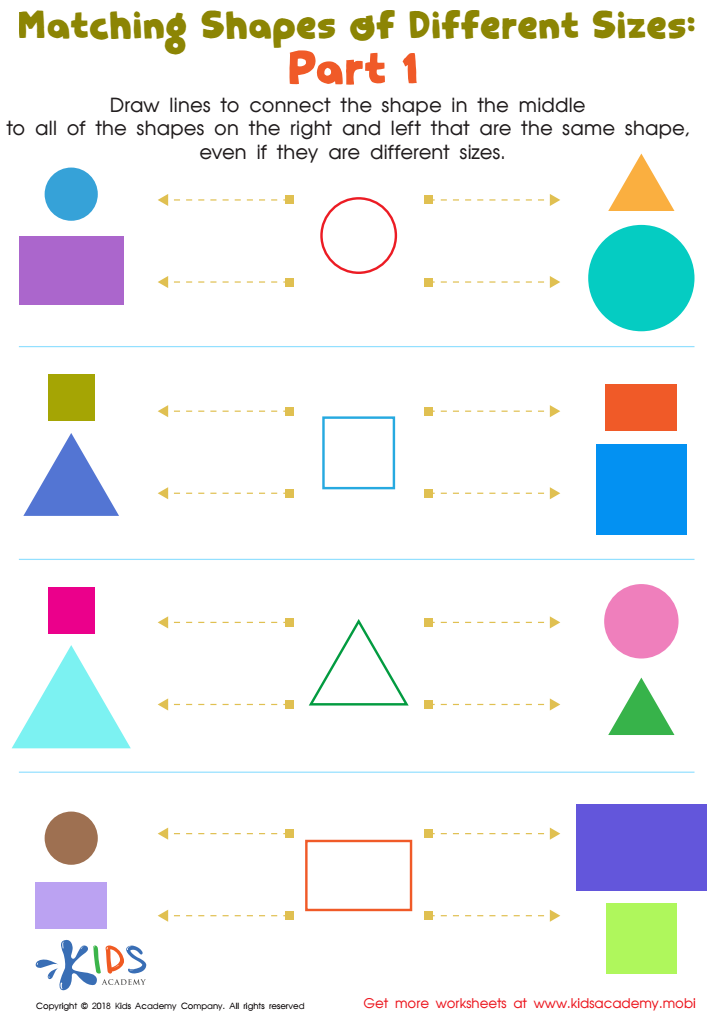
Geometry: part 1 Worksheet
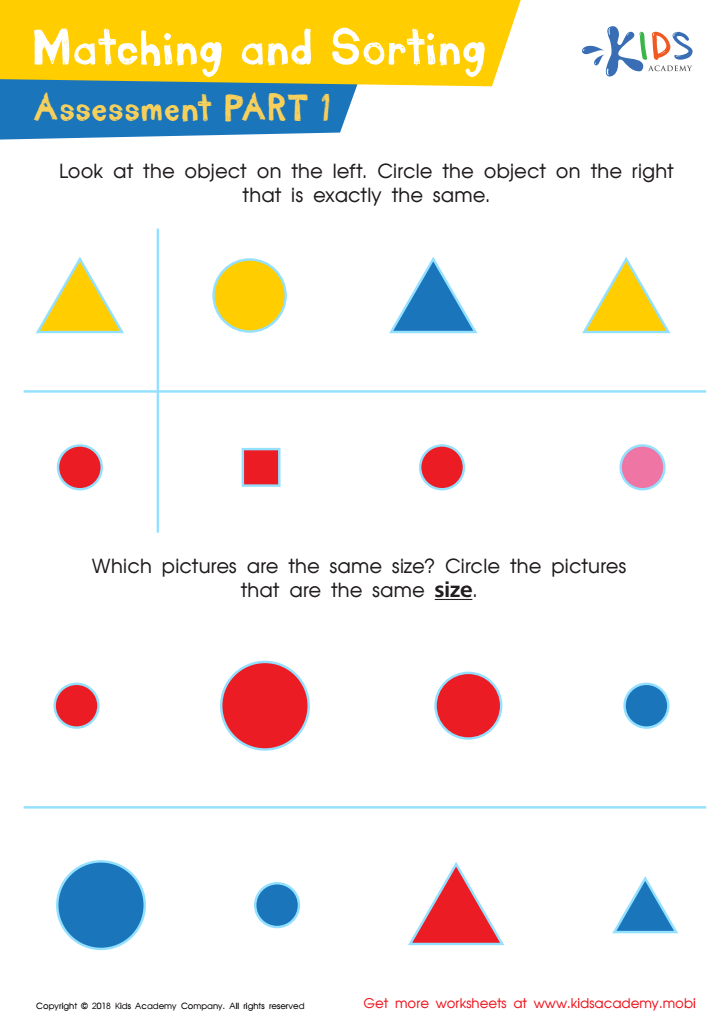
Matching and Sorting for Kindergarten: Assessment 1 Worksheet








Reading comprehension and understanding normal 2D shapes are foundational skills for children aged 3-9 that support broader learning and development. Parents and teachers should prioritize these areas as they are critical for children's cognitive, social, and academic success.
Reading comprehension helps children make meaning from texts, fostering critical thinking and creativity. Engaging in reading activities enhances vocabulary, reasoning, and communication skills, enabling children to express themselves clearly. As they interact with stories, kids also cultivate empathy and social awareness.
Understanding normal 2D shapes, such as squares, circles, and triangles, is equally essential. These geometric concepts form the basis for spatial reasoning, which is crucial in subjects like mathematics and science. Recognizing shapes promotes critical skills such as pattern recognition, problem-solving, and logical thinking.
When parents and teachers collaborate in fostering these skills, they create a comprehensive learning environment that empowers children. Building a strong foundation in reading and shape recognition will not only enhance children's academic performance but also prepare them for real-world applications, making these skills invaluable throughout their lives. By prioritizing these abilities, adults can ensure that children develop a lifelong love for learning and the confidence to tackle more complex concepts in the future.