Hand-eye Coordination Normal Addition & Subtraction Worksheets for Ages 3-9
3 filtered results
-
From - To
Enhance your child's math skills with our "Hand-eye Coordination Normal Addition & Subtraction Worksheets" designed for ages 3-9. These engaging and educational worksheets help young learners develop essential hand-eye coordination while mastering basic addition and subtraction. Featuring fun and interactive activities, kids will improve their numerical fluency and fine motor skills in an enjoyable way. Ideal for early graders, our worksheets provide a balanced mix of challenges tailored to various skill levels, ensuring gradual progression. Visit Kids Academy for these invaluable resources to support your child's academic growth and hand-eye coordination development.
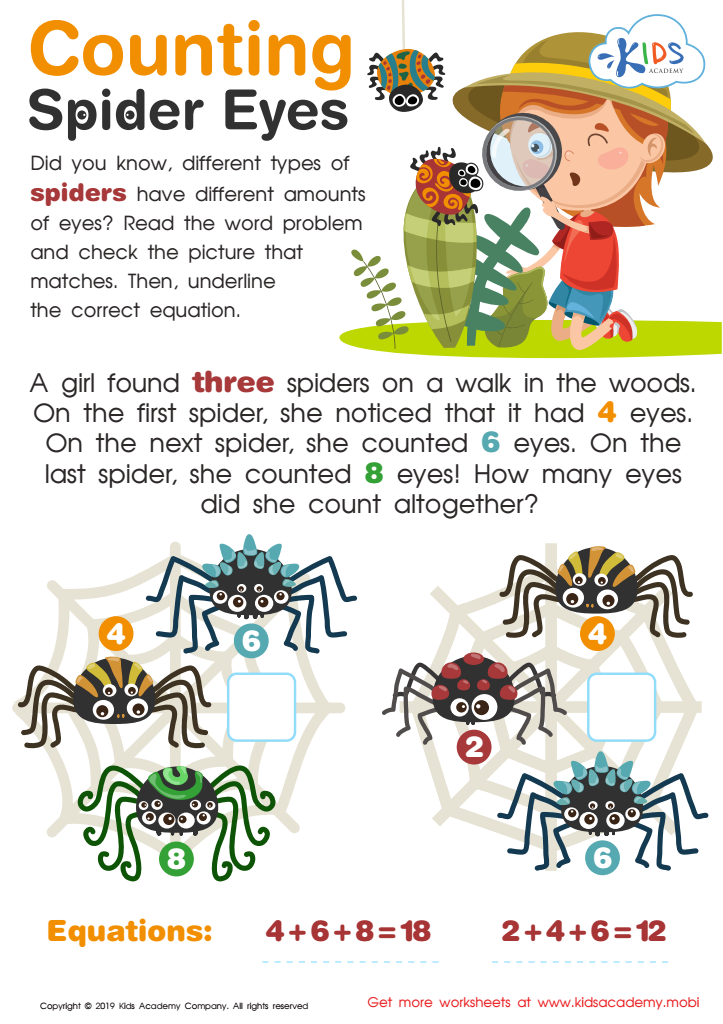
Counting Spider Eyes Worksheet
 Assign to My Students
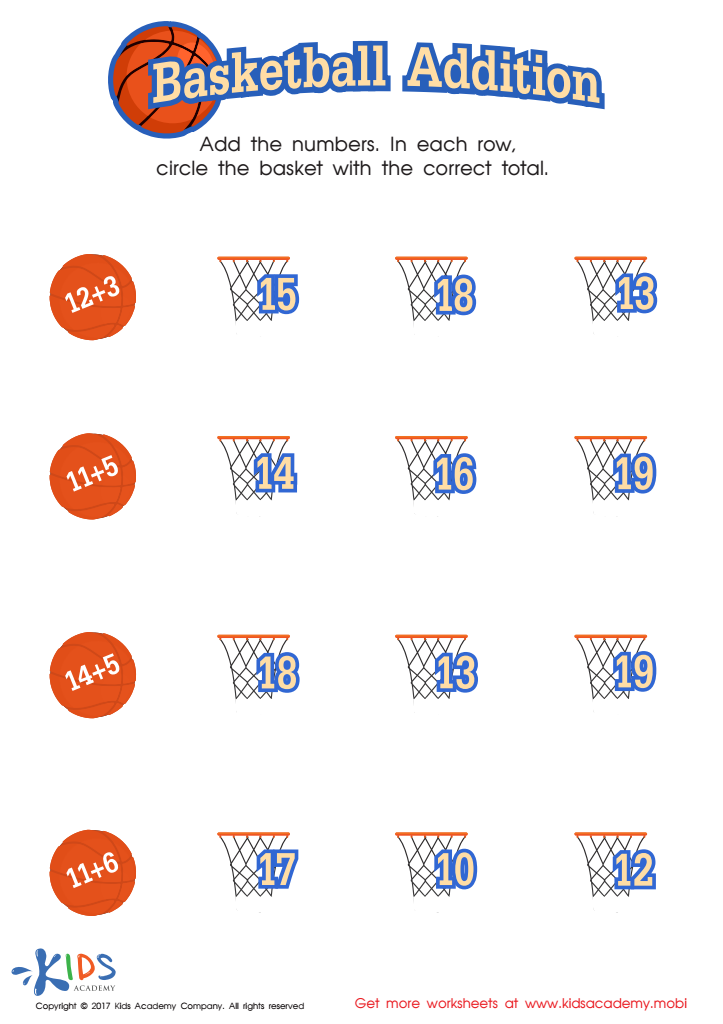
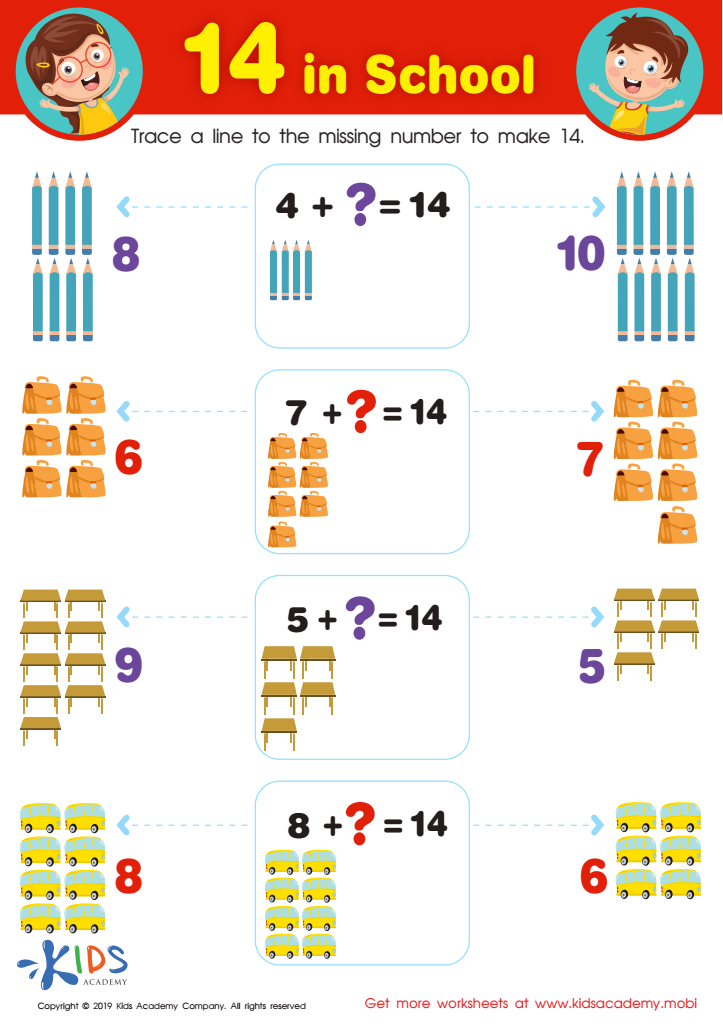
14 in School Worksheet








Hand-eye coordination is vital for children aged 3-9 as it is foundational for numerous developmental milestones and daily skills. In this age range, children are mastering basic academic concepts such as addition and subtraction, and hand-eye coordination plays a critical role in this learning process. When a child writes numbers, counts objects, or arranges items during math exercises, they rely heavily on the ability to align their physical movements with what their eyes are seeing.
Improving hand-eye coordination through normal addition and subtraction activities facilitates better handwriting, which is crucial for clear and effective communication as they progress in school. It also aids in developing fine motor skills, which are essential for tasks such as cutting, buttoning clothes, and tying shoelaces—a practical aspect of growing independence.
Moreover, well-developed hand-eye coordination can enhance children's engagement in sports and recreational activities, contributing to a healthy lifestyle. Mathematics itself, through pattern recognition and counting movements (like jumping while counting or grouping objects), contributes to this coordination. Thus, emphasizing hand-eye coordination helps children build a strong academic foundation while supporting their holistic physical and cognitive growth. Therefore, parents and teachers should prioritize nurturing these skills to ensure well-rounded development and ease in learning future, more complex tasks.








