Logical thinking development Normal Addition & Subtraction Worksheets for Ages 3-9
4 filtered results
-
From - To
Enhance your child's logical thinking skills with our specially designed Normal Addition & Subtraction Worksheets for ages 3-9. These worksheets are crafted to make learning math an enjoyable and engaging experience, promoting critical thinking and problem-solving abilities. Each activity focuses on foundational addition and subtraction concepts, allowing kids to grasp these essential skills while stimulating their cognitive development. Ideal for at-home learning or as classroom resources, our worksheets cater to various learning styles and paces, ensuring every child can thrive. Get ready to nurture your young learner's math proficiency and logical reasoning with these interactive and fun-filled worksheets!
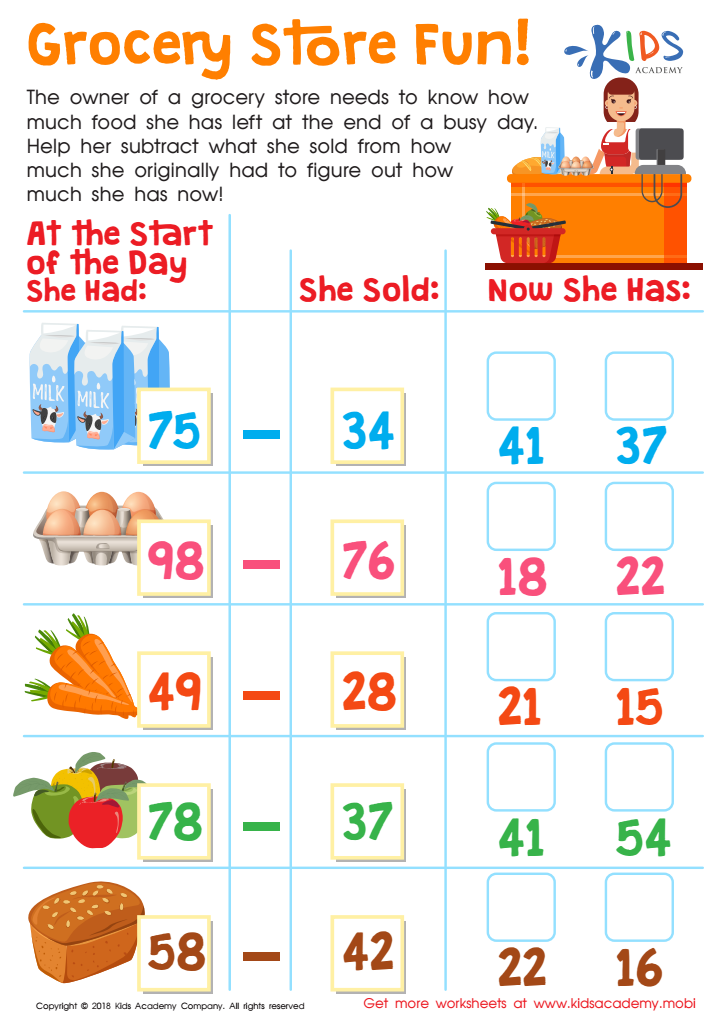
Grocery Store Fun! Worksheet
 Assign to My Students
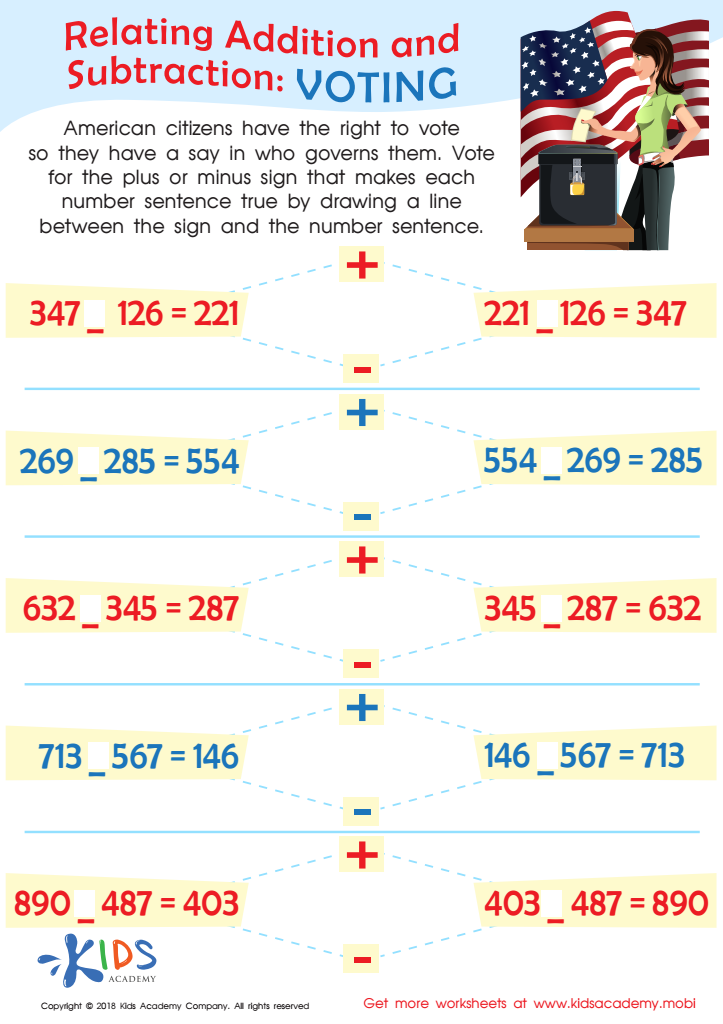
Voting Worksheet
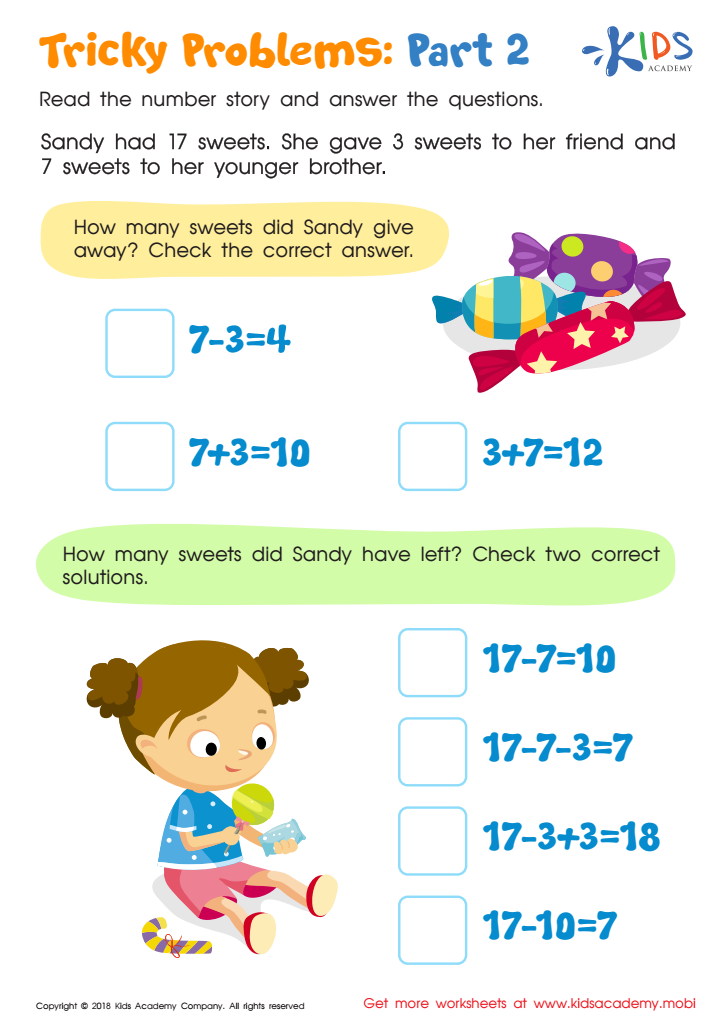
Tricky Problems Worksheet: Part 2
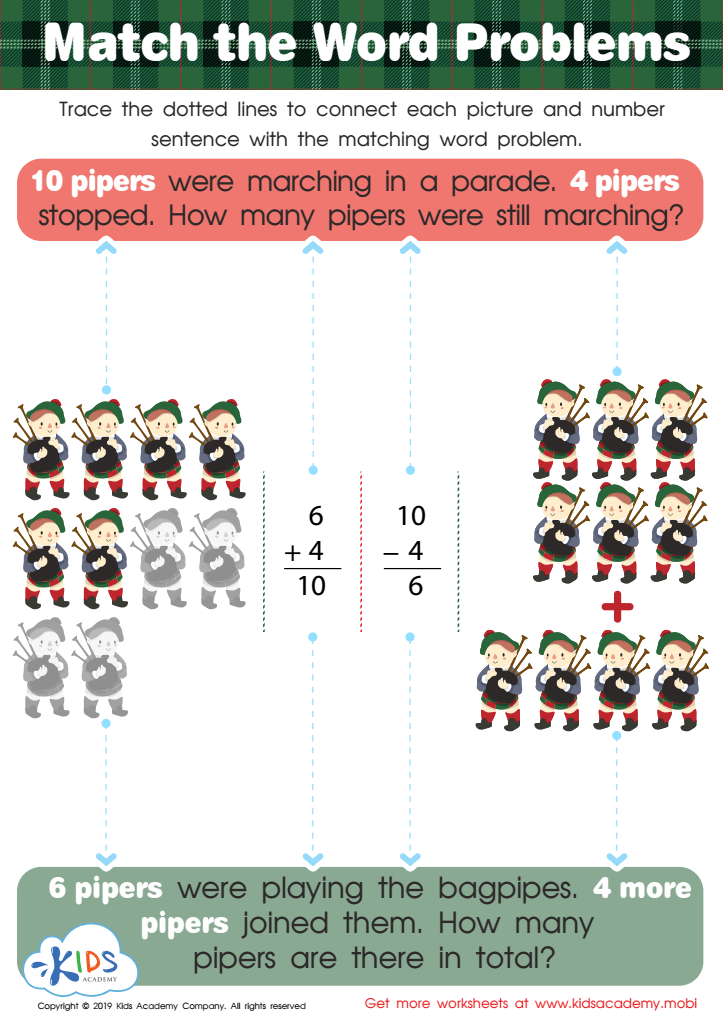
Match the Word Problems Worksheet








Logical thinking development and the mastery of normal addition and subtraction are foundational skills for children ages 3-9, serving as essential building blocks for their cognitive growth. Parents and teachers should prioritize these skills because they directly impact a child’s problem-solving abilities and academic success.
Logical thinking encourages children to reason, analyze patterns, and make connections, helping them approach challenges both in mathematics and everyday situations. These critical thinking skills enhance their ability to understand concepts, ask questions, and improve decision-making, facilitating lifelong learning.
Normal addition and subtraction introduce early numeracy, fostering competence and confidence in mathematics. Understanding these concepts promotes mathematical fluency, allowing children to tackle more complex operations as they advance in their education. Establishing a strong numerical foundation also minimizes math anxiety, a common barrier to success in STEM subjects.
Moreover, these skills enhance social development, as children learn to collaborate, share solutions, and celebrate breakthroughs. When guardians and educators engage in activities that promote logical thinking and arithmetic skills, they empower children to navigate their world more effectively, igniting curiosity and boosting self-esteem. Ultimately, prioritizing these areas nurtures well-rounded individuals equipped for academic challenges and everyday problem-solving.








