Basic Math Skills Normal Addition Worksheets for Ages 3-9
5 filtered results
Difficulty Level
Grade
Age
-
From - To
Subject
Activity
Standards
Discover engaging Basic Math Skills Normal Addition Worksheets designed for children aged 3-9! Our carefully crafted worksheets focus on building foundational math skills through fun exercises and colorful illustrations. Each worksheet emphasizes essential addition concepts, helping young learners practice simple sums while enhancing their problem-solving abilities. Perfect for both classroom activities and at-home learning, these worksheets are tailored to spark curiosity and foster a love of math. Parents and teachers will appreciate the structured format that encourages progressive learning. Join us in making math enjoyable and accessible for early learners—explore our collection today and watch your child’s confidence soar!
Favorites
With answer key
Interactive
Voting Worksheet
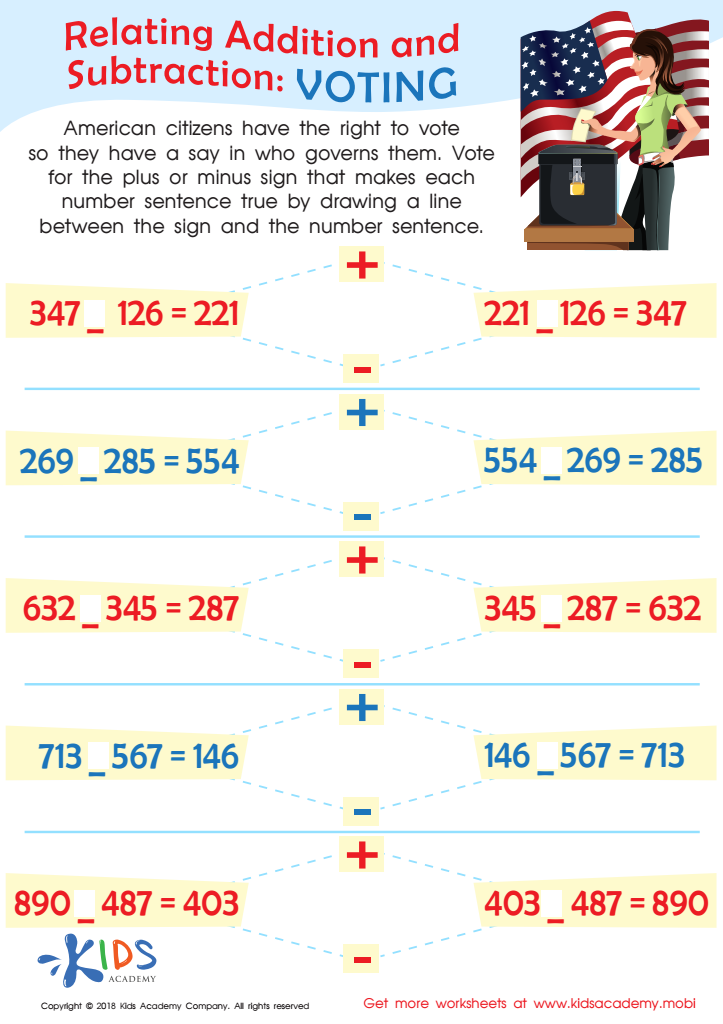
This worksheet combines Social Studies and Math, teaching kids the democratic concept of voting. Guide learners to observe the problem, and decide if it needs a plus or minus. They "vote" for the correct answer by drawing a line from the problem to the correct operation symbol. Tally up the votes to check the answers!
 Assign to My Students
Voting Worksheet
Worksheet
Valentines Day Word Problem Worksheet
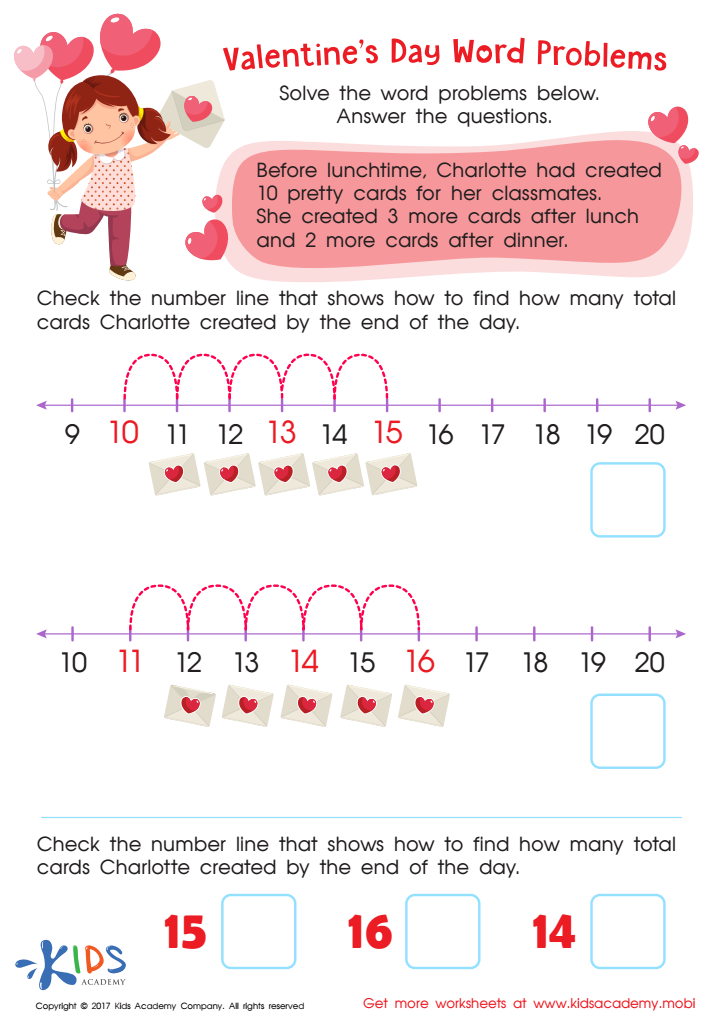
This Valentine's Day worksheet will help your child practice using a number line to solve an addition problem. It's a great way to boost confidence and make solving word problems a breeze.
Valentines Day Word Problem Worksheet
Worksheet
Adding Numbers: Classifying Animals Worksheet
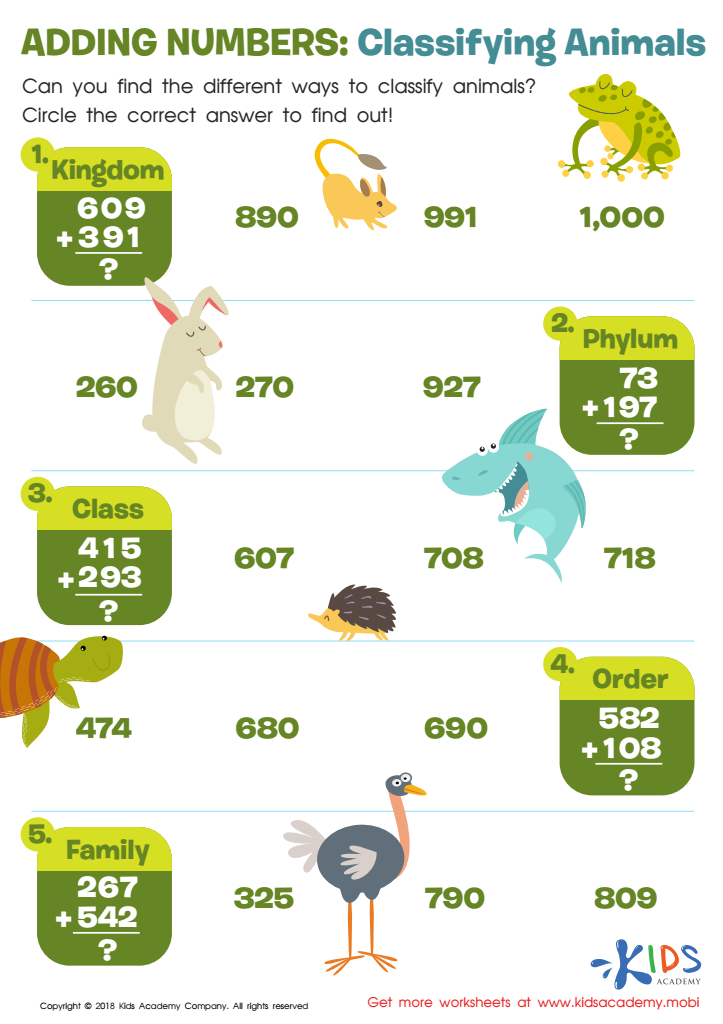
Your kids can learn to classify animals in Biology. This worksheet helps them do this by solving 5 equations. Circle the right answer to complete the task.
Adding Numbers: Classifying Animals Worksheet
Worksheet
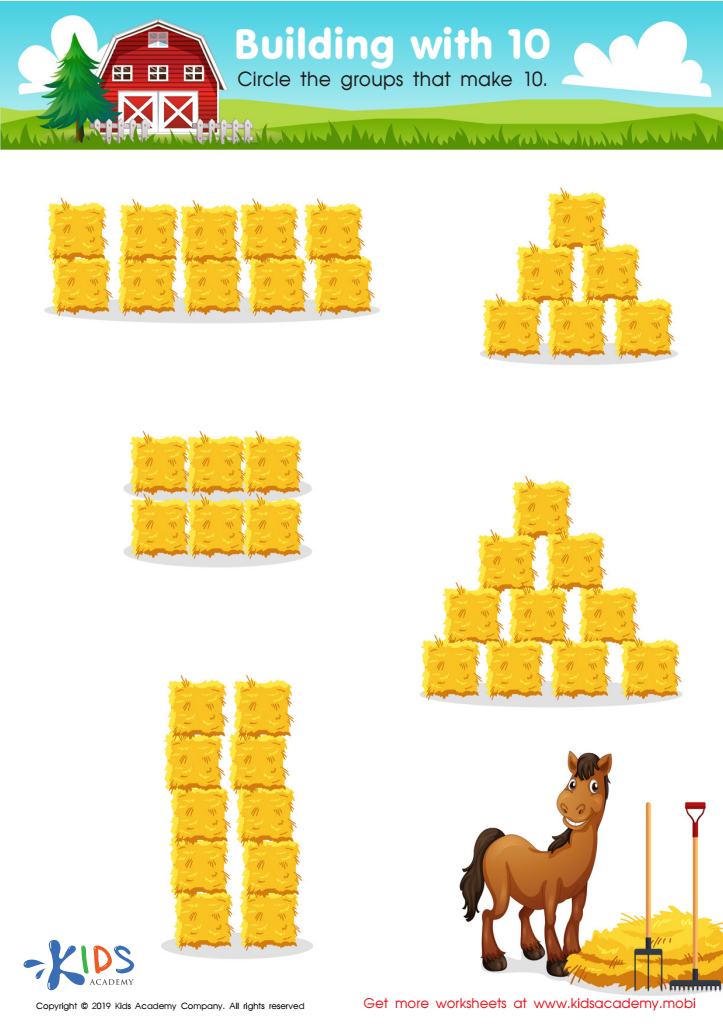
Building with 10 Worksheet
Counting numbers can be simple with this worksheet: Ask your kids to count the stacks of objects, ensure accuracy with your help, then circle the ones of ten. With practice and guidance, your children will soon become counting pros!
Building with 10 Worksheet
Worksheet
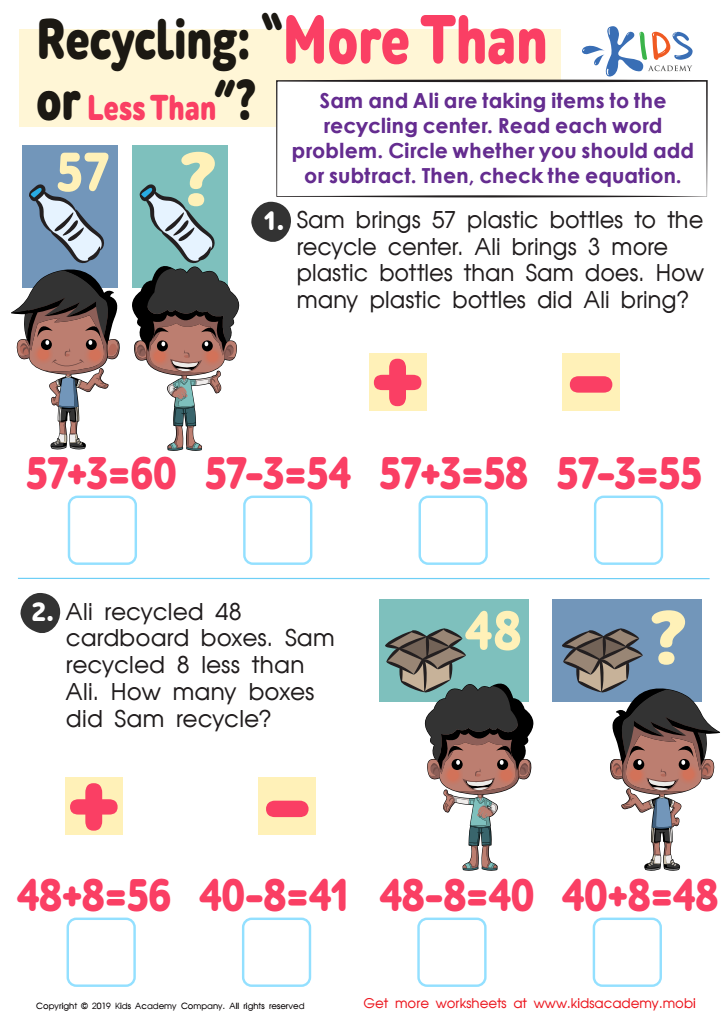
Recycling - More or Less Worksheet
Your child can compare numbers and solve word problems with this free worksheet. Help them understand what's being asked as Sam and Ali take items to the recycling center. They can choose the correct equation to match the word problem and apply their skills in reading and pulling out the appropriate information.
Recycling - More or Less Worksheet
Worksheet
Join Kids Academy for Free
Who is primarily going to use this learning content?








Parents and teachers should prioritize basic math skills, particularly normal addition, for children aged 3-9 because these foundational skills pave the way for future learning and academic success. Mastering addition introduces children to critical thinking and problem-solving strategies, fostering their ability to understand relationships between numbers. Business insights reveal that children who grasp these concepts early are better prepared for complex mathematical ideas later on.
Practicing addition in early years enhances cognitive development and is linked to increased confidence in academic environments. Engaging children in addition through fun and interactive methods can make math enjoyable, reducing math anxiety and fostering a positive attitude towards the subject. Additionally, real-life applications of addition, such as counting objects or sharing snacks, help children to connect math with everyday experiences.
Furthermore, building a strong mathematical foundation supports children's overall educational journey. Early mastery of basic math can illuminate connections in various subjects, such as science and economics. Parents and teachers play a pivotal role in creating nurturing environments where curiosity thrives. By emphasizing the importance of addition, they equip children with essential tools that promote lifelong learning and critical quantitative skills, helping draw the road to structured, analytical thinking.