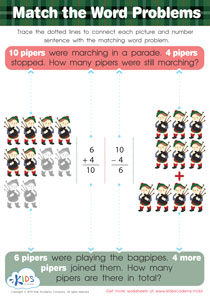
Mathematical reasoning Normal Addition Worksheets for Ages 3-9
4 filtered results
-
From - To
Our Mathematical Reasoning Normal Addition Worksheets for ages 3-9 are designed to provide a solid foundation in basic math skills. Tailored for young learners, these worksheets enhance problem-solving abilities and foster critical thinking. With engaging exercises that range from simple sums to more complex addition problems, children will strengthen their number sense and boost their confidence in mathematics. Perfect for classroom use or at-home practice, these worksheets support early math mastery and prepare children for more advanced concepts. Download now to help your child develop crucial mathematical skills in a fun and interactive way.
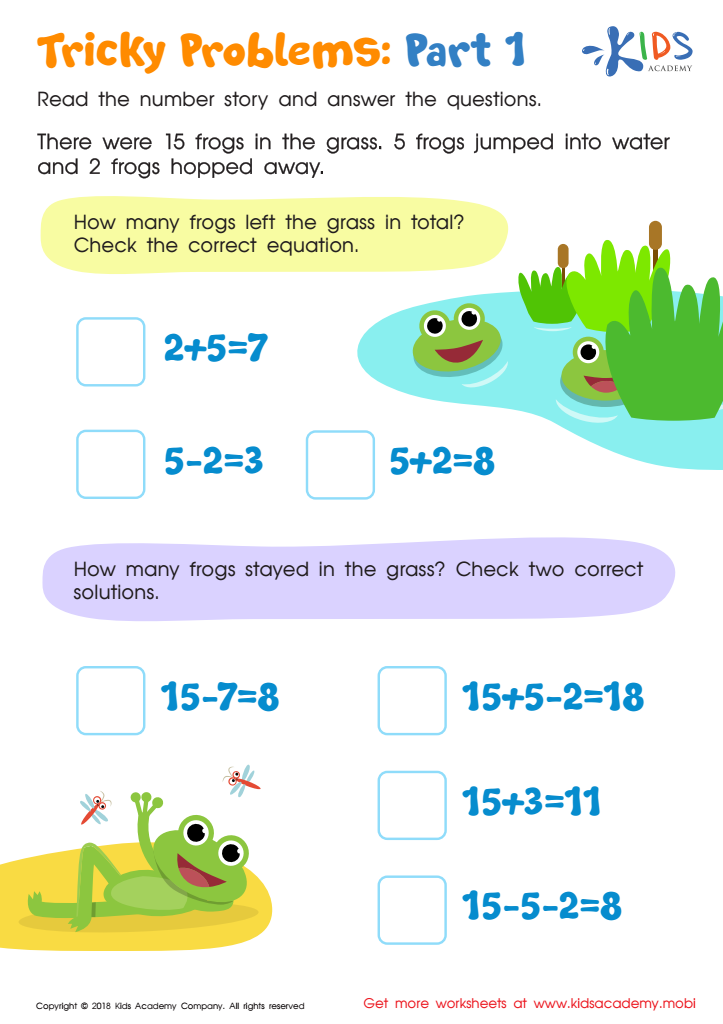
Tricky Problems Worksheet: Part 1
 Assign to My Students
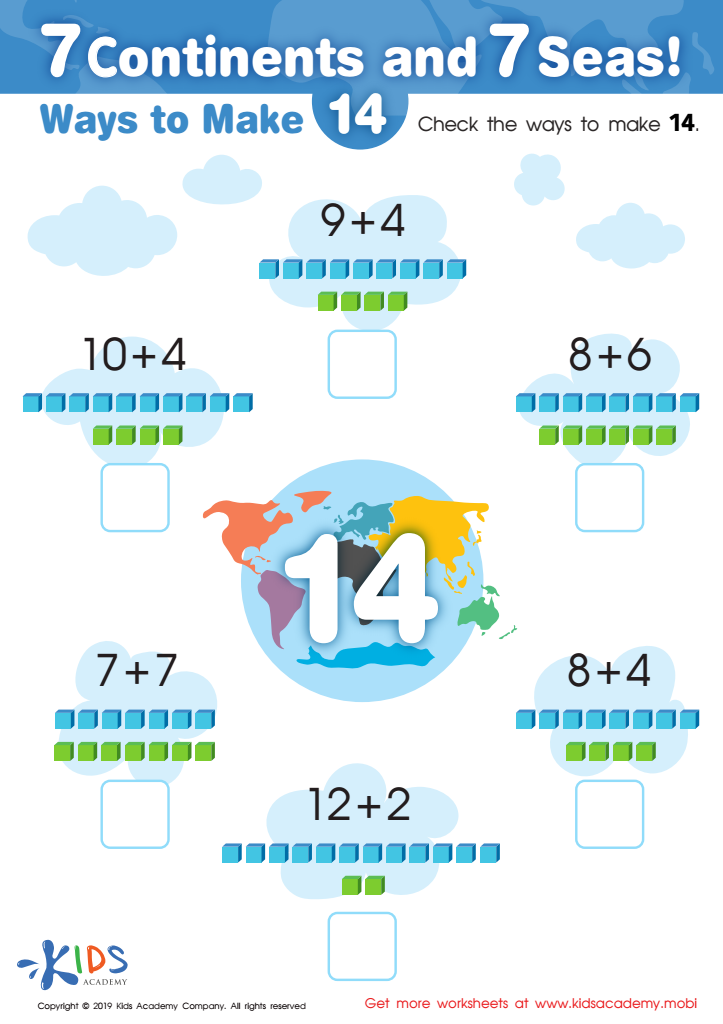
7 Continents and 7 Seas Worksheet
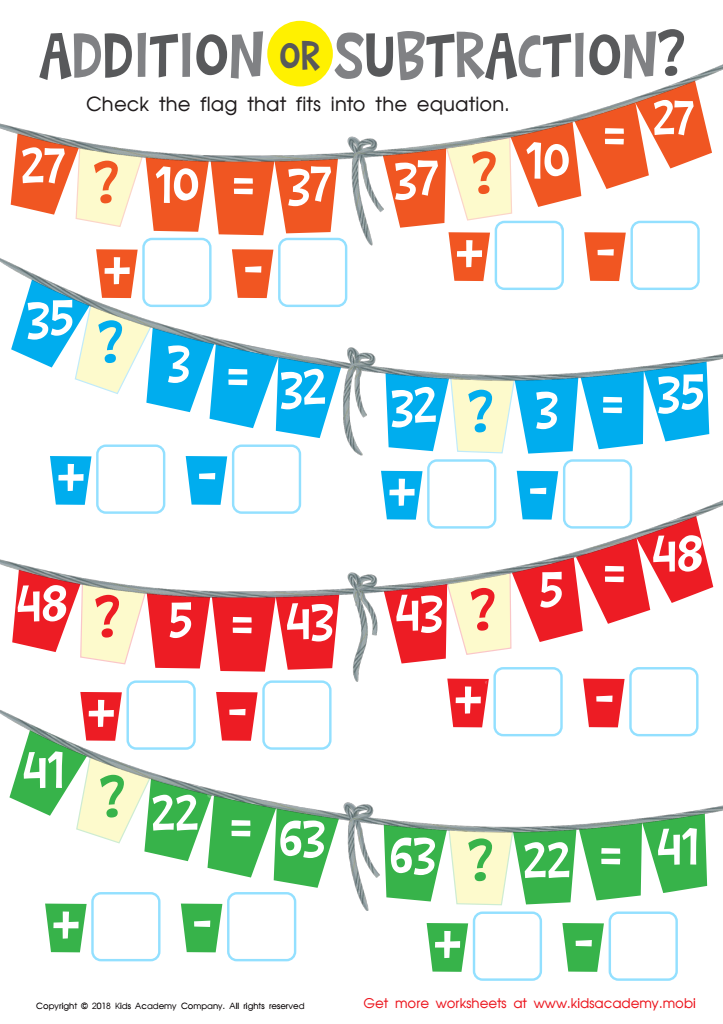
Addition or Subtraction? Worksheet
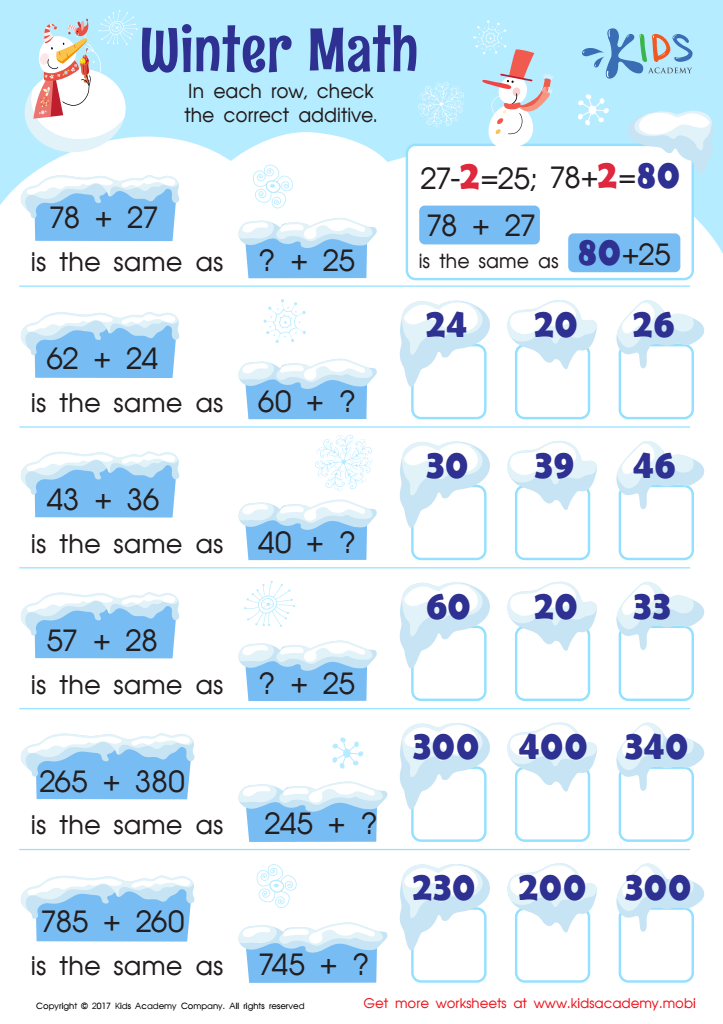
Free Addition Worksheet








Mathematical reasoning and simple addition are fundamental skills that significantly impact a child's cognitive development, making them crucial for ages 3-9. During these formative years, children's brains are exceptionally plastic, meaning they can absorb and retain large amounts of information effectively. Engaging in mathematical reasoning teaches children critical thinking, problem-solving skills, and logical reasoning, which are foundational not only for math but also for other subjects and everyday decision-making.
Normal addition is the entry point to a broader understanding of math. Mastery of basic addition helps children build confidence in their numerical abilities, laying the groundwork for more complex mathematical concepts later in their education, such as subtraction, multiplication, and division. Introducing these concepts early also nurtures a positive attitude toward math, countering the all-too-common math anxiety that can deter future learning.
For parents and teachers, prioritizing these skills fosters an environment that values curiosity and learning. By making math fun and accessible through practical activities and real-world applications, adults can show children the relevance of math in daily life. This early support is pivotal as it opens the doors to future academic success and everyday competence, giving children the tools they need to navigate the world intelligently and confidently.