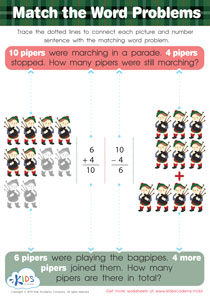
Subtraction practice Normal Addition Worksheets for Ages 3-9
3 filtered results
Difficulty Level
Grade
Age
-
From - To
Subject
Activity
Standards
Welcome to our Subtraction Practice Normal Addition Worksheets designed for children aged 3-9! This collection offers engaging and interactive worksheets that make learning subtraction fun and easy. Tailored to cater to various skill levels, our materials help young learners strengthen their subtraction abilities while reinforcing their overall math foundation. Through colorful illustrations and age-appropriate exercises, children can enjoy mastering subtraction at their own pace. Perfect for home or classroom use, these worksheets encourage independent learning, improving both confidence and competence in mathematics. Get started today, and watch your child become a subtraction whiz!
Favorites
With answer key
Interactive
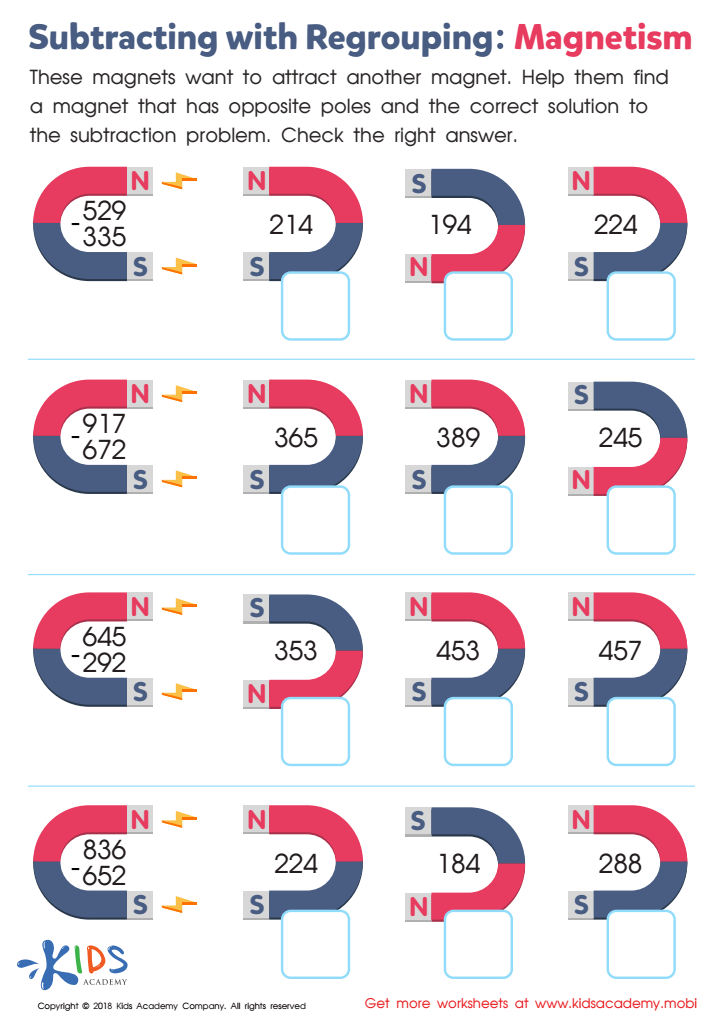
Subtracting with Regrouping: Magnetism Worksheet
Download Kids Academy's worksheet for a fun way to review science and math! Look at the magnet and remember opposites attract. Find another with opposite poles, then solve the problem on the left and check the solution against the magnet. Check the box next to the correct answer to complete this page.
 Assign to My Students
Subtracting with Regrouping: Magnetism Worksheet
Worksheet
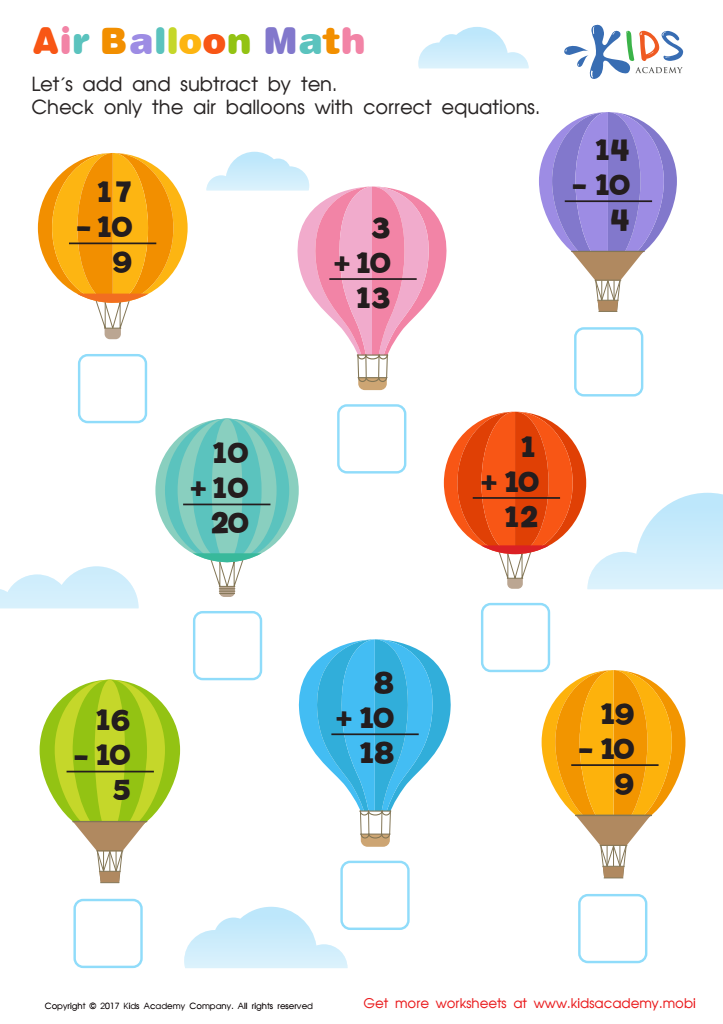
Air Balloon Math Worksheet
Revised:
Review your child's addition and subtraction skills with this fun worksheet. Featuring hot air balloons filled with math equations, help your child add or subtract by ten before ticking the boxes with the right answers. Working through the equations one-by-one is a great way to make math practice enjoyable!
Air Balloon Math Worksheet
Worksheet
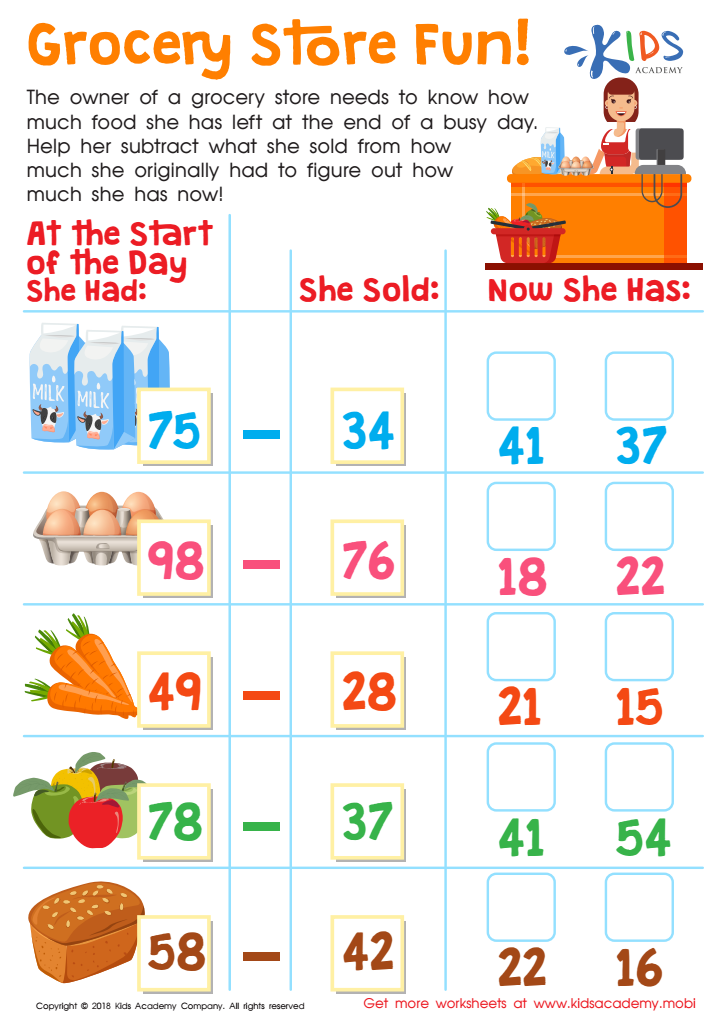
Grocery Store Fun! Worksheet
Let your kids have fun with this store worksheet. It requires them to help the owner by subtracting what she has sold from the original amount to figure out how much is left. Have them read and solve the equations in the printout to give the store owner the answer.
Grocery Store Fun! Worksheet
Worksheet
Join Kids Academy for Free
Who is primarily going to use this learning content?








Subtraction practice and safe addition are crucial for children aged 3-9, as they form the foundation for their future mathematical skills. Mastering these basic operations during early development fosters numerical fluency, critical thinking, and problem-solving abilities which are essential in everyday life.
Parents and teachers should prioritize subtraction and addition for several reasons. Firstly, these skills enhance cognitive development; children learn to process information, discern patterns, and build logical connections. Regular practice also instills confidence, as children experience success through guided exercises, allowing them to approach more advanced concepts without anxiety.
Moreover, subtraction and addition help young learners understand the world around them. They apply these skills to real-life situations, such as counting money, telling time, and measuring ingredients in cooking. This relevance makes math engaging and practical, reinforcing its importance.
Lastly, establishing a strong numerical foundation eases the transition to more complex mathematical concepts in later grades. By focusing on subtraction and addition, parents and teachers lay the groundwork for academic success and a lifetime of quantitative reasoning. In short, investing time in this foundational practice is essential to equip young learners with confidence, competence, and a love for mathematics.