Multiplication practice Normal Arrays Worksheets for Ages 3-9
3 filtered results
-
From - To
Enhance your child's multiplication skills with our engaging Normal Arrays Worksheets, designed specifically for ages 3 to 9. These worksheets provide a fun and interactive way for young learners to grasp multiplication concepts through visual arrays. By organizing numbers in rows and columns, children can easily understand the relationship between multiplication and addition. Our collection features various themed activities that captivate young minds while reinforcing essential math skills. Perfect for home practice or school settings, these worksheets empower kids to build confidence in their abilities. Explore our resources today and turn multiplication practice into an enjoyable learning adventure!
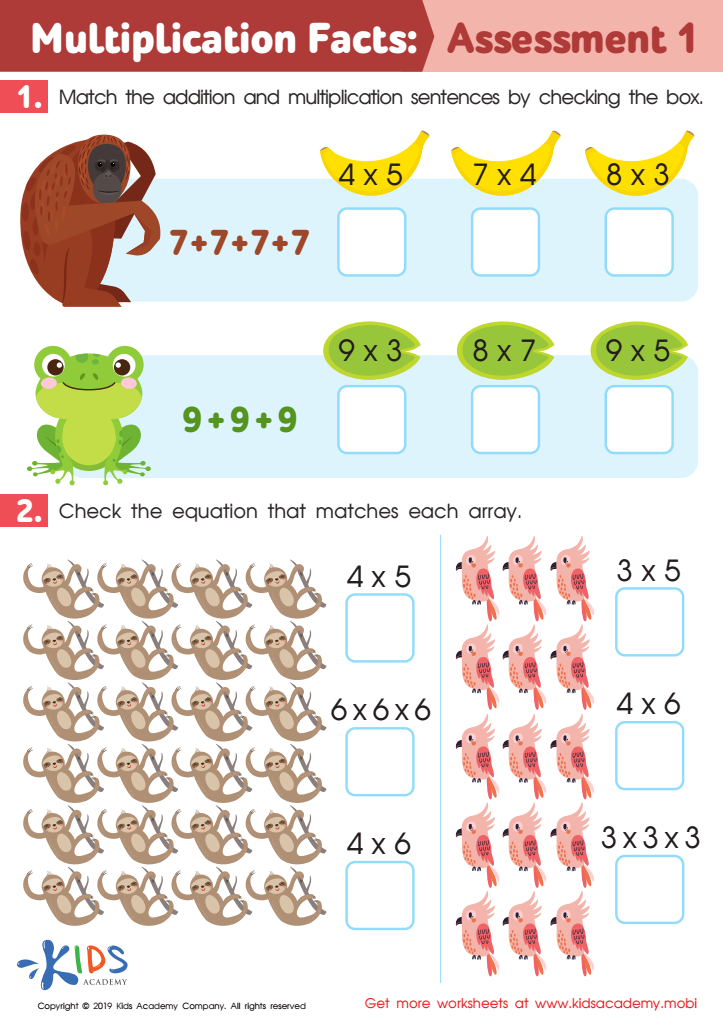
Multiplication Facts: Assessment 1 Worksheet
 Assign to My Students
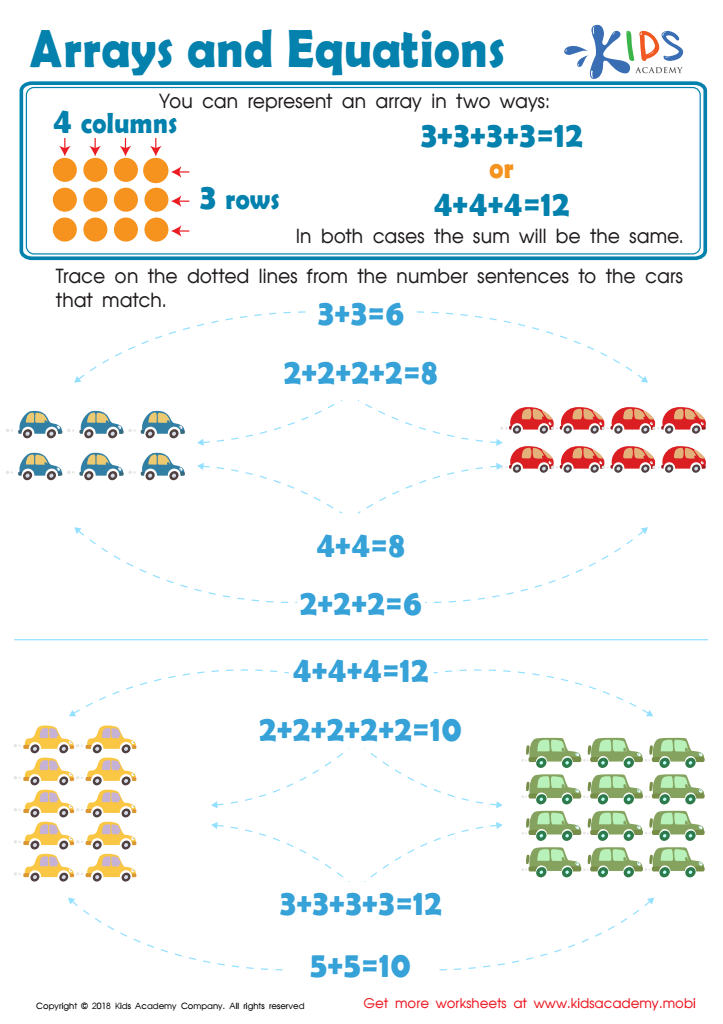
Arrays and Equations Worksheet
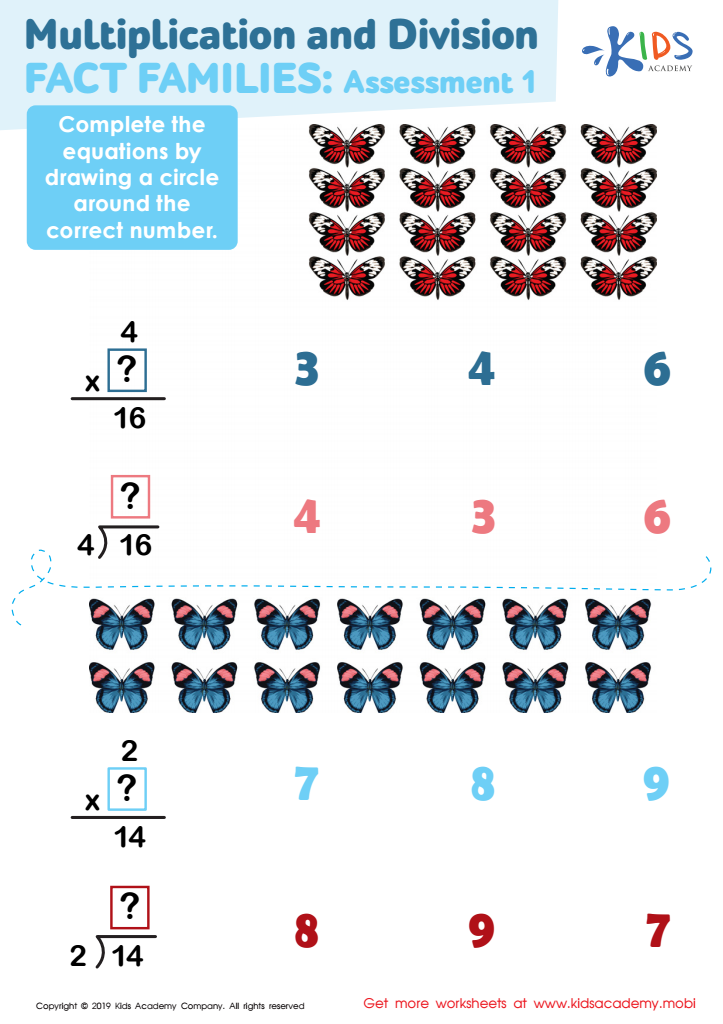
Multiplication and Division Fact Families Assessment 1 Worksheet








Multiplication practice with normal arrays is crucial in early childhood education for children aged 3-9. Understanding multiplication not only lays the groundwork for more advanced mathematical concepts but also enhances overall cognitive development. By introducing multiplication through normal arrays—visual representations that help children see the relationship between numbers—students can grasp the concept of grouping and repetition in a tangible way.
Normal arrays support various learning styles, enabling children to illustrate multiplication visually, which complements auditory and kinesthetic learning methods. This can directly impact children's confidence in mathematics, reducing math anxiety and fostering a positive attitude toward the subject.
Moreover, practicing multiplication through normal arrays builds a strong foundation for problem-solving skills as children learn to break down complex problems into manageable parts. This method also introduces basic principles of geometry and spatial reasoning, further enhancing critical thinking skills. For parents and teachers, encouraging engagement with normal arrays cultivates an enjoyable learning experience and nurtures curiosity about numbers, essential for long-term academic success. By prioritizing such engaging methods, adults equip children with the tools they need to thrive in their future math endeavors and cultivate a lifelong love for learning.








