Enhancing observation skills Normal Math Worksheets for Ages 3-9
5 filtered results
-
From - To
Enhance your child's observation skills with our engaging Normal Math Worksheets designed for ages 3-9. These worksheets focus on developing critical thinking and attention to detail through fun activities that blend learning with play. By encouraging children to observe patterns, shapes, and relationships, our worksheets support foundational math concepts and overall cognitive development. Tailored to various skill levels, these resources provide a perfect learning platform at home or in the classroom. Foster a love for math while boosting your child’s ability to assess and analyze their surroundings. Explore our collection and empower young learners today!
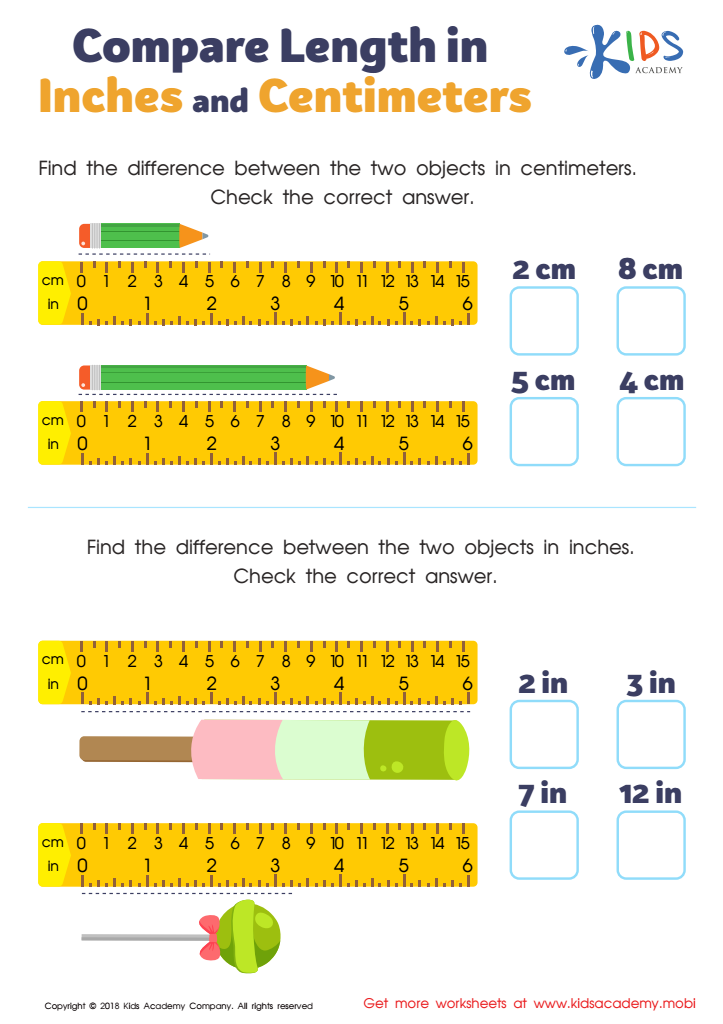
Compare Length in Inches and Centimeters Worksheet
 Assign to My Students
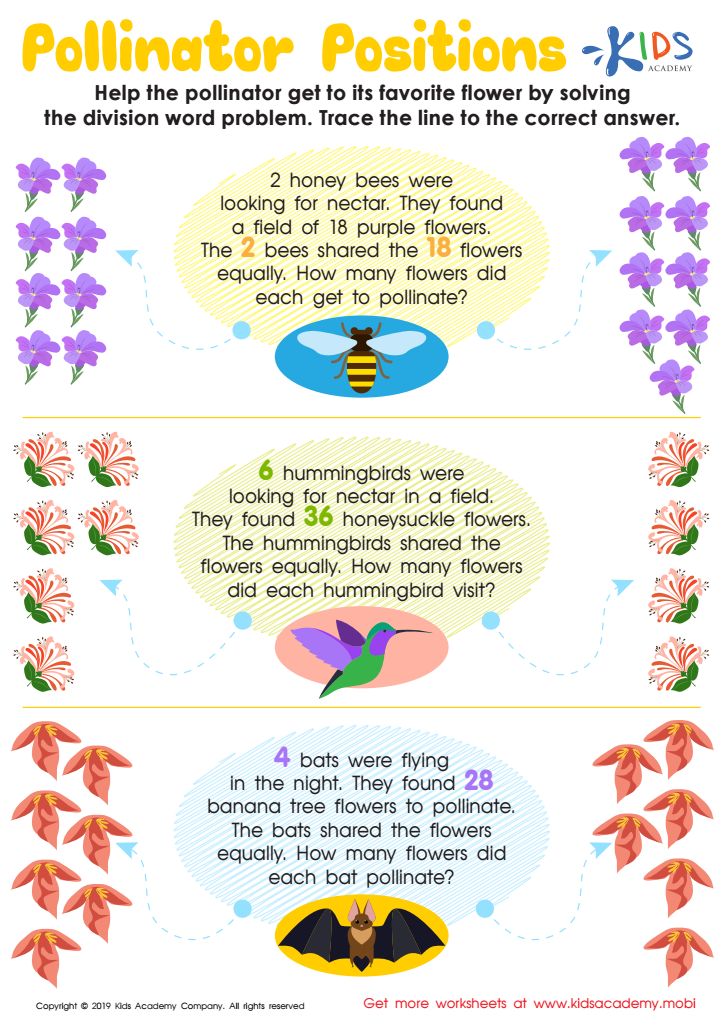
Pollinator Positions Worksheet
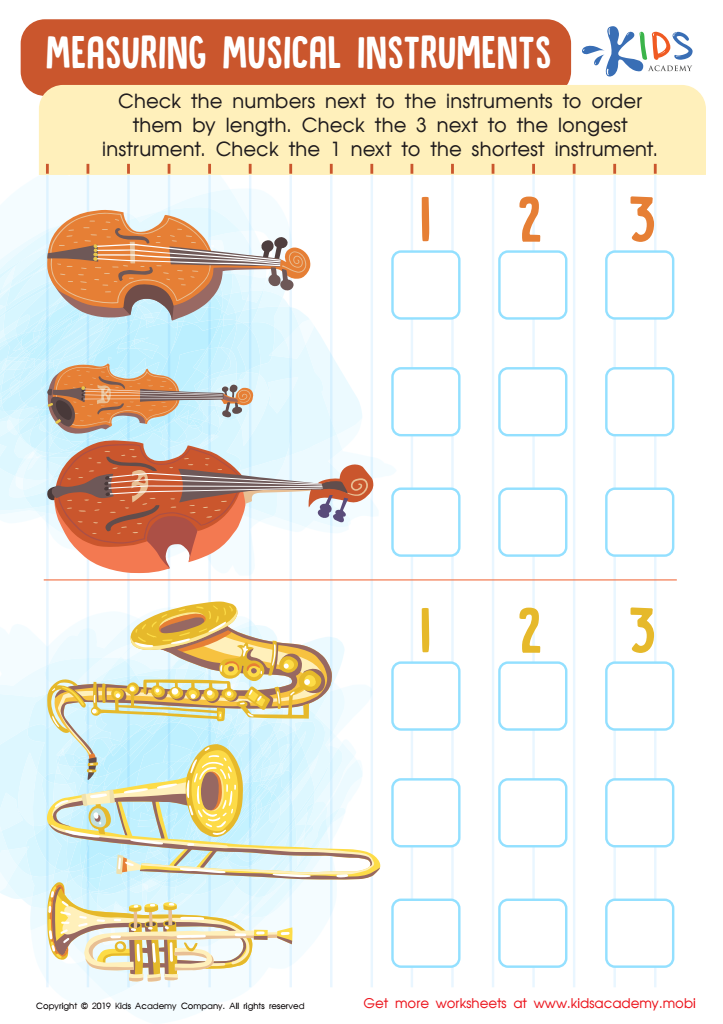
Measuring Musical Instruments Worksheet
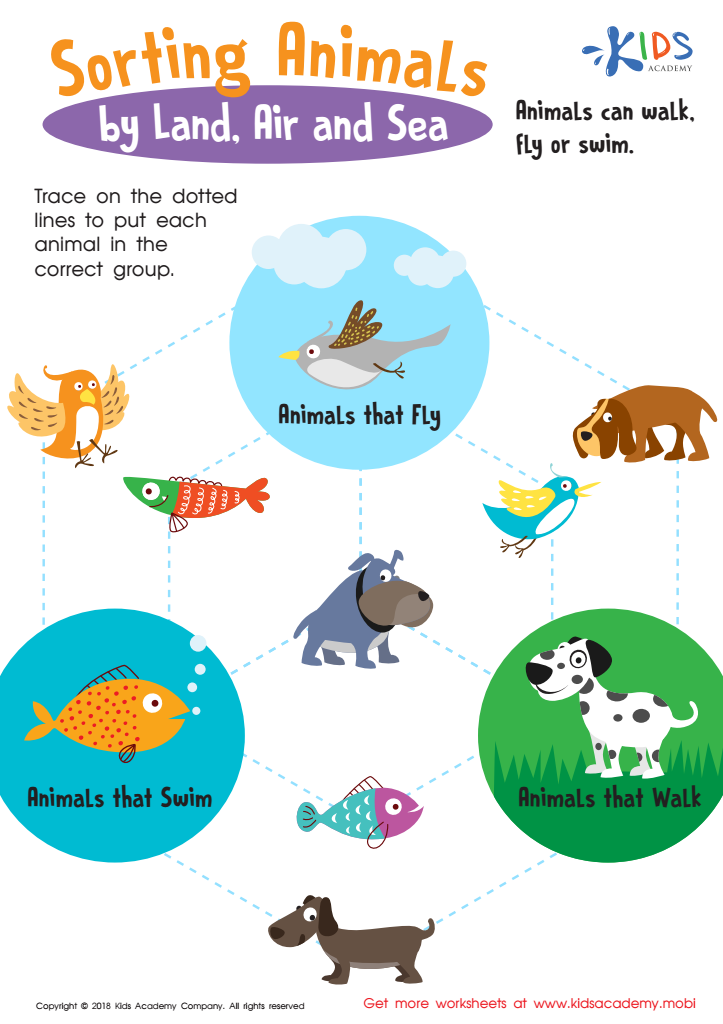
Sorting Animals by Land, Air and Sea Worksheet
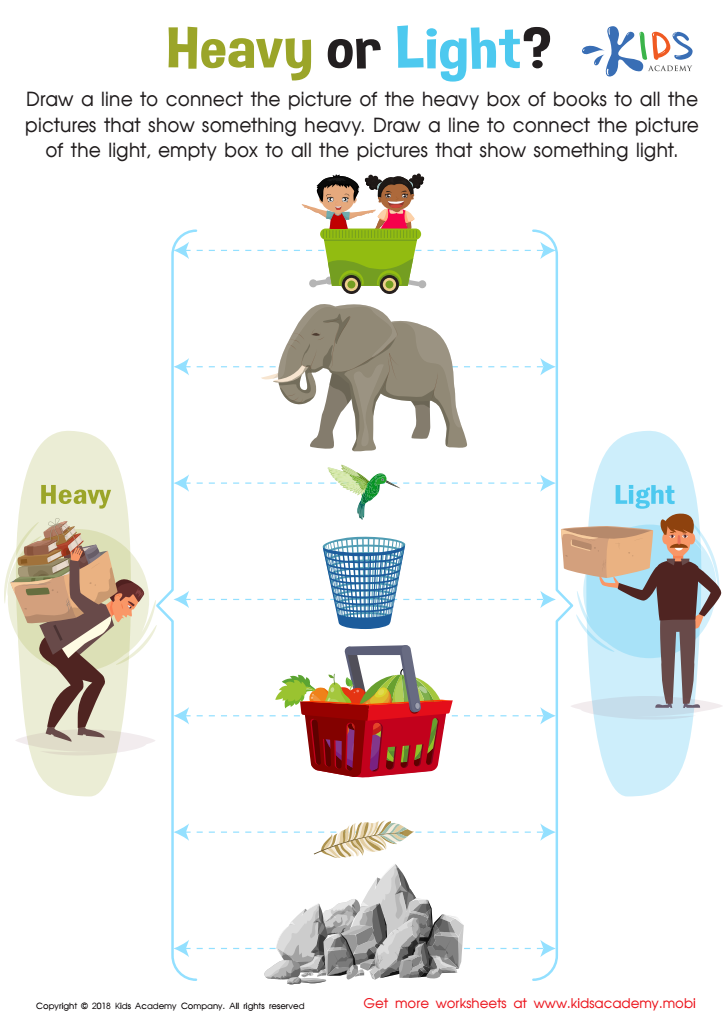
Heavy or Light? Worksheet








Enhancing observation skills in mathematics for children aged 3-9 is crucial because it lays the foundation for critical thinking, problem-solving, and analytical abilities. At this age, children are naturally curious and eager to explore their environment. By honing their observation skills, parents and teachers enable children to engage actively with mathematical concepts through exploration and discovery. When children observe patterns, spatial relationships, and quantities in their everyday surroundings, they begin to understand how math applies beyond the classroom.
Observational skills also help children develop language and communication skills as they describe their findings and reasoning. Furthermore, enhancing these skills fosters a positive attitude toward math, making it less intimidating and more enjoyable. Children who can observe, discuss, and reflect on mathematical ideas are more likely to retain information and understand concepts deeply.
Moreover, skilled observers are more adept at recognizing clues and making connections, both of which are essential for early math proficiency. In an era where STEM (Science, Technology, Engineering, and Mathematics) education is increasingly emphasized, nurturing these observational capabilities is vital for equipping the next generation with the skills necessary for future academic and career success. Thus, investing in enhancing observation skills at a young age is an essential step towards lifelong learning and achievement in mathematics.








