
Practice addition Normal Math Worksheets for Ages 3-9
3 filtered results
Difficulty Level
Grade
Age
-
From - To
Subject
Activity
Standards
Boost your child's math skills with our "Practice Addition Normal Math Worksheets for Ages 3-9." Perfectly designed for young learners, these engaging worksheets make mastering addition fun and easy. They focus on enhancing learning skills, promoting problem-solving abilities, and building a strong arithmetic foundation. Ideal for preschoolers, kindergarten, and early elementary students, these worksheets offer varying difficulty levels to cater to different learning paces. Each sheet features colorful, kid-friendly designs to keep children interested and motivated. Download now and watch your child’s confidence soar while making math an enjoyable adventure!
Visit https://www.kidsacademy.mobi/printable-worksheets/normal/age-3-9/math/learning-skills/practice-addition/ for more.
Favorites
With answer key
Interactive
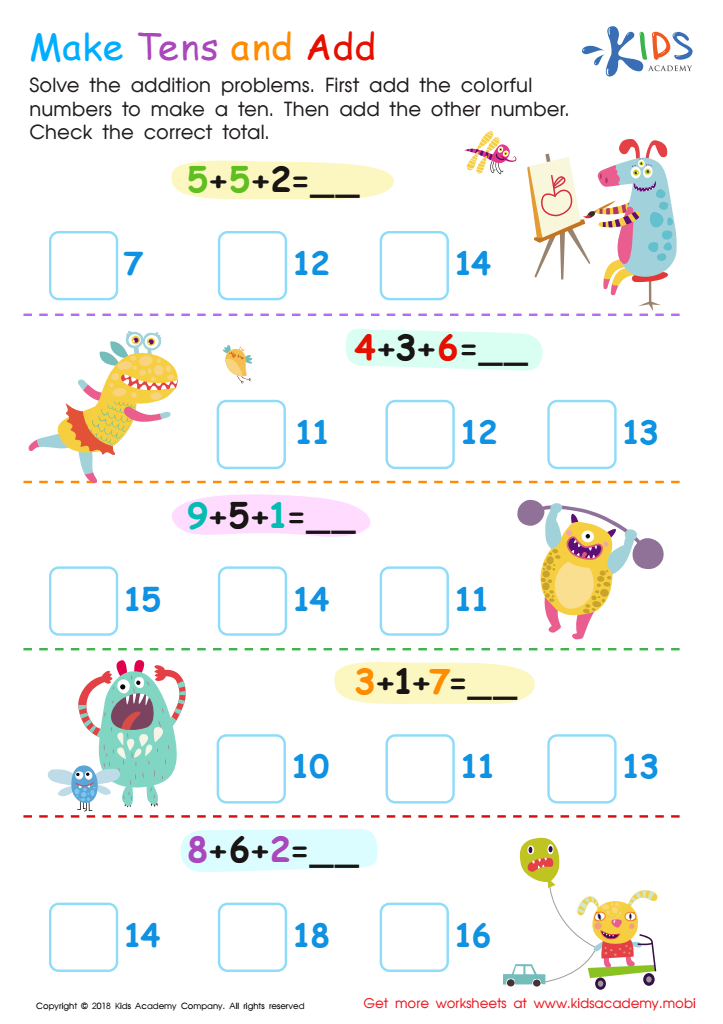
Make Tens and Add Worksheet
Making a "ten" is a powerful strategy to use when computing, but we may not realize it. This PDF worksheet will help kids understand how easy it is to add three numbers with this strategy. Plus, they'll have fun with the monsters and strengthen fine motor skills as they check the right answer boxes.
 Assign to My Students
Make Tens and Add Worksheet
Worksheet
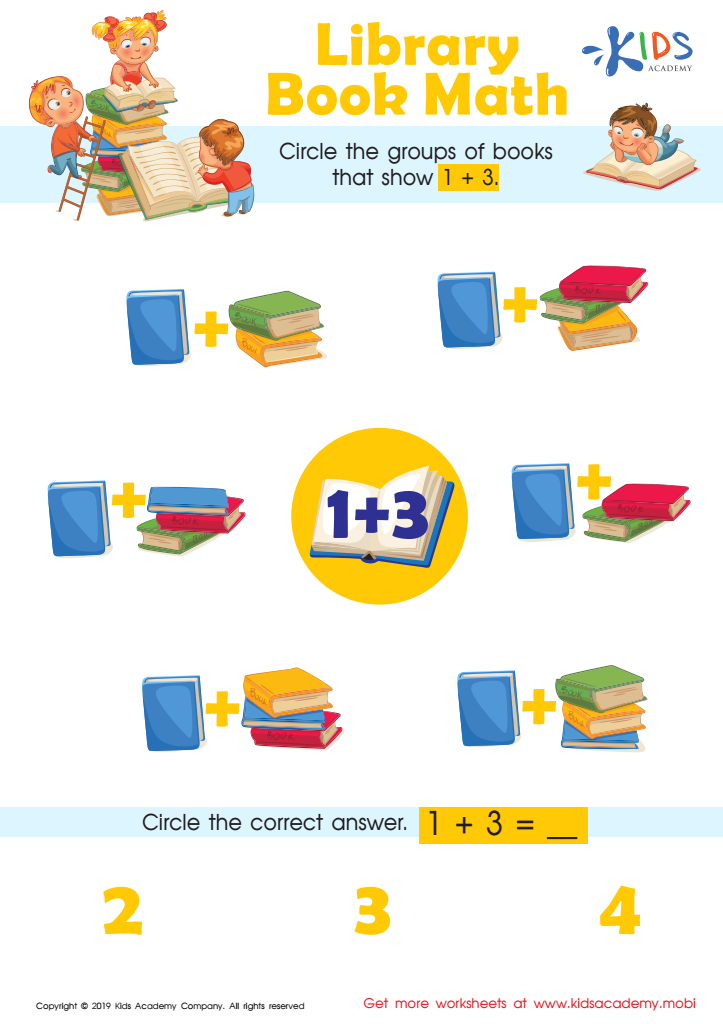
Library Book Math Worksheet
=4.
It's essential for your child's growth to know how to count and add. Help them by giving simple tasks and encouraging them. This worksheet is a great tool to use. Ask your kids to name the objects in the picture and help them circle the groups of books that show 1+3=4.
Library Book Math Worksheet
Worksheet
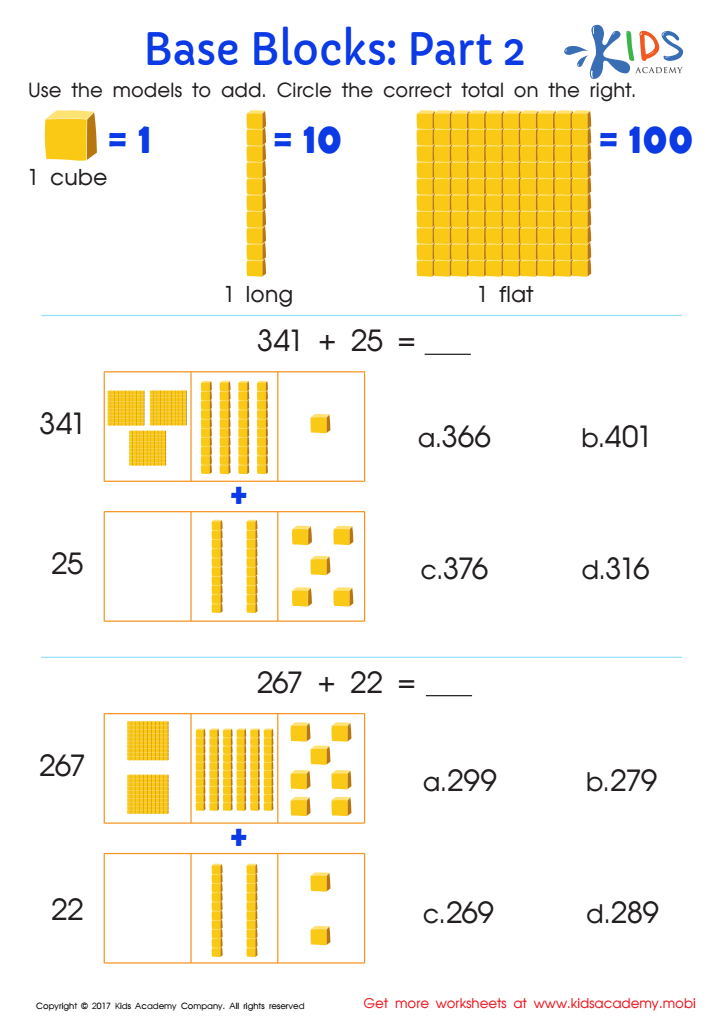
Base Ten Blocks Worksheet: Part 2
It provides kids with the practice needed to get a better grip on numeracy and multi-digit addition. Get the PDF today and give your child the resources they need.
This worksheet uses base blocks to help kids recognize and add multi-digit numbers. It gives kids the practice they need to become more numerate and handle multi-digit addition with confidence. Download the PDF now and give your child the tools they need to succeed.
Base Ten Blocks Worksheet: Part 2
Worksheet
Join Kids Academy for Free
Who is primarily going to use this learning content?








Parents and teachers should prioritize practicing addition for children aged 3-9 because it establishes a critical foundation for future math skills and encourages cognitive development. At this young age, children's brains are incredibly adaptable and can efficiently absorb new information. Introducing them to addition helps build numerical literacy early on, enabling a smoother transition to more complex mathematical concepts as they grow.
Understanding addition also develops logical thinking and problem-solving abilities, skills that are transferrable across all educational subjects and everyday situations. Regular practice helps children understand the concept of combining quantities, making them comfortable with basic arithmetic operations they will encounter regularly. This repetition builds their confidence, which is crucial for fostering a positive attitude towards math as they progress through their education.
Moreover, practicing math in early childhood can be a social activity, encouraging collaboration between peers and strengthening communication skills. Through engaging exercises and games, addition practice can be enjoyable, promoting a love of learning and curiosity. In sum, incorporating addition practice in early childhood aids in cognitive development, instills lasting mathematical competence, and lays the groundwork for academic success, all while being a fun and interactive experience for young learners.








