Real-life application Normal Math Worksheets for Ages 3-9
4 filtered results
-
From - To
Discover our "Real-Life Application Normal Math Worksheets" designed specifically for children ages 3-9! These engaging worksheets provide practical math scenarios to help young learners connect mathematical concepts with everyday life. From counting apples in a grocery store to measuring ingredients for a recipe, our activities foster critical thinking and problem-solving skills. Each worksheet is crafted to support various learning styles and fosters an interactive learning experience, making math fun and relatable. Perfect for home or classroom use, these worksheets encourage kids to apply math in real-world situations, building foundational skills for future academic success. Start your child's math journey today!
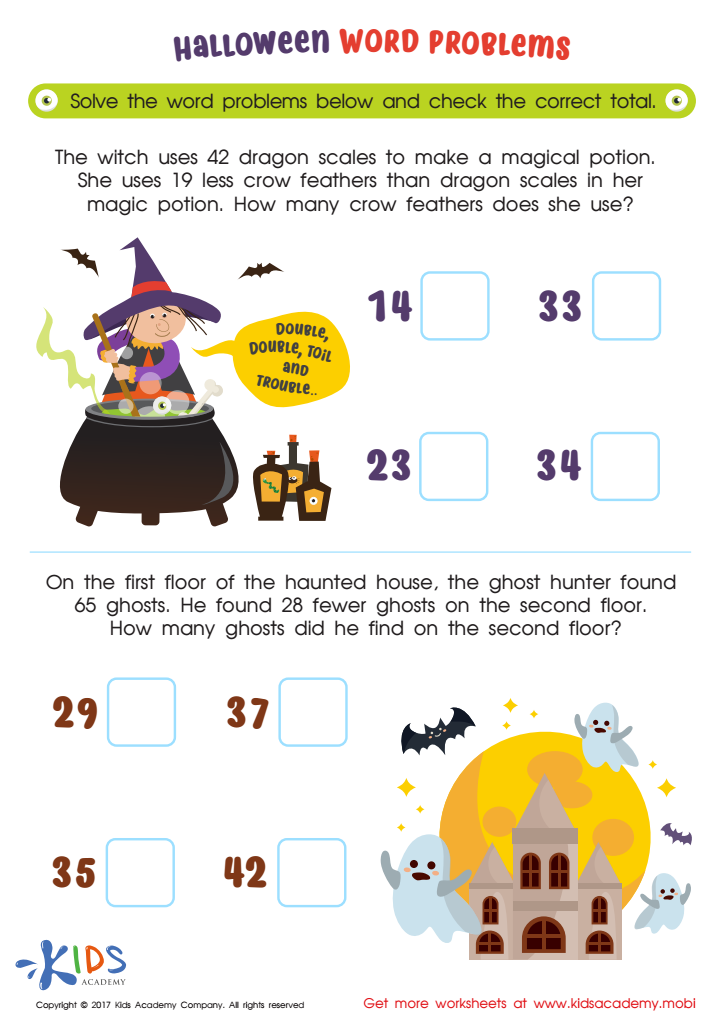
Halloween Word Problems Printable
 Assign to My Students
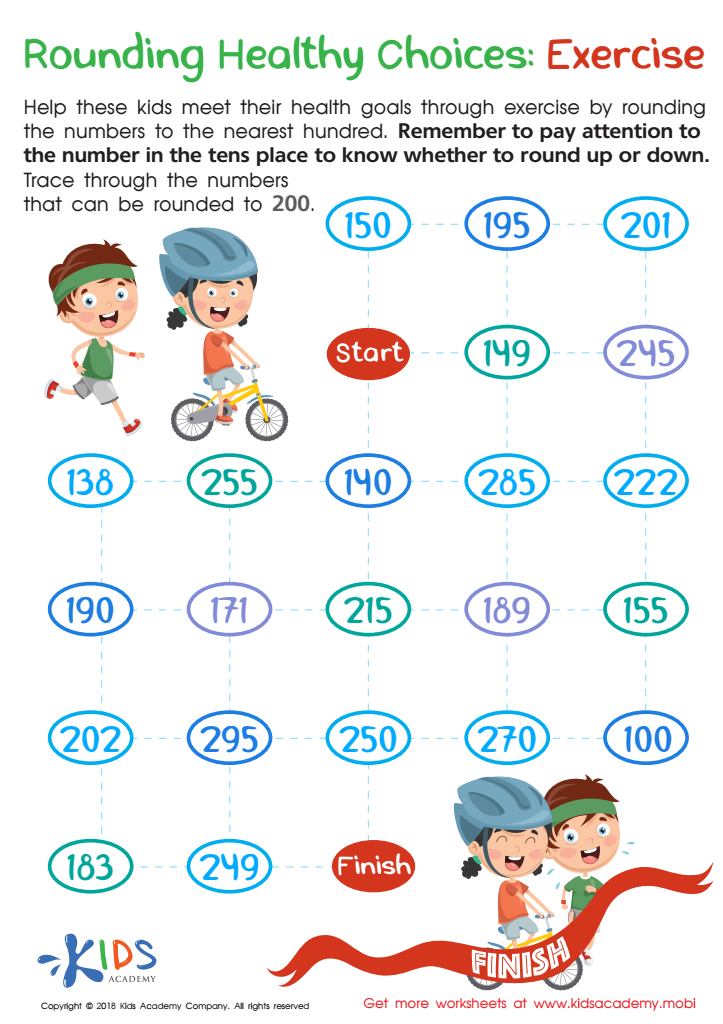
Rounding Healthy Choices Exercise Worksheet
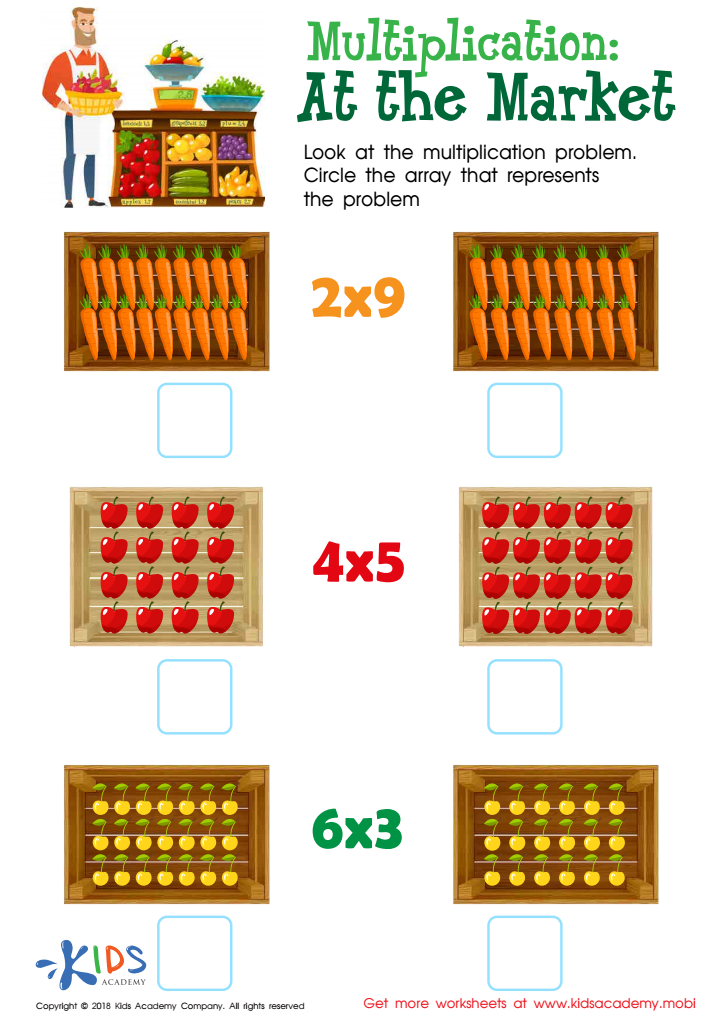
At the Market Worksheet
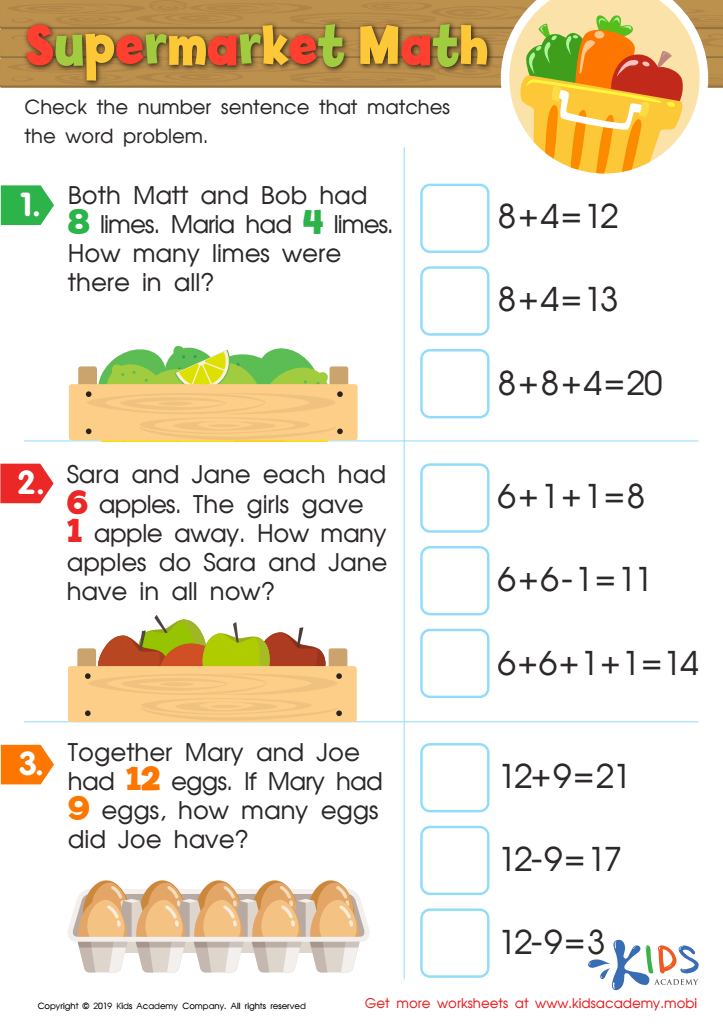
Supermarket Math Worksheet








Parents and teachers should prioritize real-life applications of math for children ages 3-9 because this approach fundamentally enhances children’s understanding and appreciation of mathematical concepts. Early exposure to practical math helps young learners grasp the relevance of numbers beyond the classroom, fostering curiosity and engagement. For instance, cooking can illustrate measurements and fractions, while shopping offers lessons in addition, subtraction, and budgeting.
Moreover, when children see math as a tool for everyday problem-solving, it not only boosts their confidence but also cultivates critical thinking skills. Real-life applications help children understand abstract concepts in a tangible way, making learning more relatable and enjoyable. This early foundation encourages positive attitudes towards math, reducing anxiety and fear associated with the subject later on.
Additionally, utilizing everyday situations to teach math can strengthen parent-child and teacher-student bonds as they engage in collaborative learning experiences. Thus, focusing on real-life math is not just about building numerical skills; it's about fostering a lifelong love for learning and equipping children with essential skills they will carry into their future. Ultimately, teaching math within the context of everyday life prepares children for academic success and helps them become proficient problem-solvers in the real world.








