
Vocabulary development Normal Matching Worksheets for Ages 3-9
3 filtered results
Difficulty Level
Grade
Age
-
From - To
Subject
Activity
Standards
Explore our engaging "Vocabulary Development Normal Matching Worksheets" designed for children ages 3-9! These interactive resources help young learners enhance their vocabulary skills through matching exercises that promote cognitive growth and literacy. Each worksheet features colorful visuals and familiar words, making learning fun and effective. By participating in these activities, children will connect images with corresponding terms, reinforcing their word recognition and comprehension. Our worksheets foster critical thinking and encourage independent learning, ensuring a solid foundation for future literacy skills. Perfect for classrooms or homeschooling, these printable resources are a fantastic way to make vocabulary development enjoyable and captivating for young learners!
Favorites
With answer key
Interactive
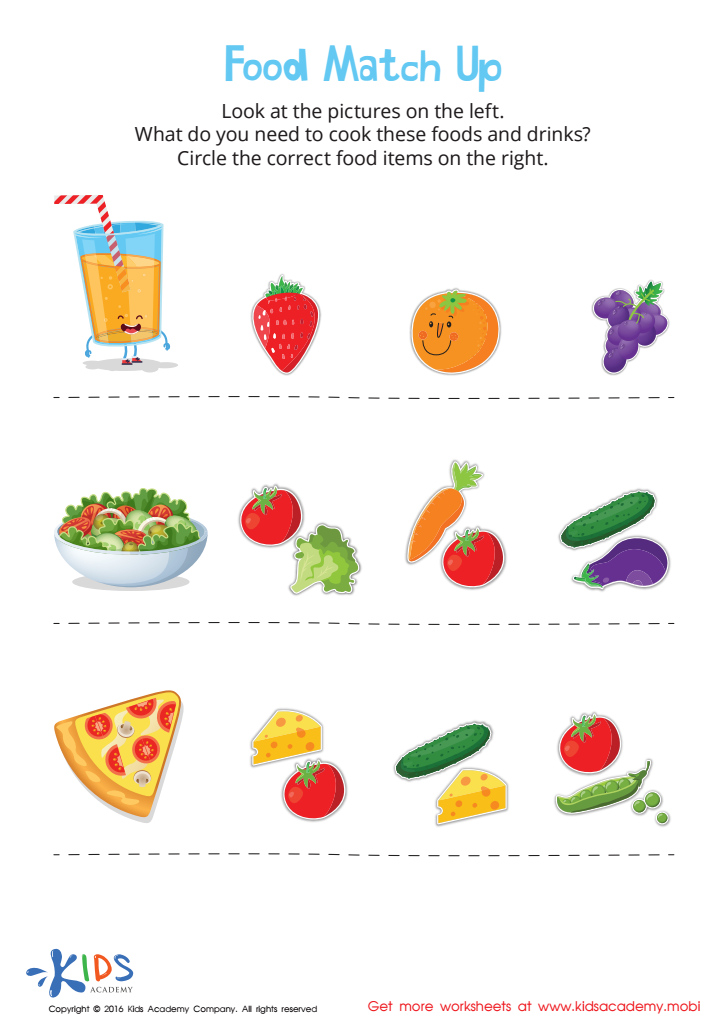
Food Match Up Worksheet
This worksheet will help your preschooler develop early math and cognitive skills. It challenges them to pay attention to details, understand how smaller parts make a whole, and increase important matching skills. Use it to give them a hands-on learning experience in the kitchen, and watch them understand how ingredients come together to make something delicious!
 Assign to My Students
Food Match Up Worksheet
Worksheet
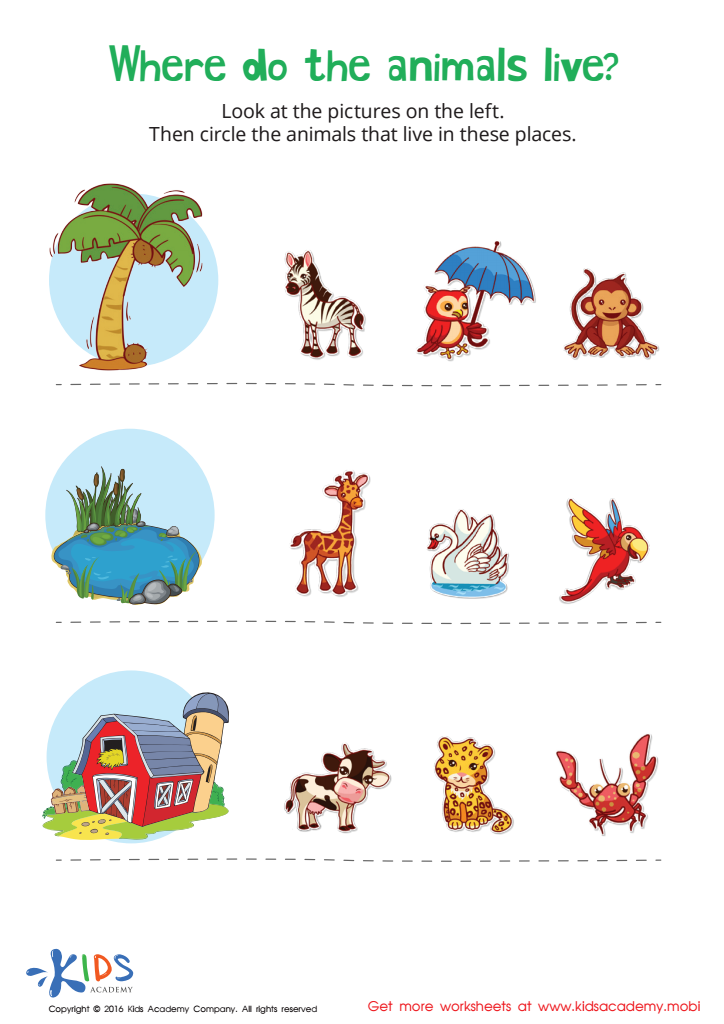
Where Animals Live Worksheet
Teaching early reading and math skills is important, but don't forget about science. With the Where Animals Live PDF worksheet, kids can identify their favorite animals and the environments they live in. Ask them what type of environment the animals like and introduce them to geography. It's great for logical reasoning and classification skills. Your kid will practice with their favorite animals and love the trip to the zoo afterwards!
Where Animals Live Worksheet
Worksheet
Join Kids Academy for Free
Who is primarily going to use this learning content?








Vocabulary development is crucial for children aged 3-9, forming the building blocks for effective communication and cognitive growth. During this critical period, children rapidly acquire language skills that influence their social interactions and academic success. Parents and teachers should care about vocabulary development because a robust vocabulary enhances reading comprehension and writing abilities, enabling children to express themselves clearly and engage with complex ideas.
Moreover, early vocabulary growth is linked to various positive outcomes, including improved literacy skills, higher standardized test scores, and better classroom behavior. Children who possess a rich vocabulary can comprehend instructions, participate in conversations, and develop critical thinking skills, all of which contribute to their overall learning experience.
By actively engaging in vocabulary development activities—such as reading aloud, playing word games, and introducing new words in context—parents and teachers can foster a love for language that will last a lifetime. This not only prepares children for academic challenges but also fosters emotional intelligence and social skills, enabling them to navigate their environments effectively. Thus, prioritizing vocabulary development from an early age lays the foundation for lifelong learning and personal growth, making it a vital focus for both parents and educators.








