Reading comprehension Normal Multiplication Worksheets for Ages 3-9
5 filtered results
-
From - To
Enhance your child's reading comprehension and multiplication skills with our specially designed Normal Multiplication Worksheets for ages 3-9. These engaging worksheets combine fun activities with educational content, helping young learners grasp essential concepts while improving their reading proficiency. Each worksheet is tailored to reinforce multiplication through visually appealing illustrations and engaging scenarios, ensuring that children stay motivated and intrigued. Ideal for classroom use or home learning, our resources cater to various learning styles and abilities. Empower your child with the foundational skills they need for academic success, all while enjoying the journey of learning through our thoughtfully crafted worksheets!
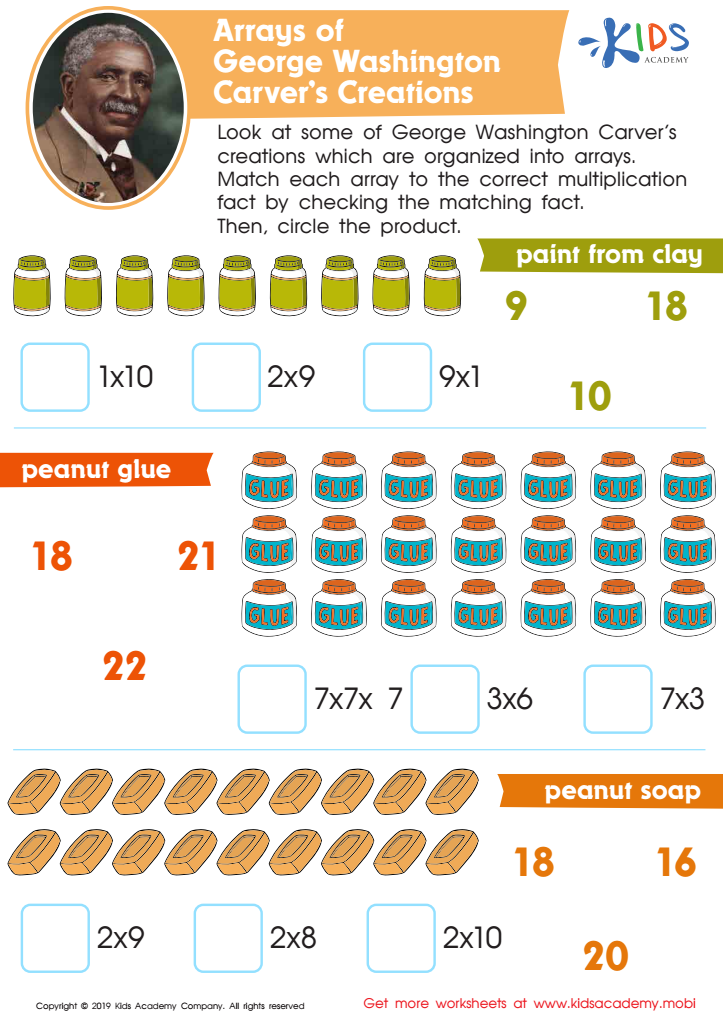
Arrays of George Washington Carver’s Creations Worksheet
 Assign to My Students
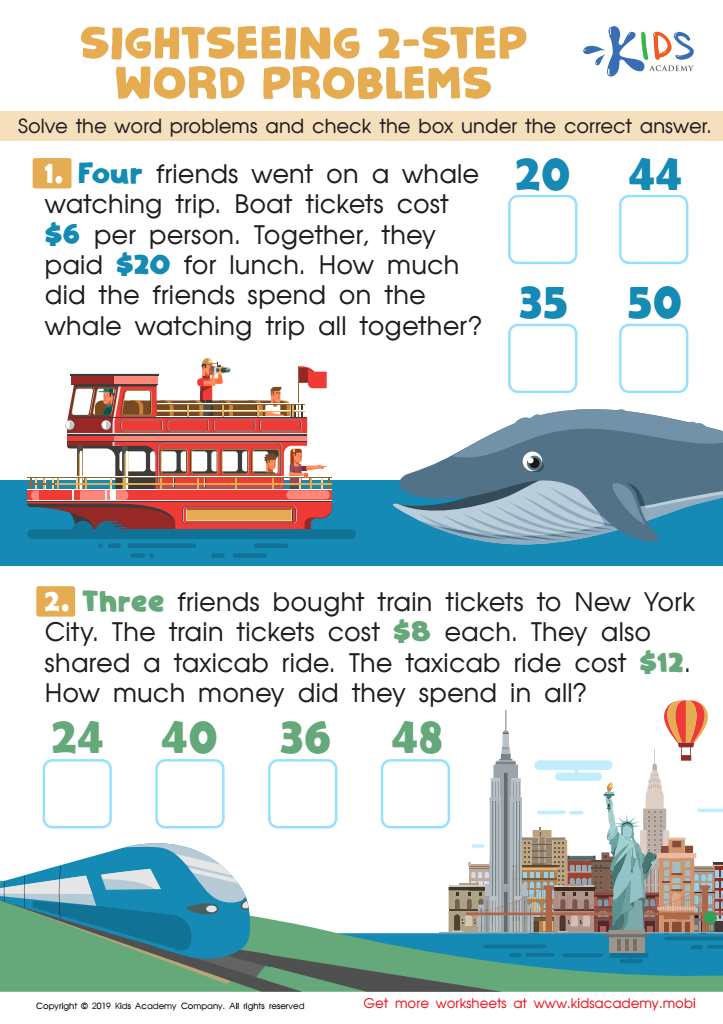
Sightseeing 2-Step Word Problems Worksheet
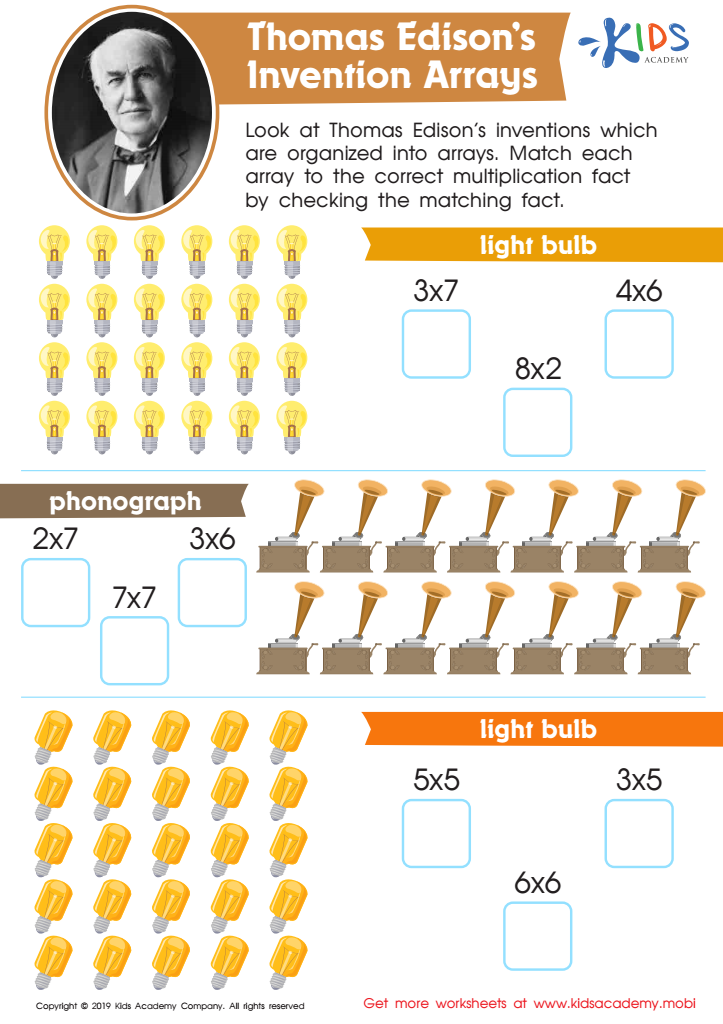
Thomas Edison’s Invention Arrays Worksheet
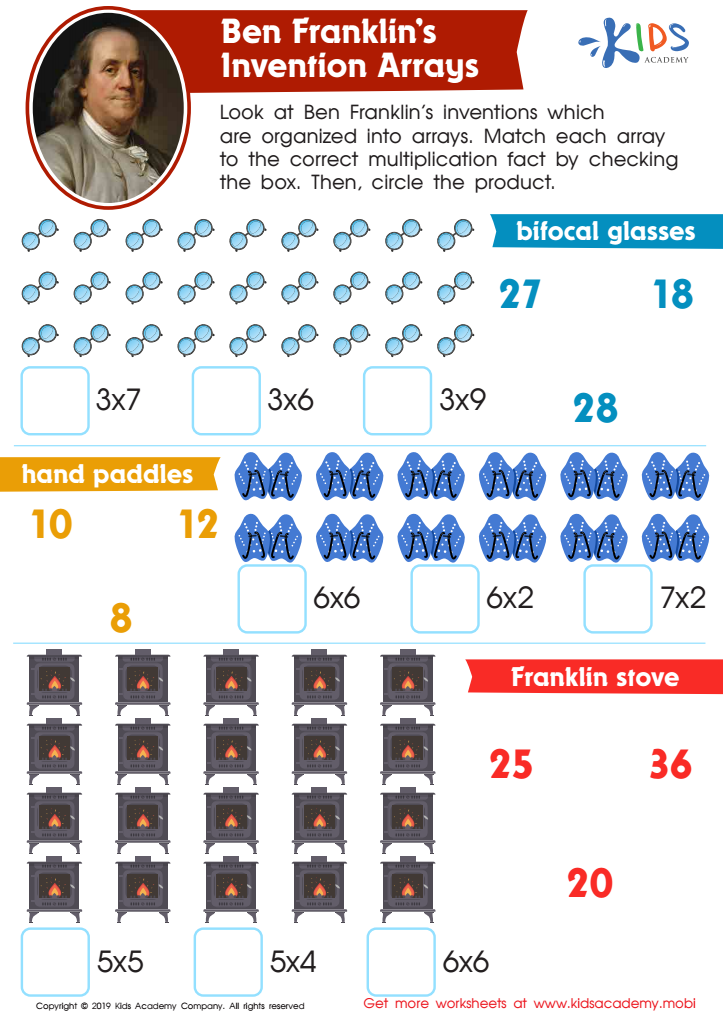
Ben Franklin’s Invention Arrays Worksheet
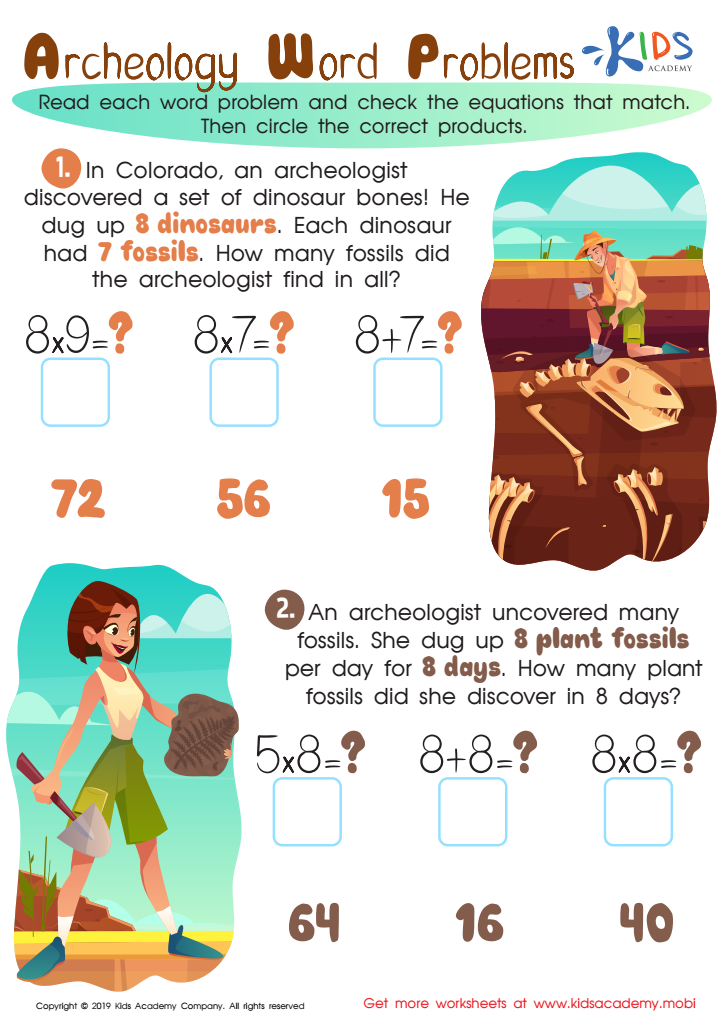
Archeology Word Problems Worksheet








Reading comprehension and numerical skills, such as understanding normal multiplication, are foundational for children's academic success. For ages 3-9, emphasizing these skills is essential as they form the building blocks for more complex concepts later in life.
Reading comprehension enables young learners to decode texts and grasp their meanings, fostering critical thinking and communication skills. When children can understand and analyze what they read, they become more engaged learners, which boosts their overall academic performance across various subjects. Furthermore, strong reading skills build confidence and a lifelong love for literature and learning.
In parallel, understanding normal multiplication lays the groundwork for future mathematics. As children encounter more complex math concepts, a solid grasp of basic multiplication is crucial. Mastering multiplication improves problem-solving skills and promotes logical thinking, enhancing overall cognitive development.
Together, reading comprehension and multiplication nurture a well-rounded education. They equip children with the skills necessary to navigate an increasingly complex world. By prioritizing these areas, parents and teachers can help cultivate not only competent students but also inquisitive and resilient individuals capable of tackling future challenges. Therefore, investment in these foundational skills is imperative for fostering both academic and personal growth in early learners.








