Understanding patterns Normal Multiplication Worksheets for Ages 3-9
3 filtered results
-
From - To
Explore our "Understanding Patterns Normal Multiplication Worksheets for Ages 3-9" designed to boost young learners' skills. Tailored for kids between 3 to 9, these worksheets help beginner mathematicians grasp multiplication basics through fun and engaging pattern activities. Developed by educational experts, they offer an age-appropriate challenge to stimulate critical thinking and reinforce understanding. Each worksheet incorporates colorful illustrations and straightforward instructions so children can independently enhance their multiplication proficiency. Ideal for both classroom use and homeschooling, our worksheets pave the way for a solid mathematical foundation. Start your child's journey to mastering multiplication today!
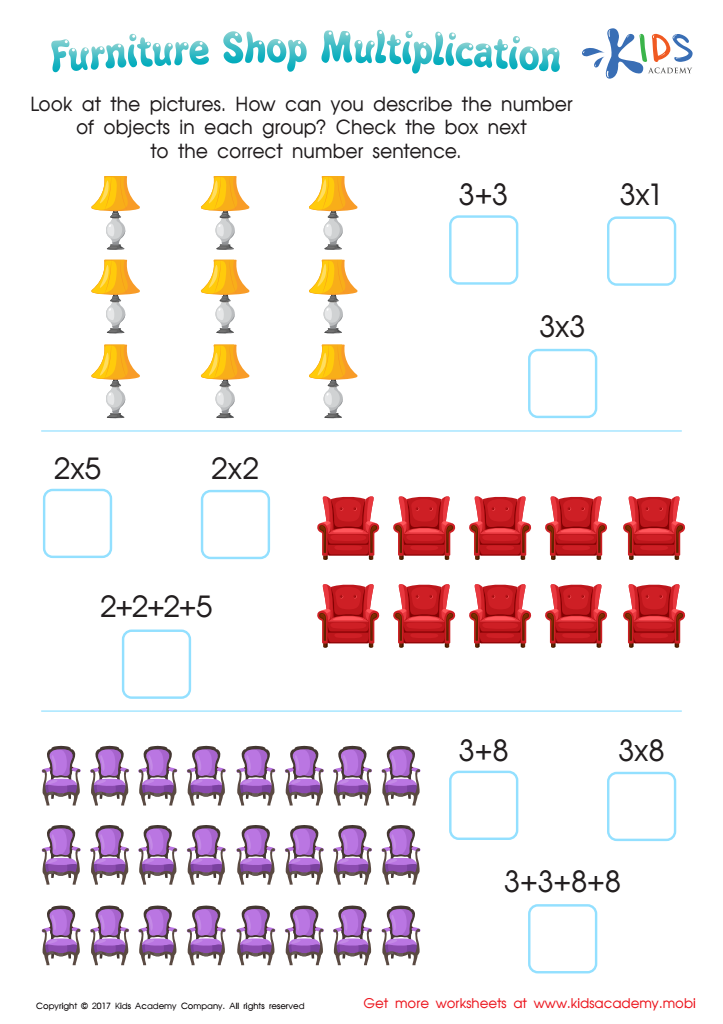
Furniture Shop Worksheet
 Assign to My Students
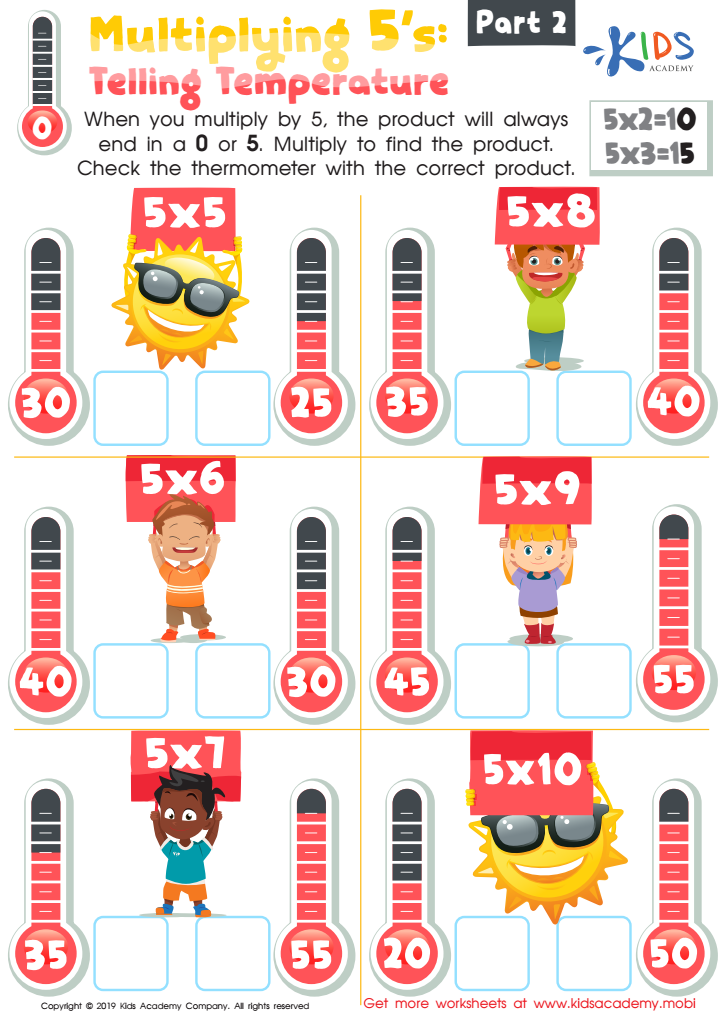
Multiplying 5’s: Telling Temperature Part 2 Worksheet
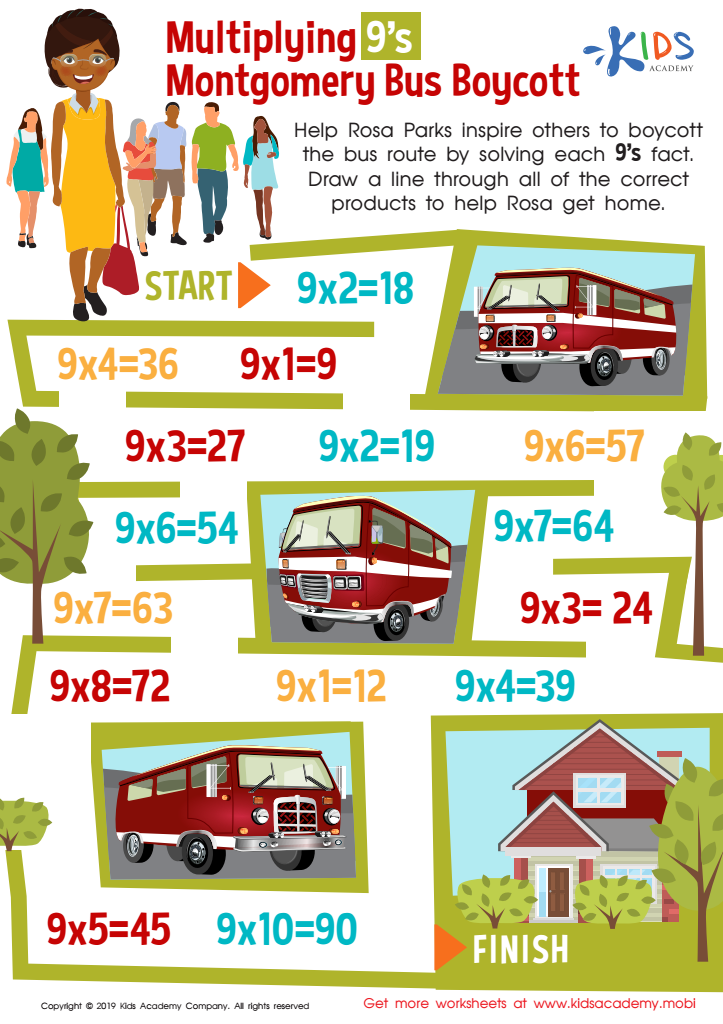
Multiplying 9’s Montgomery Bus Boycott Worksheet








Understanding patterns and normal multiplication at an early age lays a crucial foundation for young children in multiple ways. Firstly, recognizing patterns enhances cognitive skills essential for problem-solving and critical thinking. For children aged 3-9, these skills are foundational steps in not only mathematics but also in everyday reasoning and decision-making.
Introducing multiplication early consolidates their grasp of basic arithmetic operations, reinforcing addition, and understanding of numbers. It transitions naturally from simple counting and addition, helping kids realize that multiplication is essentially repetitive addition. This conceptual clarity aids in faster mental calculations and boosts confidence with numbers.
Moreover, early familiarity with patterns and multiplication supports future learning in more advanced mathematics and science. It helps children appreciate the consistencies and rules within numbers, building an analytical mindset that is valuable across all subjects. For instance, they will soon learn that 2 times 3 gives the same result as 3 times 2, which introduces them to the commutative property of multiplication.
Parents and teachers can foster resilience and perseverance by making learning these concepts engaging through games and hands-on activities. Encouragement and patience are key, as these early experiences shape children's attitudes towards math and learning, turning potential struggles into opportunities for success.








