Understanding rounding Normal Rounding Worksheets for Ages 3-9
5 filtered results
-
From - To
Welcome to our "Understanding Rounding Normal Rounding Worksheets" page for kids aged 3-9! Discover engaging activities designed to make rounding fun and accessible. These worksheets guide young learners through the basics of rounding numbers, introducing essential math skills in a playful way. With colorful illustrations and simple explanations, children will grasp how to round to the nearest ten or hundred, enhancing their number sense. Perfect for classrooms or home learning, our resources promote critical thinking and foster a love for mathematics. Download our worksheets today and help your little ones master the concept of rounding in an enjoyable and interactive manner!
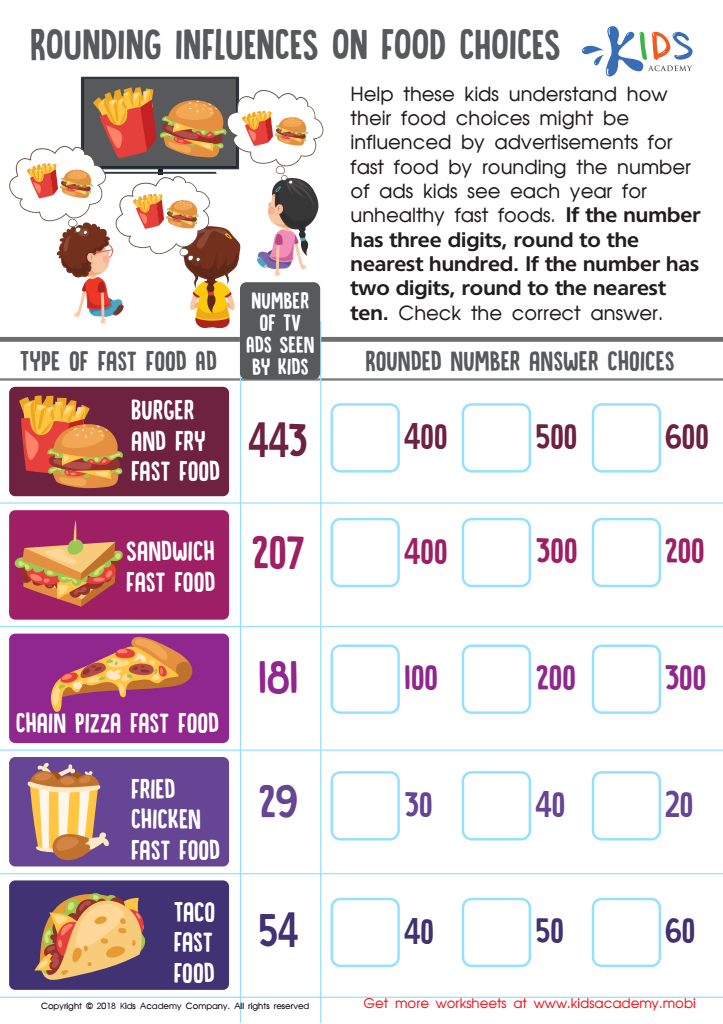
Rounding Influences Food Choices Worksheet
 Assign to My Students
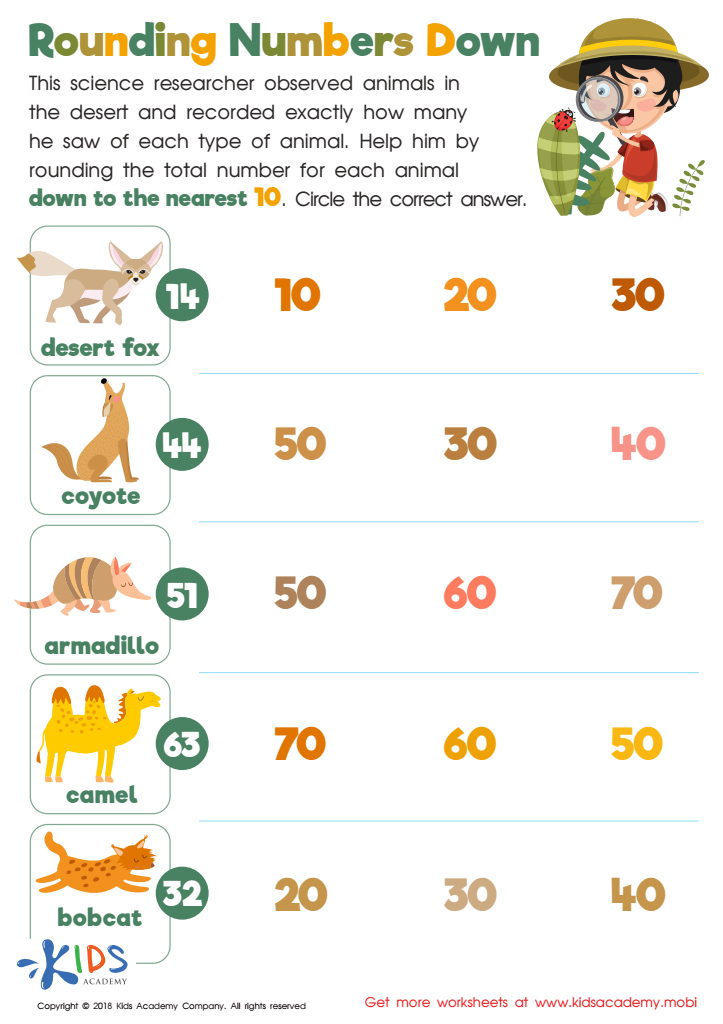
Rounding Numbers Down Worksheet
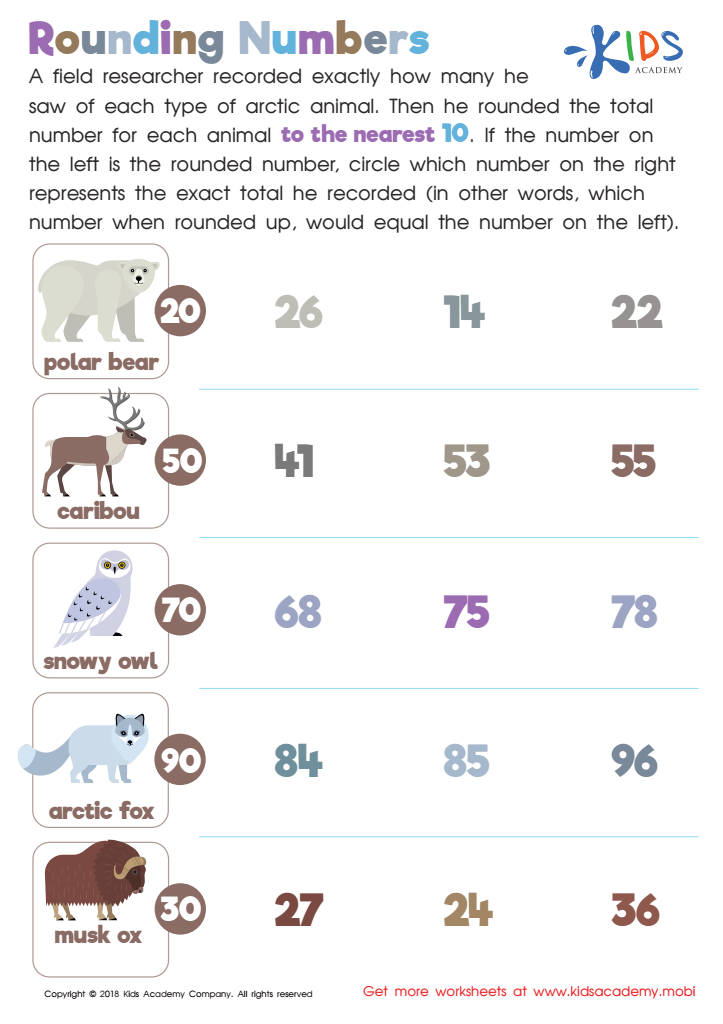
Rounding Numbers Worksheet
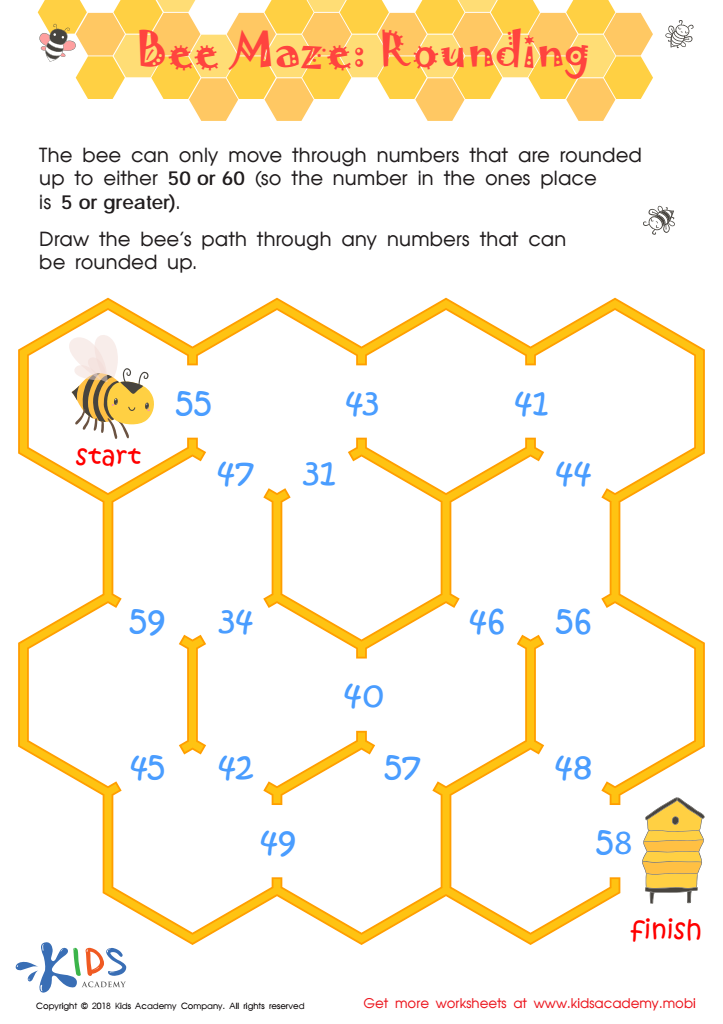
Bee Maze Rounding Worksheet
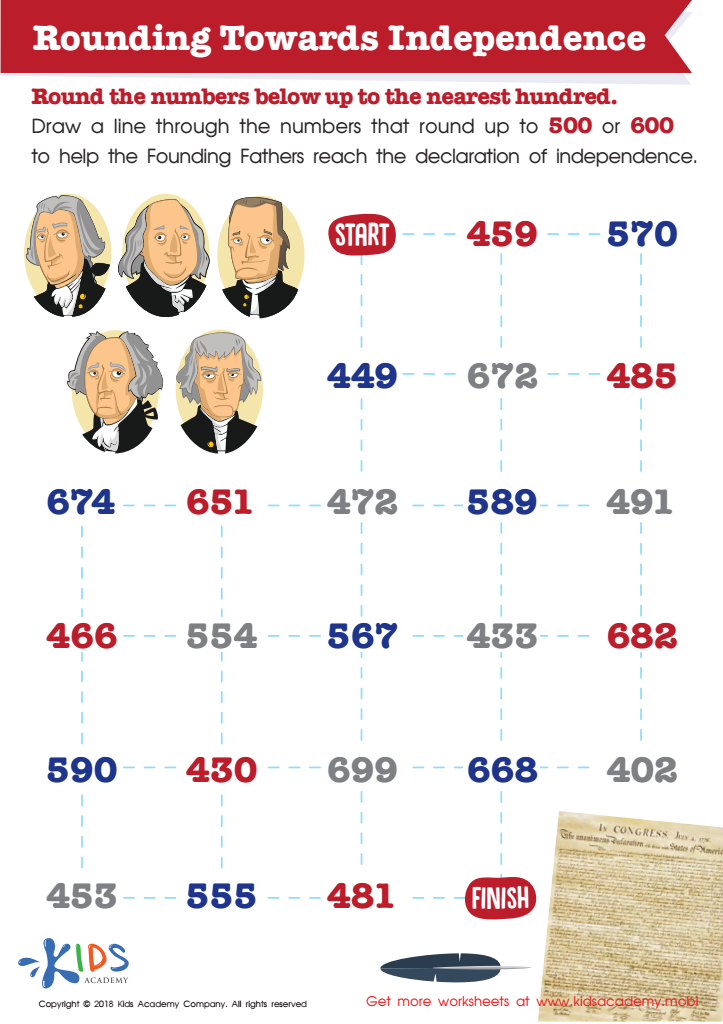
Rounding Towards Independence Worksheet






Understanding rounding is a foundational math skill that affects students' numeracy and problem-solving abilities from an early age. For children aged 3-9, grasping the concept of rounding—especially "normal" rounding, which involves adjusting numbers to the nearest ten or hundred—serves several important purposes.
Firstly, it simplifies math operations. Early learners can use rounding to make mental calculations more manageable. For instance, rounding 47 to 50 makes adding and subtracting easier, which boosts confidence and fosters positive attitudes toward math.
Secondly, rounding lays the groundwork for more complex mathematical concepts in later years, such as estimation, probability, and data interpretation. By introducing this concept early, educators prepare students for future learning and foster critical thinking skills.
Additionally, understanding rounding enhances parental involvement in education. When parents help their children practice rounding, they reinforce skills in a practical way, turning everyday situations—like shopping or cooking—into learning opportunities.
In conclusion, by prioritizing the understanding of normal rounding, parents and teachers play a vital role in developing a child’s mathematical foundation, ensuring students are prepared for academic success and confident in their abilities.