Categorization skills Normal Sorting Worksheets for Ages 3-9
5 filtered results
-
From - To
Discover our engaging Categorization Skills Normal Sorting Worksheets for children ages 3-9, designed to boost critical thinking through active learning. These thoughtfully crafted worksheets help kids effectively sort and classify items based on size, shape, color, and more. Ideal for home or classroom use, they support cognitive development with fun, hands-on activities. Encourage fine motor skills and improve logical reasoning while children easily grasp foundational math concepts. Visit Kids Academy to equip young learners with the essential categorization skills they need for academic success and everyday problem-solving. Dive into learning today and watch your child's progress soar!
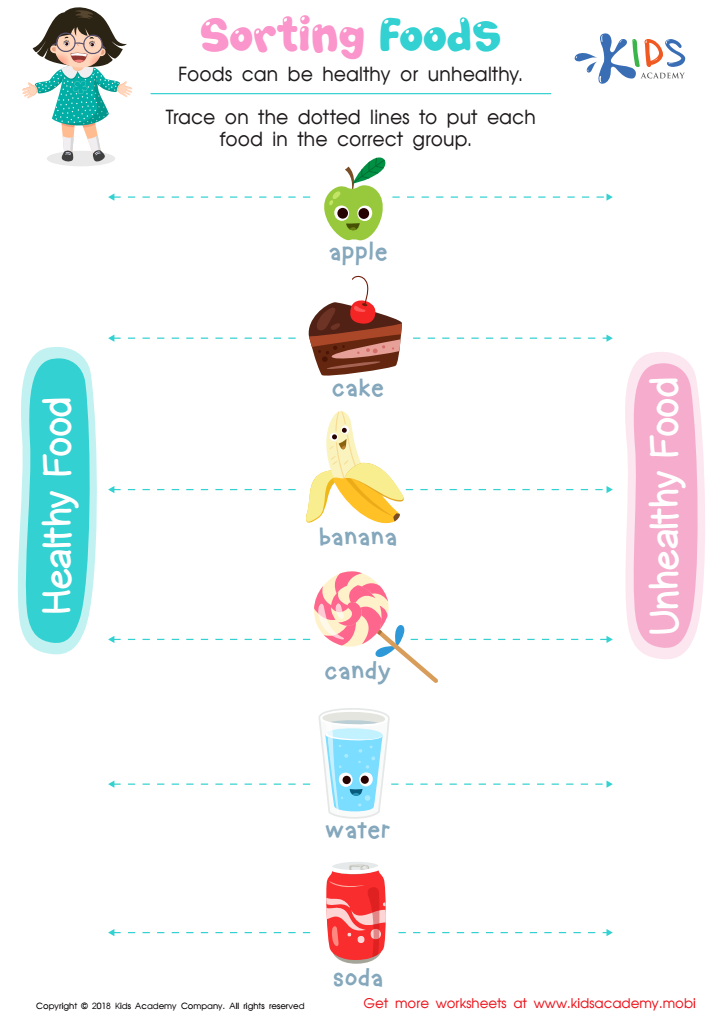
Sorting Food Worksheet
 Assign to My Students
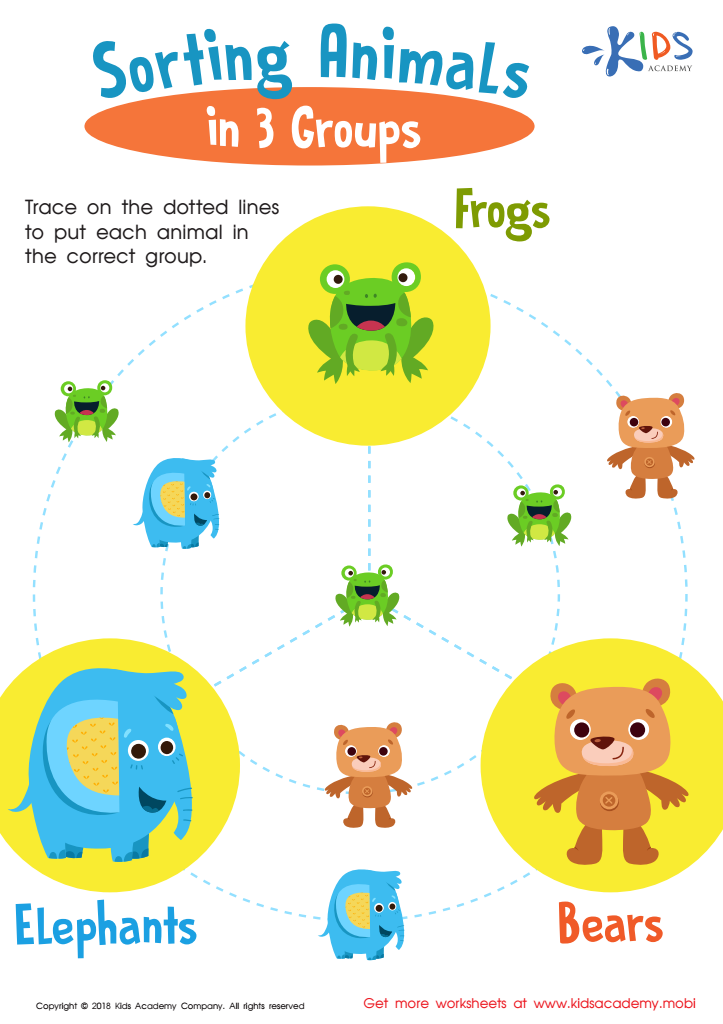
Sorting Animals in 3 Groups Worksheet
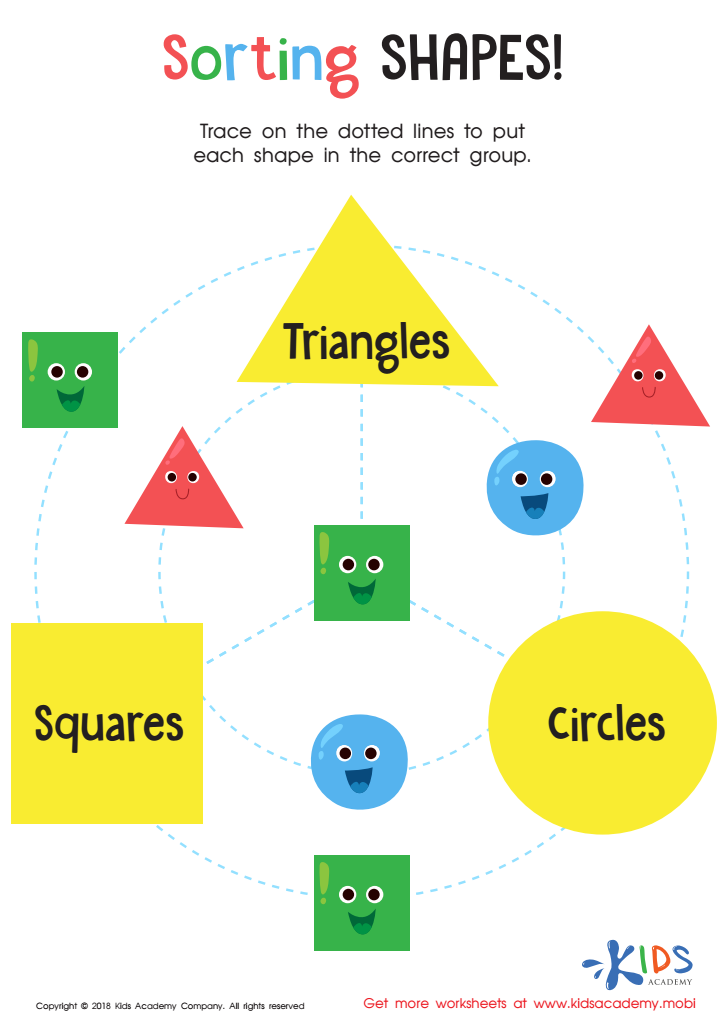
Sorting Shapes - Part 3 Worksheet
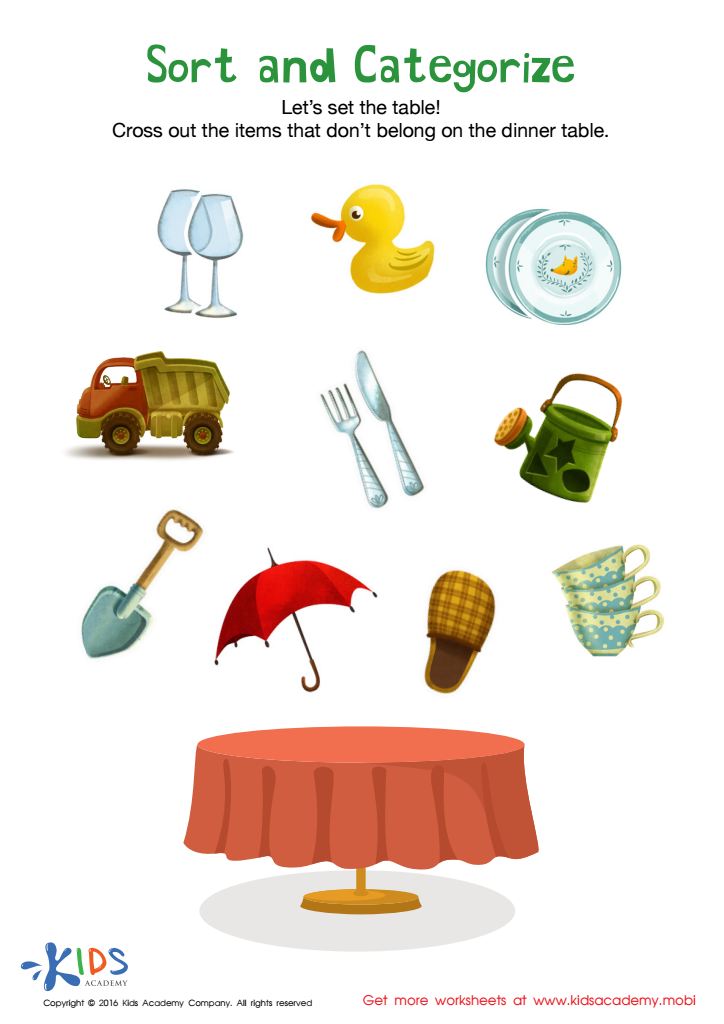
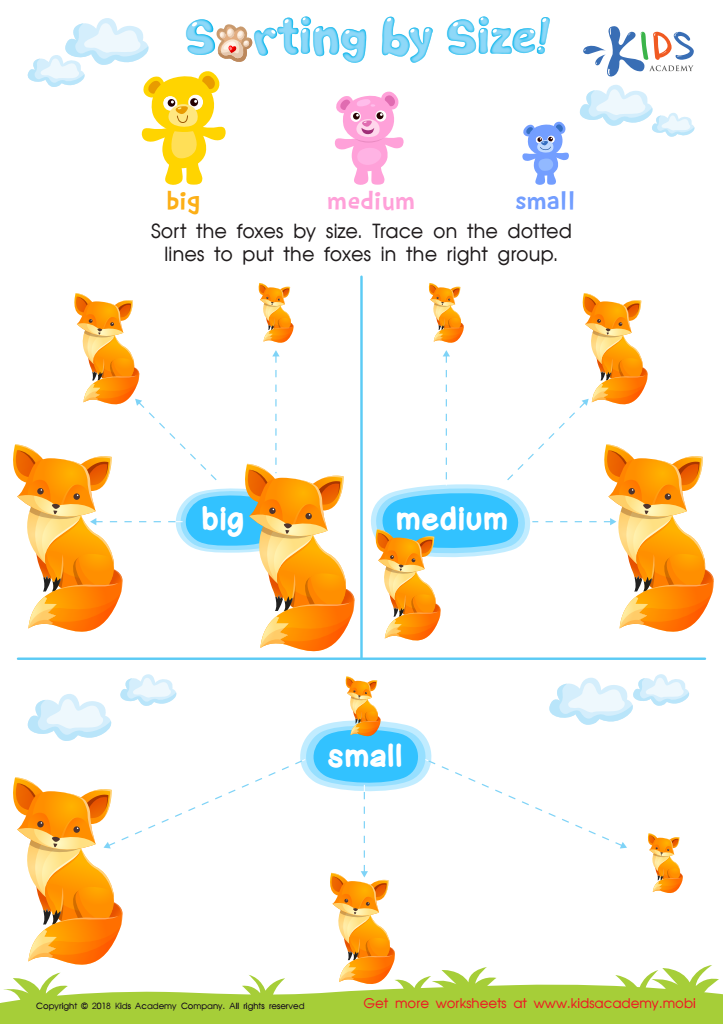
Sorting by Size Worksheet








Categorization skills (normal sorting) are essential for the cognitive development of children aged 3-9. As children learn to group objects, ideas, or information based on common characteristics, they develop critical thinking and problem-solving abilities. These skills are fundamental for intellectual growth and academic success.
Categorization helps children make sense of their environment. By sorting objects, they learn to notice similarities and differences, enhancing their observational skills. For example, sorting blocks by color or size teaches children about attributes and relationships, laying the groundwork for more complex thinking patterns.
Moreover, categorization promotes language development. When children discuss why items belong to certain groups, they expand their vocabulary and learn to articulate their thoughts clearly. This linguistic practice is key for effective communication and literacy.
Emotionally, sorting activities can boost a child's confidence. Successfully categorizing objects provides a sense of accomplishment, encouraging them to tackle more challenging tasks. It also fosters independence and organizational skills, which are crucial for daily life and future academic settings.
So, parents and teachers should value categorization skills, as they nurture foundational abilities that support overall intellectual, linguistic, and emotional development, preparing children for lifelong learning and adaptability in an ever-changing world.








