Critical Thinking Normal Sorting Worksheets for Ages 3-9
3 filtered results
Difficulty Level
Grade
Age
-
From - To
Subject
Activity
Standards
Empower young minds with our Critical Thinking Normal Sorting Worksheets, designed for ages 3-9. These engaging activities enhance essential learning skills by encouraging children to analyze, categorize, and sequence objects based on various attributes such as size, shape, and color. Each worksheet fosters critical thinking, problem-solving, and fine motor skills, providing a solid foundation for future academic success. Perfect for both classroom settings and home practice, our worksheets make learning fun and interactive, ensuring your child’s developmental milestones are met with ease. Equip your child with the tools for a brighter future with our expertly crafted sorting exercises.
Favorites
With answer key
Interactive
Sorting Animals in 3 Groups Worksheet
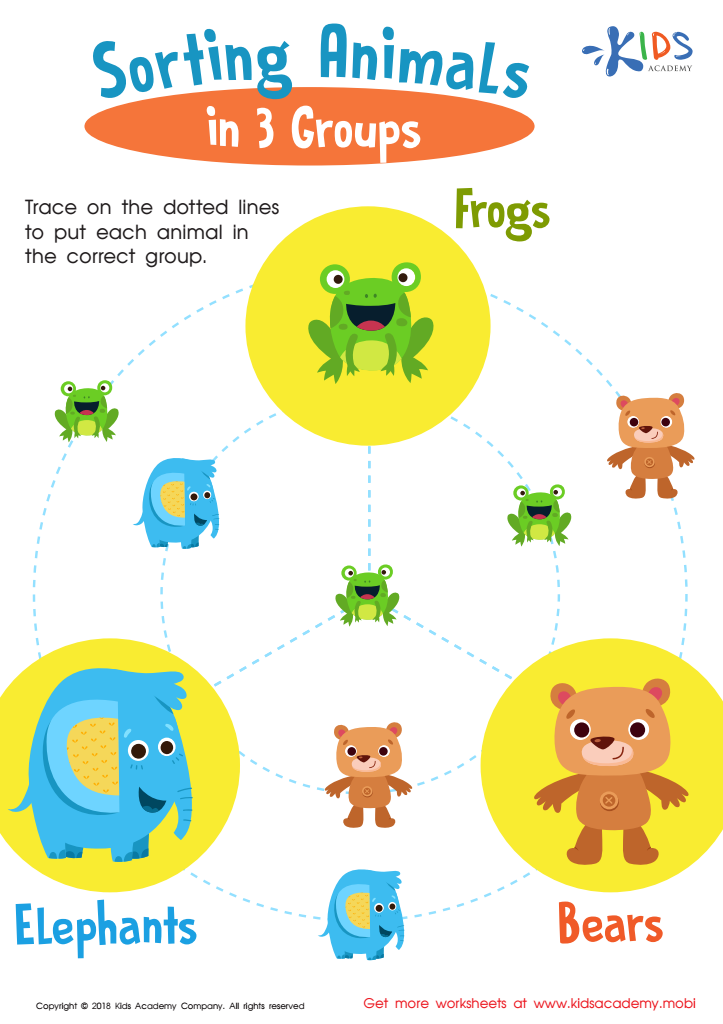
Let your kids practice and build skills for future Venn Diagrams with this PDF worksheet. They'll trace lines to match and group animals, and learn the differences and similarities of animals by categorizing with pictures and words. Plus, it's a great way to develop fine motor skills.
 Assign to My Students
Sorting Animals in 3 Groups Worksheet
Worksheet
Make the Same Pattern Worksheet
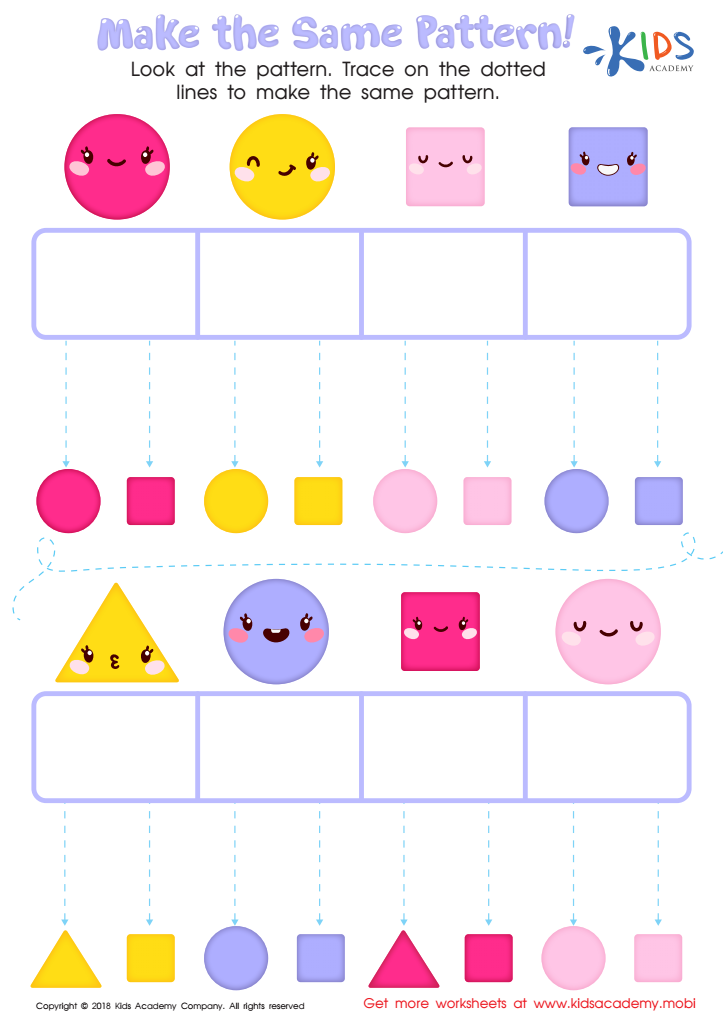
Help your child look at the patterns in the tracing sheet and guide them to trace the dotted lines to match the shapes. This exercise tests their ability to copy pictures correctly, so emphasize the importance of paying attention to the instructions and details.
Make the Same Pattern Worksheet
Worksheet
Join Kids Academy for Free
Who is primarily going to use this learning content?








Critical Thinking Normal Sorting activities play a crucial role in a child's cognitive development, and are important for parents and teachers to prioritize. During ages 3-9, children’s brains are at a peak stage of absorbing information and forming neural connections that are vital for future learning. Critical thinking and sorting tasks help hone a child’s ability to analyze, compare, and categorize objects based on various attributes such as color, shape, size, or function. These exercises lay the groundwork for enhanced problem-solving skills, logical reasoning, and decision-making abilities.
Participation in sorting activities encourages children to observe details, discern patterns, and develop criteria for grouping items in meaningful ways. This not only strengthens their analytical mindset but also enhances their capability to understand and navigate complexities in everyday life. Further, kids learning through sorting gain an intuitive grasp of mathematics and various other academic subjects where classification and categorization are essential.
Embracing such activities allows parents and teachers to observe a child's understanding and challenge them to think deeper. Supporting these exercises fosters an interactive, engaging learning atmosphere where kids learn to reflect on their processes and validate their choices, setting a strong foundation for advanced critical thinking skills in later years.