Sorting skills Normal Sorting Worksheets for Ages 3-9
5 filtered results
-
From - To
Enhance your child's sorting skills with our engaging Normal Sorting Worksheets, designed for ages 3-9. These worksheets introduce basic sorting concepts through fun and interactive activities, helping young learners categorize items based on various attributes like color, shape, and size. Ideal for preschool and early grade classrooms, our expertly crafted worksheets promote cognitive development and critical thinking. With colorful illustrations and age-appropriate challenges, your child will enjoy sorting and organizing objects while building confidence in their problem-solving abilities. Explore a world of learning with our Sorting Skills worksheets that make education both enjoyable and effective! Download free worksheets today!
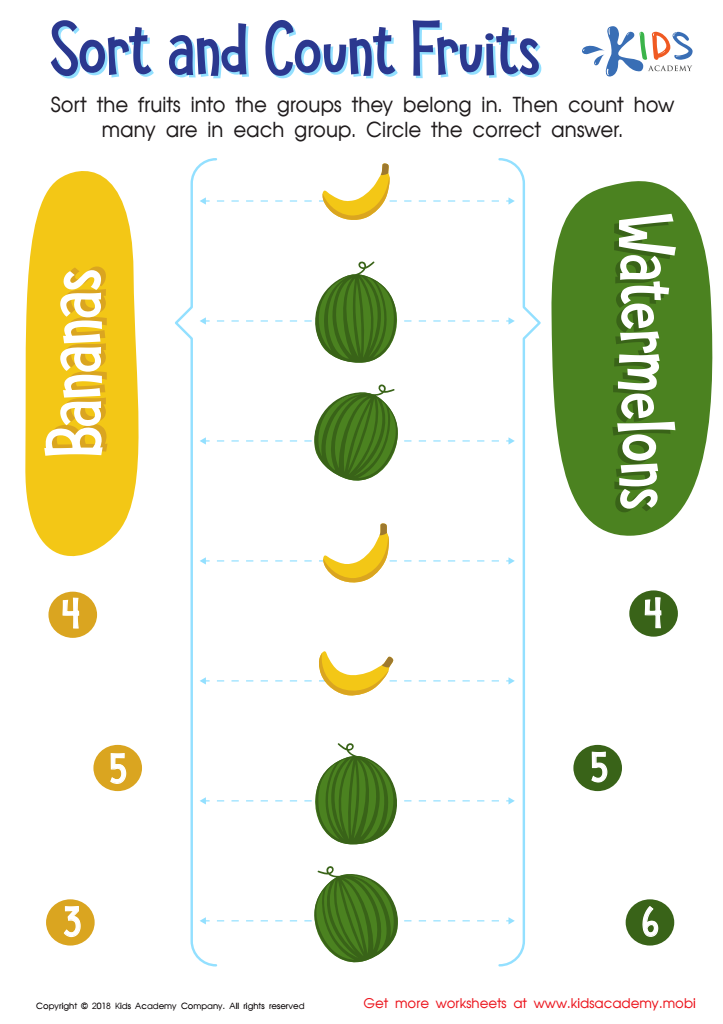
Sort and Count Fruits Worksheet
 Assign to My Students
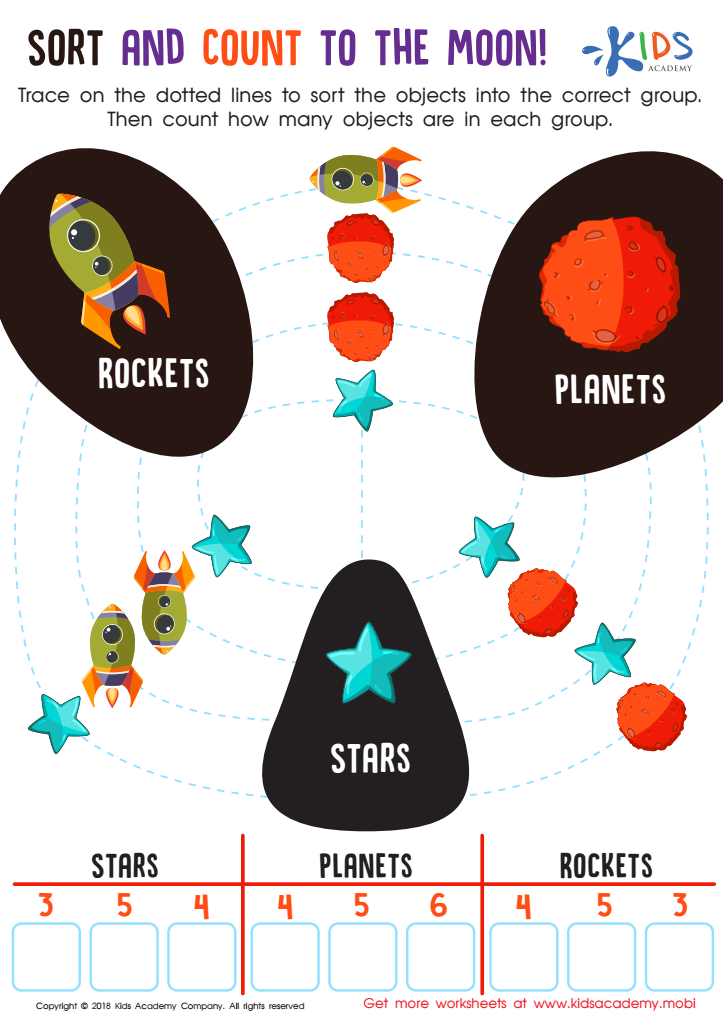
Sort and Count to the Moon Worksheet
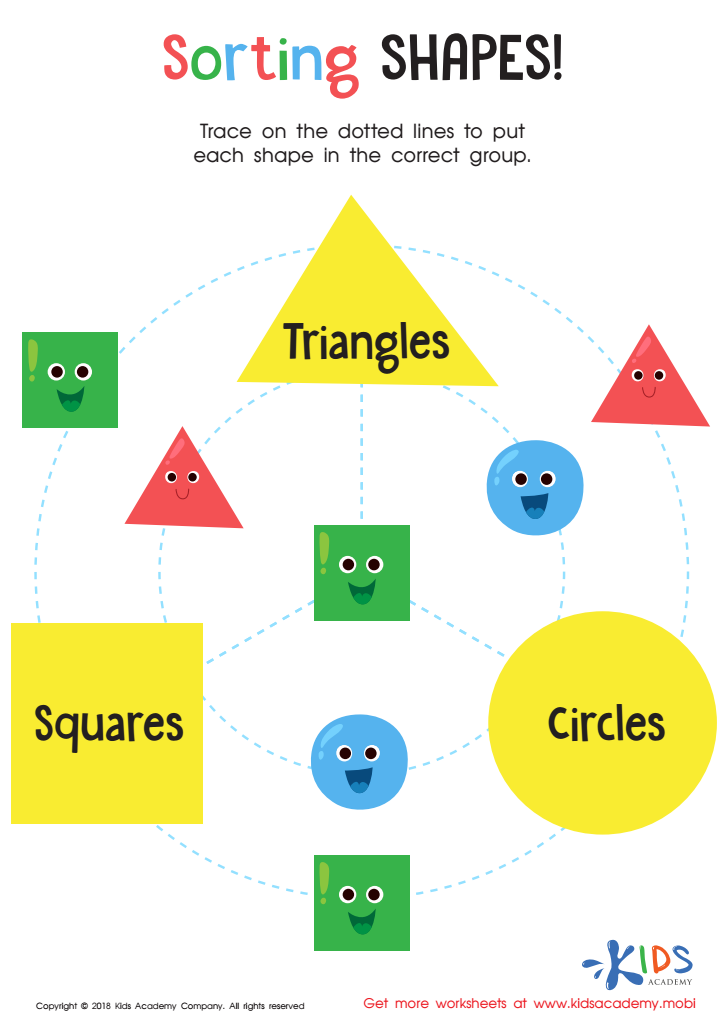
Sorting Shapes - Part 3 Worksheet
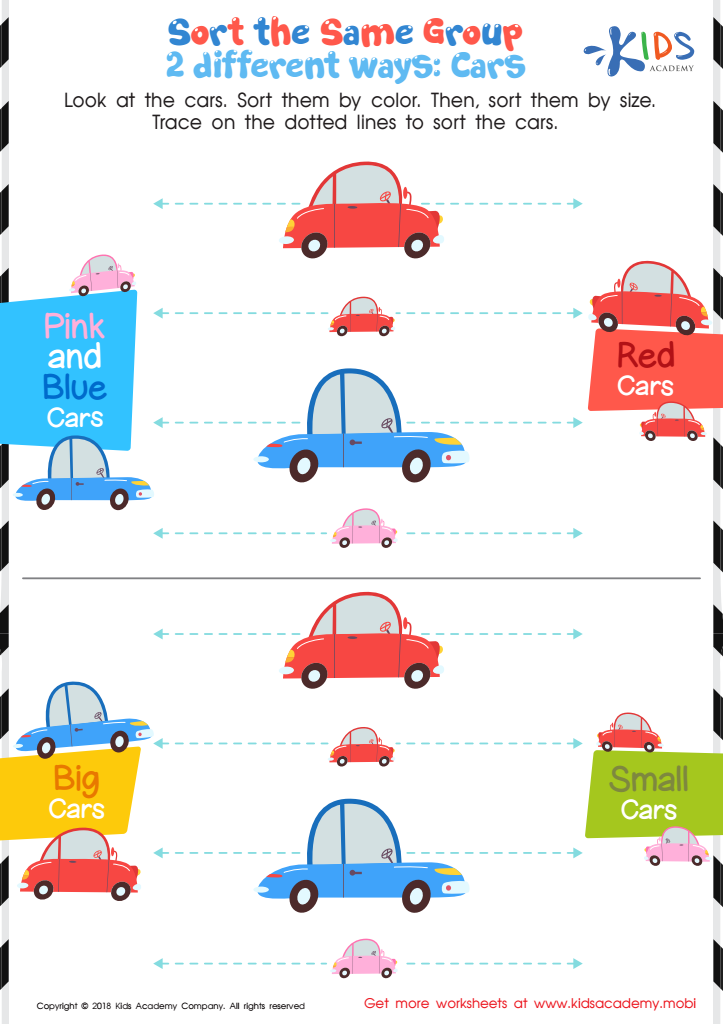
Sort the Same Group 2 Different Ways: Cars Worksheet
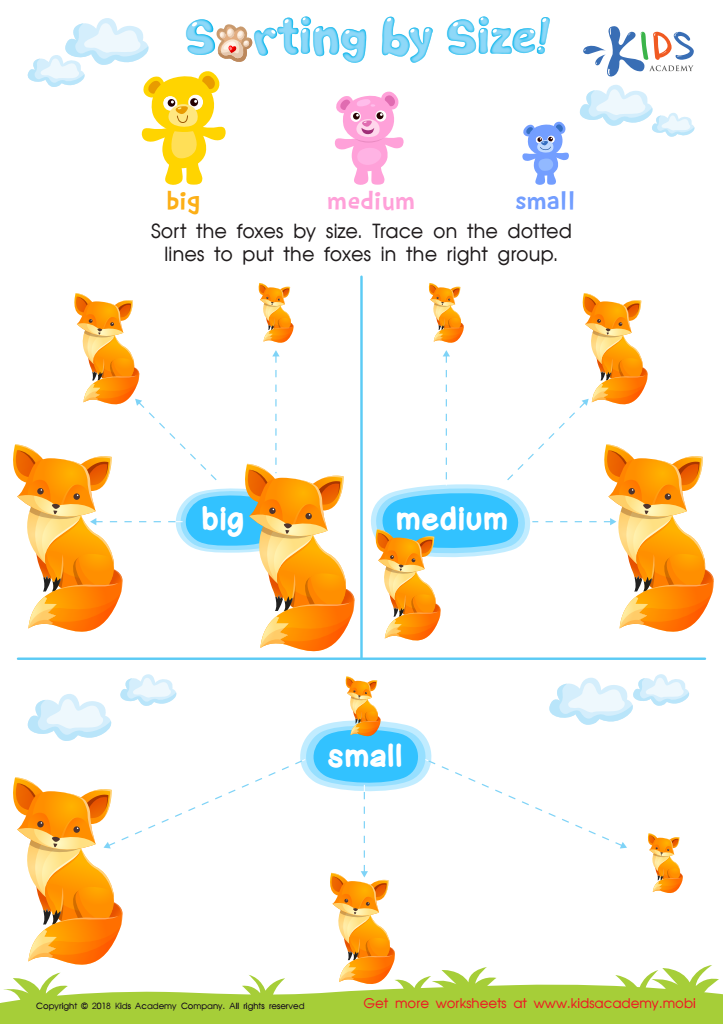
Sorting by Size Worksheet








Sorting skills are foundational to a child's cognitive development and provide a cornerstone for later learning. For children aged 3-9, learning to sort objects according to various attributes like color, shape, and size offers significant benefits. This skill not only enhances children's organizational abilities but also stimulates critical thinking and problem-solving skills as they categorize items.
Parents and teachers should care about sorting skills because they are key indicators of a child's understanding of relationships and their ability to classify and differentiate between concepts. As children sort, they engage in discussions, share logic, and practice decision-making. These activities bolster language development as they learn new vocabulary tied to their sorting criteria.
Moreover, normal sorting activities lay the groundwork for future math skills, such as pattern recognition and algebraic reasoning. By mastering sorting, children also develop strong visual and spatial skills that aid in literacy and scientific comprehension.
Encouraging sorting activities, through play or structured tasks, allows children to explore their environment meaningfully. Ultimately, fostering sorting skills in young learners promotes growth across multiple domains, making it critical for parents and educators to prioritize this integral learning activity.








