Logical Reasoning Normal Building Vocabulary Worksheets for Ages 3-9
4 filtered results
-
From - To
Enhance your child's cognitive skills with our "Logical Reasoning Normal Building Vocabulary Worksheets" designed for ages 3-9! These engaging worksheets focus on developing critical thinking and vocabulary through fun, age-appropriate activities. Children will explore words and their meanings, tackle puzzles, and solve problems that promote logical reasoning and improve reading comprehension. Our carefully crafted materials encourage creativity and independent thought, laying a strong foundation for future learning. Suitable for both home practice and classroom use, these worksheets make learning enjoyable and interactive, helping young learners strengthen essential skills essential for academic success. Boost your child’s vocabulary and reasoning abilities today!
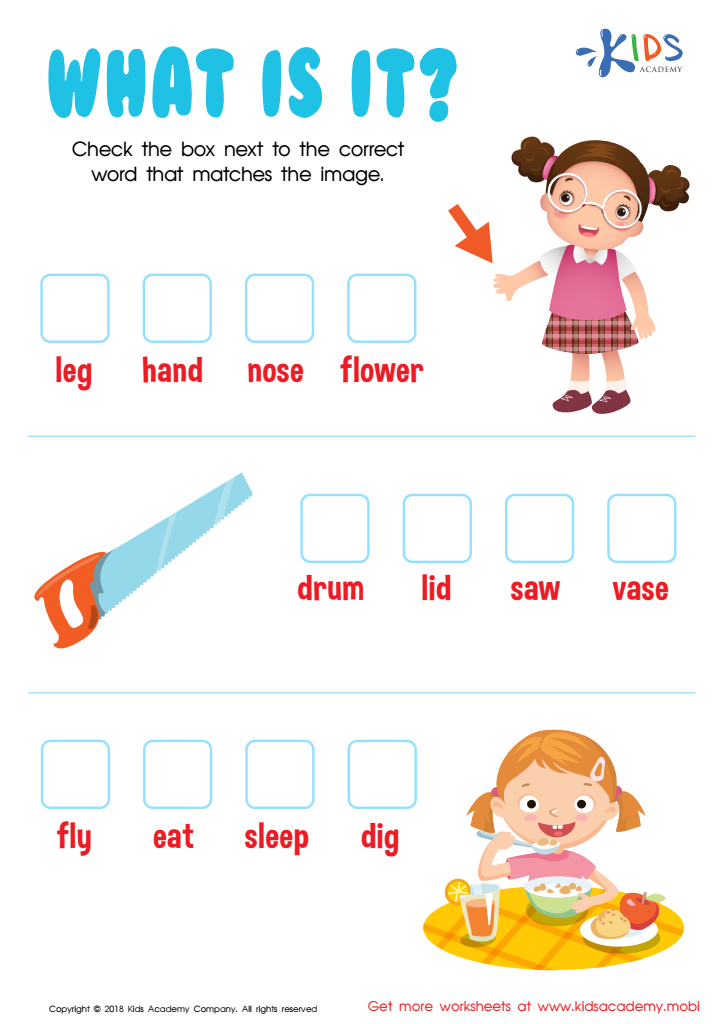
What Is It? Worksheet
 Assign to My Students











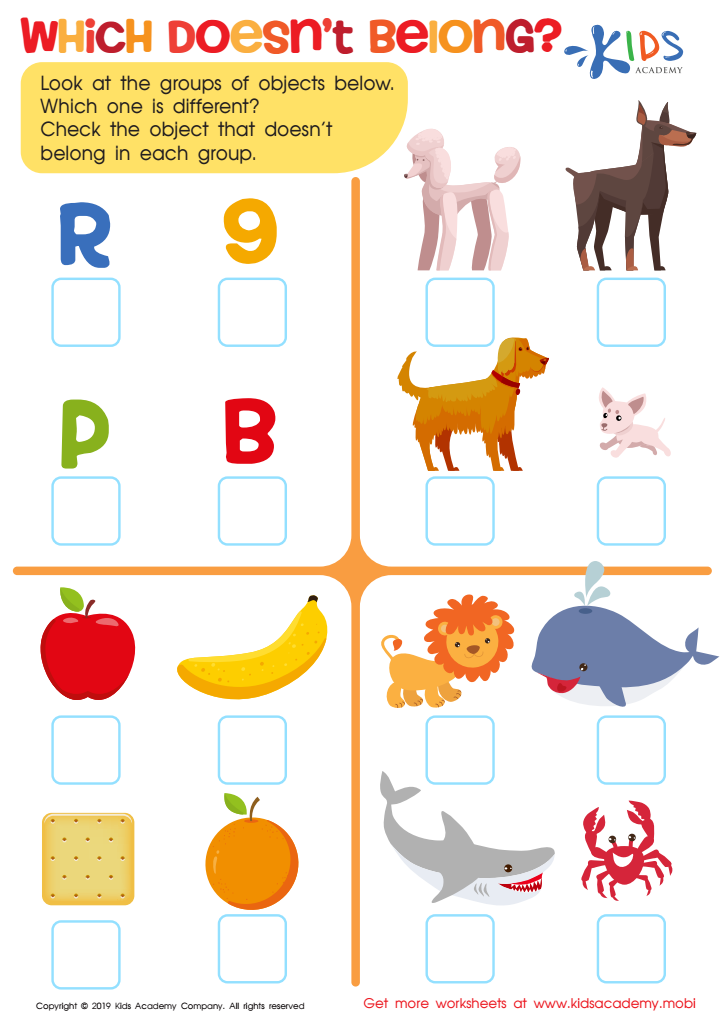
Which Doesn't Belong? Worksheet
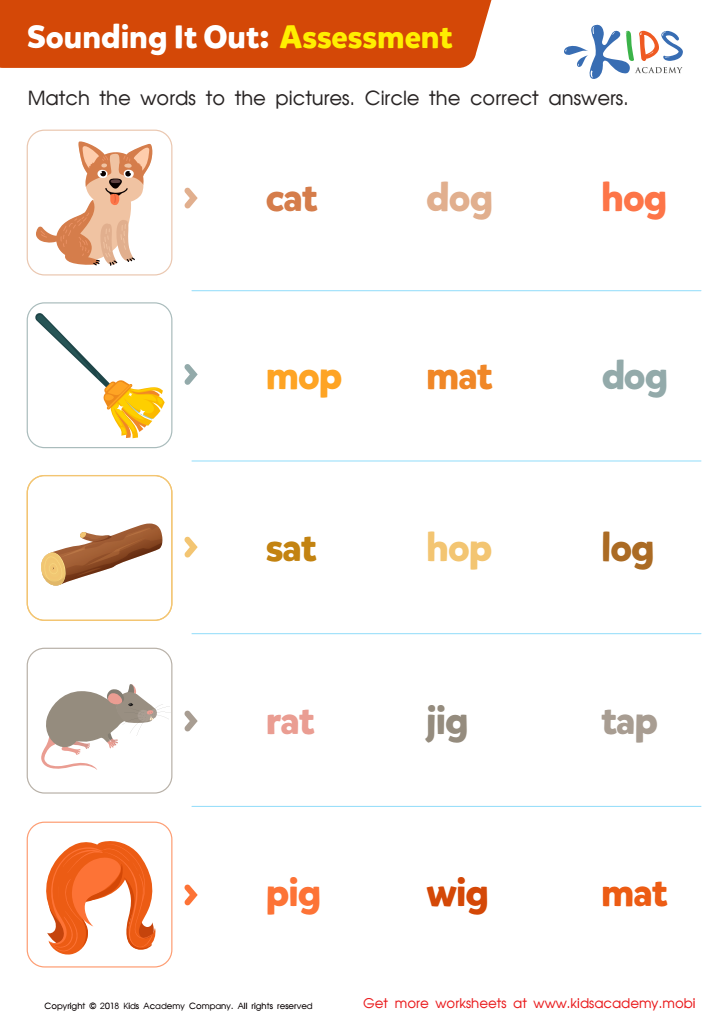
Sounding it Out: Assessment Worksheet
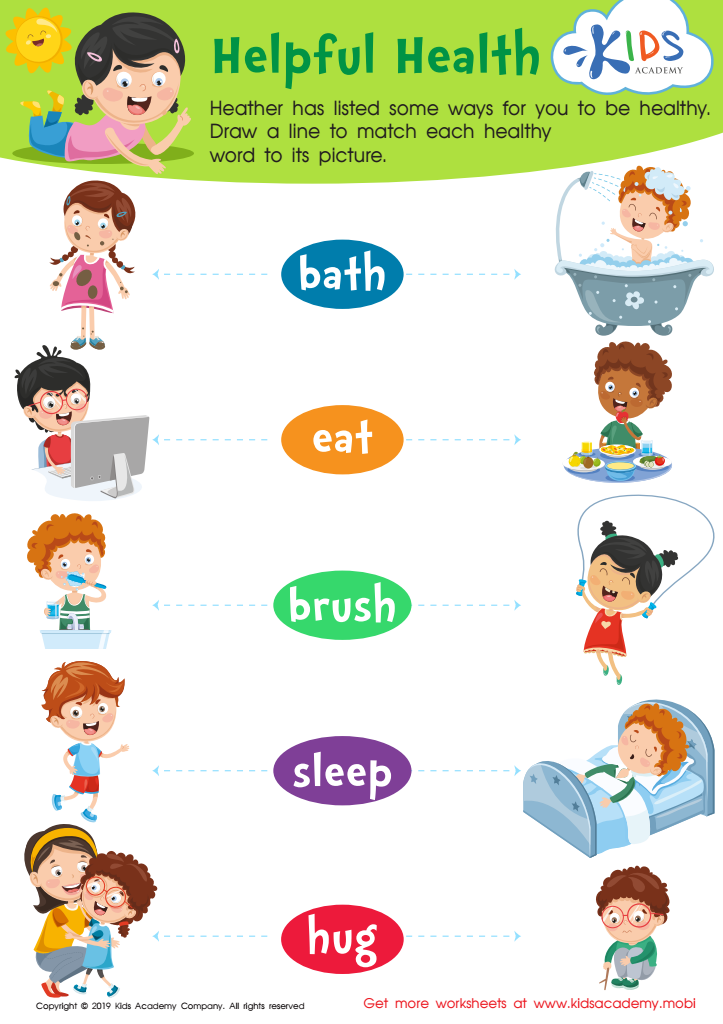
Helpful Health Worksheet



.jpg)




Logical reasoning and vocabulary development are fundamental components of early childhood education, particularly for children ages 3 to 9. Parents and teachers should prioritize these skills as they form the backbone of a child’s cognitive and linguistic abilities. Logical reasoning helps children to analyze situations, recognize patterns, and solve problems creatively. This not only prepares them for academic challenges but also enhances critical-thinking skills vital for real-life situations.
Building vocabulary early on enriches children's language skills, enabling them to express themselves more clearly and understand others better. A robust vocabulary fosters reading comprehension and fluency—the more familiar children are with words, the easier it becomes to grasp complex concepts, ideas, and stories as they progress in their education.
Both logical reasoning and vocabulary work hand in hand; logical thinking can lead to better understanding and use of language. Engaging children in games, discussions, and activities that promote both skill areas greatly enhances their overall cognitive development. Creating a solid foundation in these areas influences academic success, boosts self-confidence, and prepares children for lifelong learning—all compelling reasons for parents and teachers to invest time and effort in nurturing these essential skills.








