Phonics recognition Normal Building Vocabulary Worksheets for Ages 3-9
3 filtered results
-
From - To
Welcome to our Phonics Recognition and Vocabulary Building Worksheets designed for children ages 3-9. These engaging worksheets aid early readers in developing essential phonics skills while expanding their vocabulary. Through fun activities such as word sorting, matching, and fill-in-the-blanks, kids will strengthen their ability to recognize sounds and letters, paving the way for fluent reading. Our resources encourage interactive learning and promote cognitive skills, ensuring a holistic approach to literacy. Give your child the gift of reading confidence with our carefully crafted worksheets that make phonics and vocabulary fun and effective! Perfect for home or classroom use.
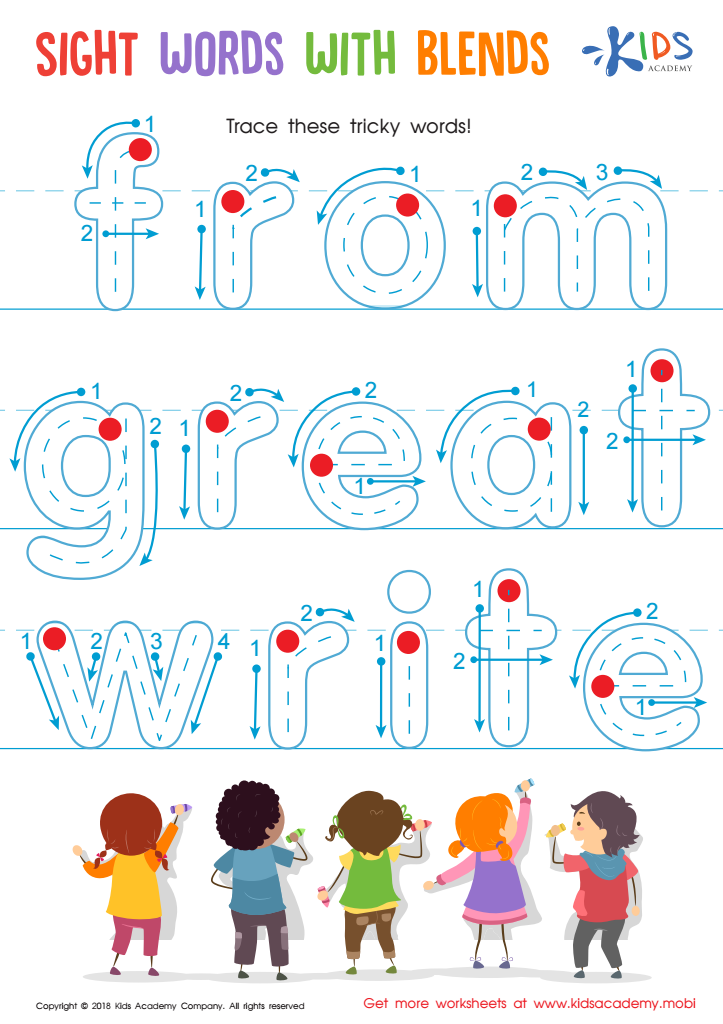
Sight Words with Blends Worksheet
 Assign to My Students











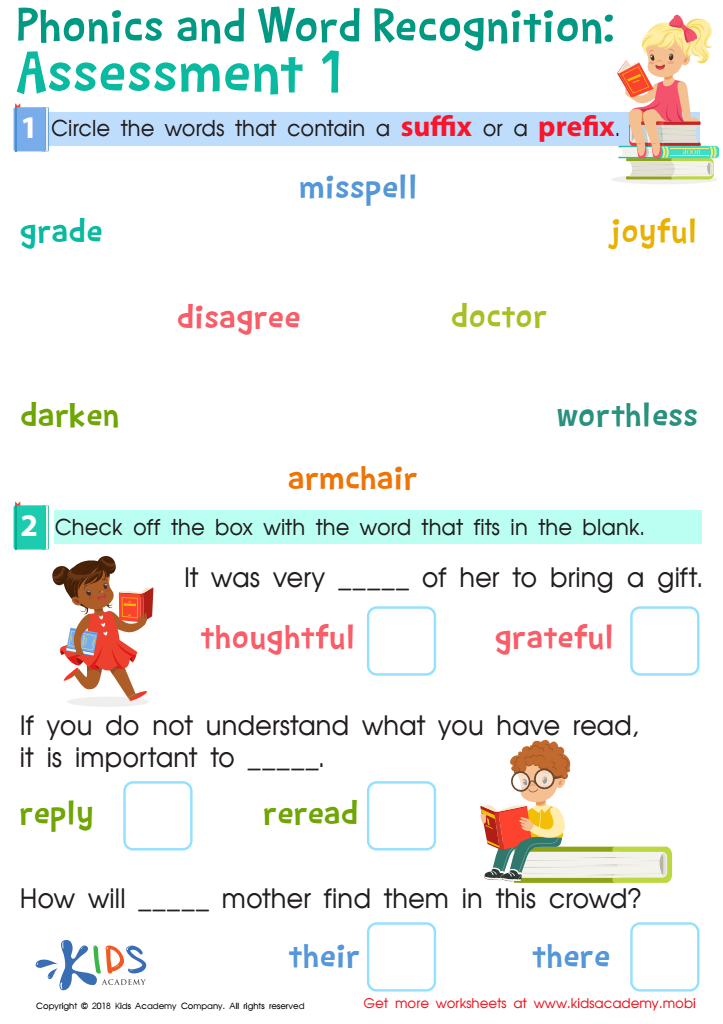
Phonics and Word Recognition: Assessment 1 Worksheet
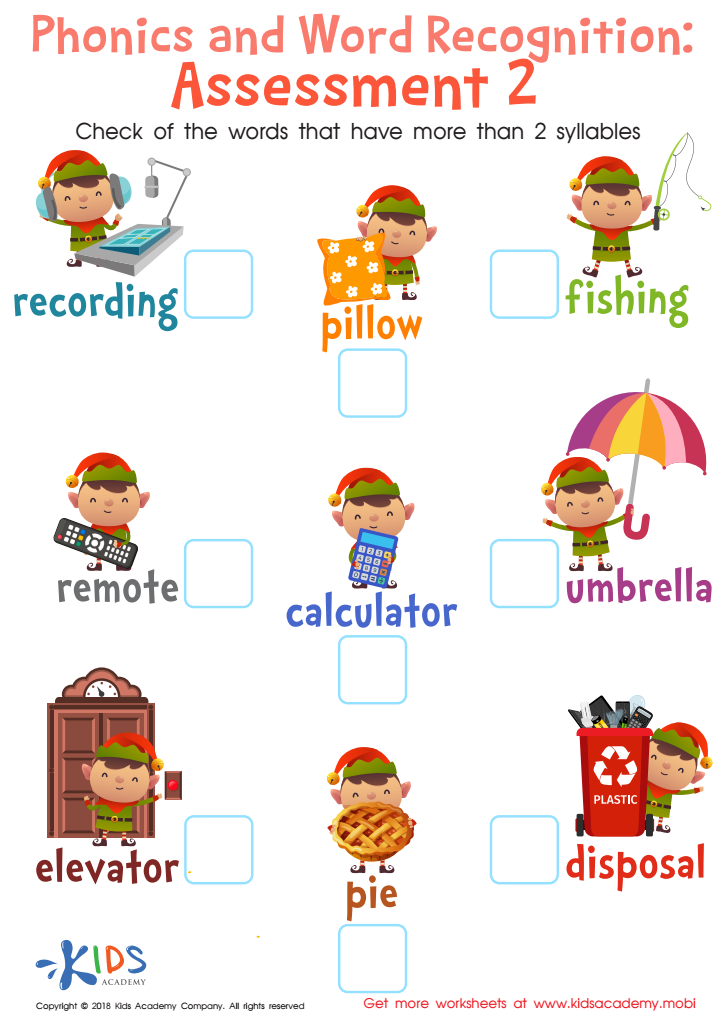
Phonics and Word Recognition: Assessment 2 Worksheet




.jpg)



Phonics recognition and vocabulary development are crucial components of early literacy for children aged 3-9. Understanding phonics helps children decode words, linking sounds to their corresponding letters, which is foundational for reading. When children grasp phonics, they gain confidence and become more motivated readers, setting the stage for lifelong literacy skills.
Additionally, building vocabulary during these formative years enhances comprehension and communication. A robust vocabulary enables children to express their thoughts, understand complex ideas, and build meaningful relationships through effective dialogue. Engaging in varied language experiences, such as reading aloud, discussing new words, and encouraging conversation, significantly improves vocabulary acquisition.
Parents and teachers play a vital role in this developmental process. By fostering an environment that prioritizes phonics and vocabulary, they can support children's cognitive growth and academic success. This focus can lead to better performance in school, improved reading skills, and higher future academic achievements. Moreover, phonics recognition and enriched vocabulary are not merely academic tools; they form the foundation for critical thinking and problem-solving skills, empowering children to navigate the world around them effectively. Hence, encouraging phonics recognition and vocabulary building should be a shared priority for both parents and teachers.








