Moral understanding Normal Reading Worksheets for Ages 3-9
5 filtered results
-
From - To
Explore our engaging Moral Understanding Reading Worksheets designed for children ages 3 to 9! These printable resources foster essential social and emotional skills, helping young learners navigate concepts of empathy, fairness, and respect through lively stories and relatable scenarios. Each worksheet encourages critical thinking and discussion, enabling children to reflect on their choices and the feelings of others. Perfect for educators and parents alike, our materials integrate seamlessly into early literacy programs or home learning environments. Support your child's moral development while enhancing their reading skills with these fun and interactive worksheets tailored to spark curiosity and foster a strong moral compass!
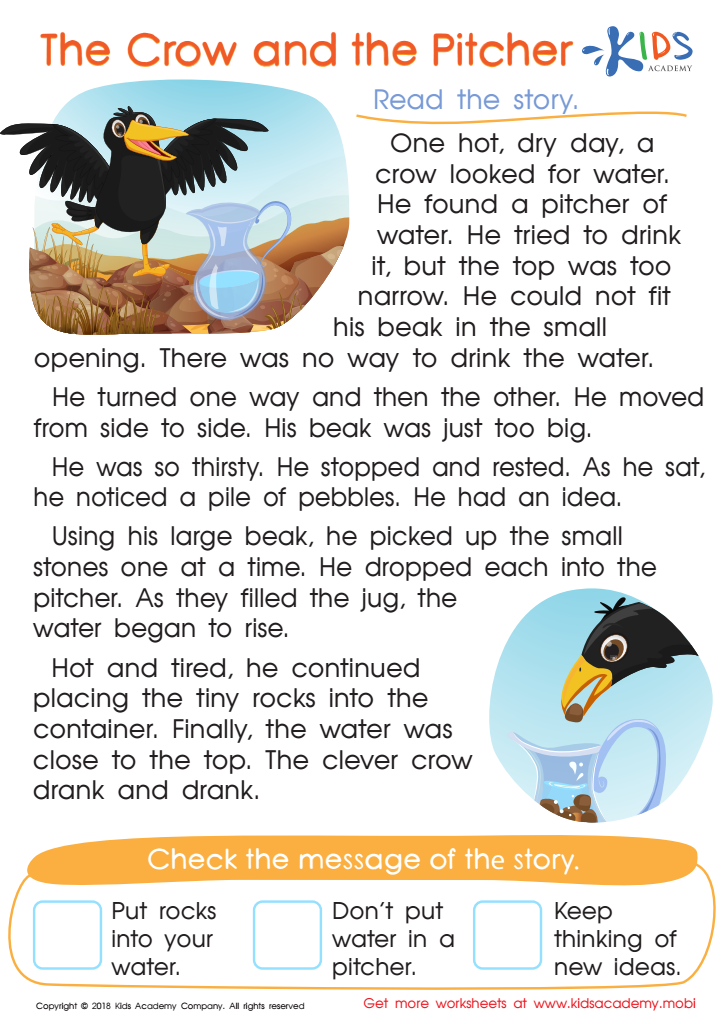
The Crow and the Pitcher Worksheet
 Assign to My Students
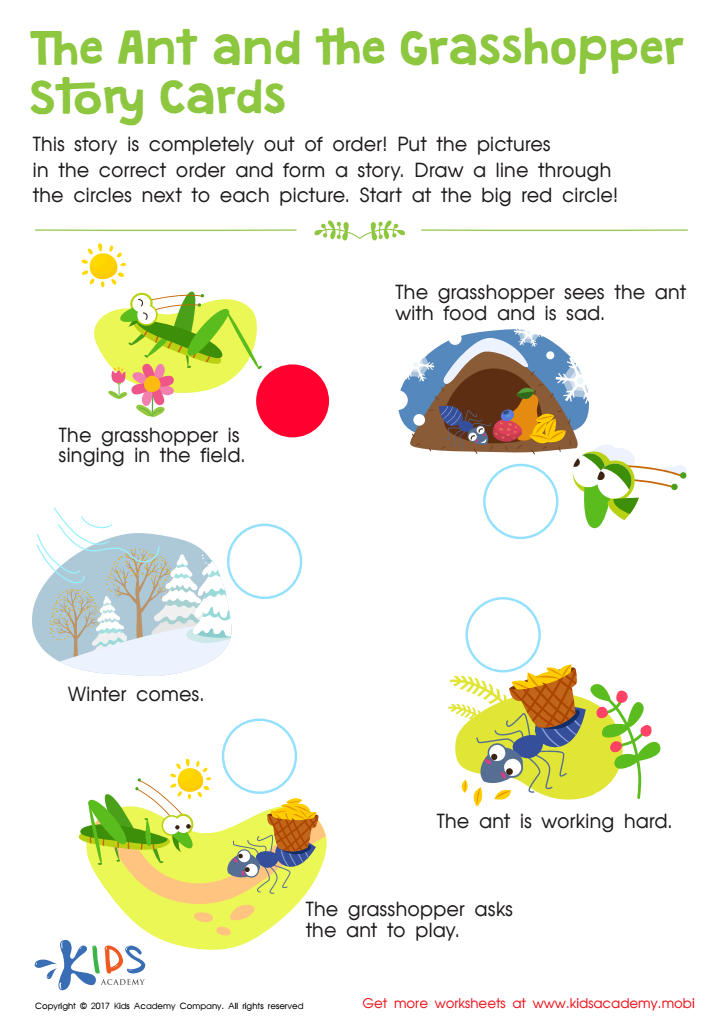
The Ant and The Grasshopper Worksheet
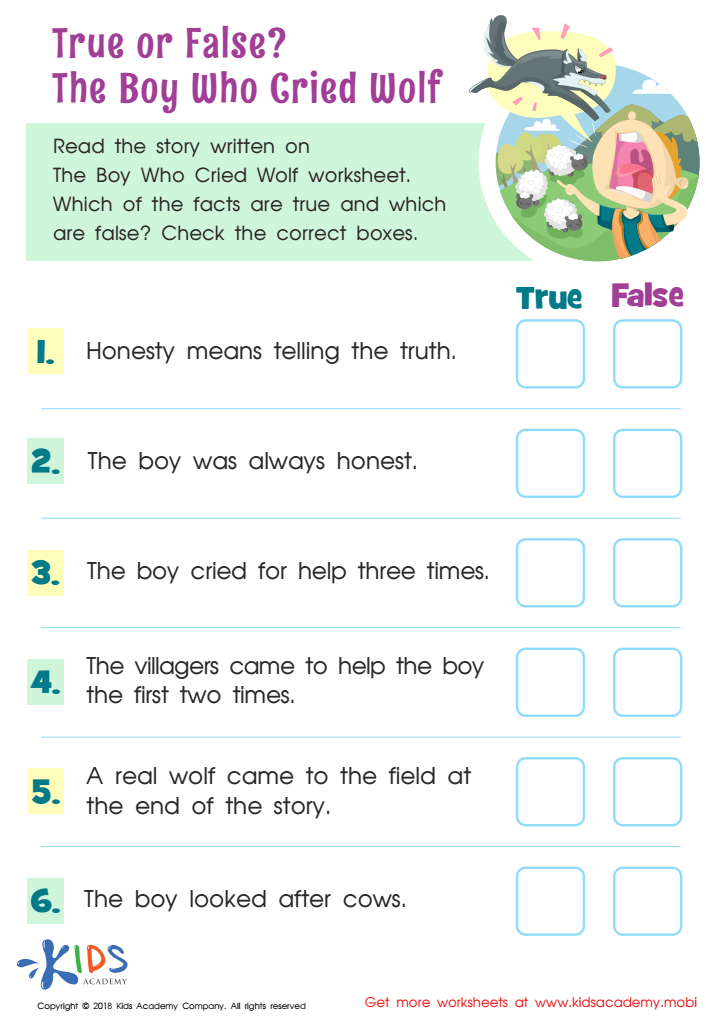
True or False? The Boy Who Cried Wolf Worksheet
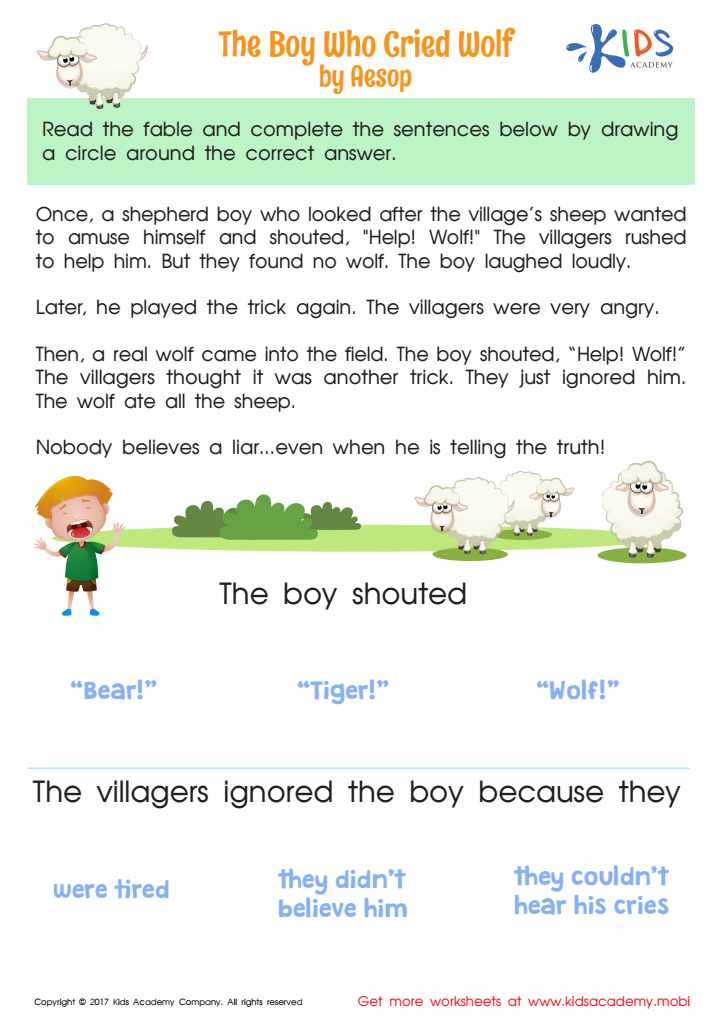
The Boy Who Cried Wolf Worksheet
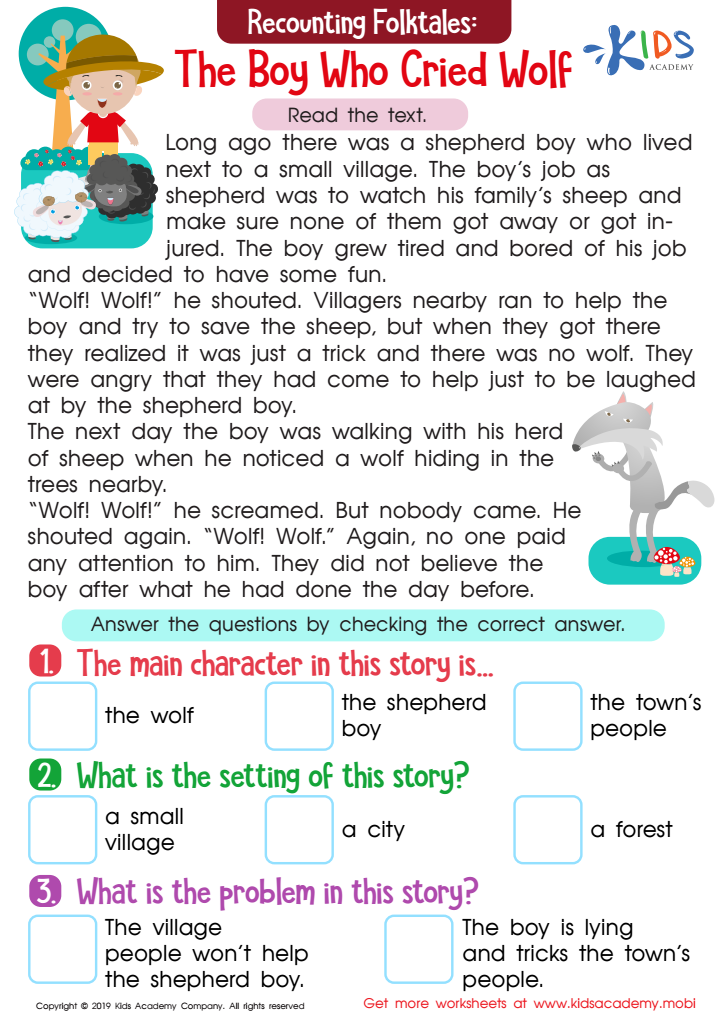
The Boy Who Cried Wolf Part 1 Worksheet






Moral understanding is crucial for children aged 3-9 as it forms the foundation for their social interactions and personal development. During these formative years, children begin to comprehend concepts of right and wrong, empathy, and fairness. When parents and teachers foster moral understanding, they help children develop essential skills such as cooperation, conflict resolution, and emotional intelligence.
Reading plays a vital role in this process. Engaging stories can introduce complex moral dilemmas in an age-appropriate way, allowing children to explore their values and perspectives without real-life consequences. Through characters and narratives, children can learn about compassion, sharing, honesty, and social responsibility.
Furthermore, discussions around moral themes in books enable children to articulate their thoughts and feelings, honing their critical thinking skills. This active engagement also strengthens their ability to relate to others, fostering a sense of community and belonging.
In essence, teaching moral understanding through reading nurtures well-rounded individuals who are better equipped to navigate relationships and societal challenges. Encouraging this growth not only benefits the child's personal development but also contributes to creating a more empathetic and understanding society. Thus, parents and teachers play a pivotal role in shaping the moral fabric of future generations.








