Rhyming skills development Normal Reading Worksheets for Ages 3-9
3 filtered results
-
From - To
Enhance your child's reading abilities with our "Rhyming Skills Development Normal Reading Worksheets for Ages 3-9." These expertly crafted worksheets cater to young learners by using engaging rhyming activities that foster phonemic awareness and vocabulary growth. Perfect for early readers, our resource is designed to make learning fun and effective. The worksheets include a variety of exercises that help kids recognize and produce rhyming words, aiding in their overall language development. Ideal for both classroom and home use, our rhyming worksheets are a crucial tool in your child's literacy journey. Discover the joy of learning with Kids Academy today!

Rhyming Words Rhyming Worksheet
 Assign to My Students
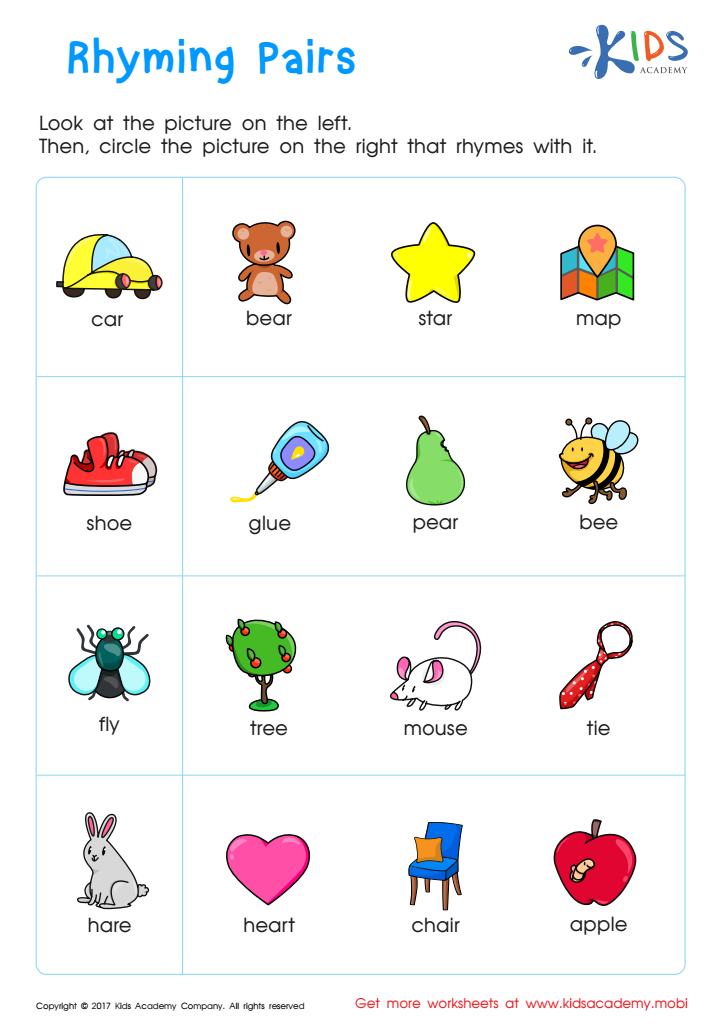

First Words: Picture Rhymes Worksheet








Rhyming skills development is crucial for young children, aged 3-9, as it lays the foundation for reading and language acquisition. First, rhyming enhances phonemic awareness, allowing children to recognize that words are made up of sounds and patterns. This awareness is essential for decoding and spelling, forming a cornerstone of proficient reading.
Secondly, engaging children with rhymes fosters memory skills and stimulates auditory discrimination, making it easier for them to learn new vocabulary. Songs, poems, and nursery rhymes capture their interest and help solidify language concepts in an enjoyable manner.
Rhyming also supports social interaction and communication skills. When children share rhymes or sing songs together, they practice expressive language and improve their ability to articulate thoughts. This interaction contributes to their emotional and social development, promoting a love for reading and learning.
By integrating rhyming skills into daily activities, both parents and teachers can create a fun, interactive environment conducive to lifelong literacy. Enhanced reading ability, communication skills, and a positive attitude towards learning are the long-term benefits that underscore the importance of developing rhyming skills in young children. Investing time and attention in this area is a critical step toward nurturing literate, confident, and articulate young learners.








