
Story analysis Normal Reading Worksheets for Ages 3-9
5 filtered results
Difficulty Level
Grade
Age
-
From - To
Subject
Activity
Standards
Welcome to our Story Analysis Normal Reading Worksheets tailored for children ages 3-9! These engaging worksheets are designed to enhance young readers' comprehension skills through analysis of age-appropriate stories. Children will develop critical thinking as they explore characters, plots, and themes. Each worksheet includes interactive exercises that promote retention and understanding, making learning both fun and effective. Ideal for classrooms or home learning, our resources cater to various reading levels. Foster a love for reading while helping your child articulate their thoughts about stories. Dive into the world of storytelling and empower your young reader today!
Favorites
With answer key
Interactive
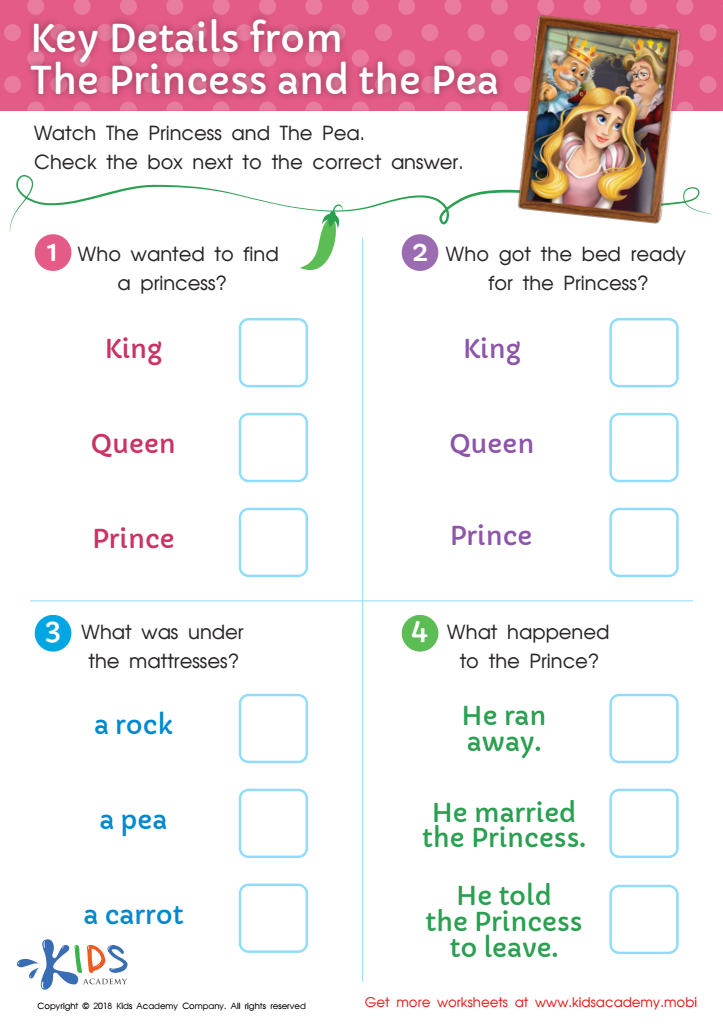
Key Details from the Princess and the Pea Worksheet
After reading The Princess and the Pea, ask your students questions to assess their comprehension of the story. Check their knowledge of key details. This printable can be used to help evaluate their understanding. Encouraging the recall of story events helps build important reading skills.
 Assign to My Students
Key Details from the Princess and the Pea Worksheet
Worksheet
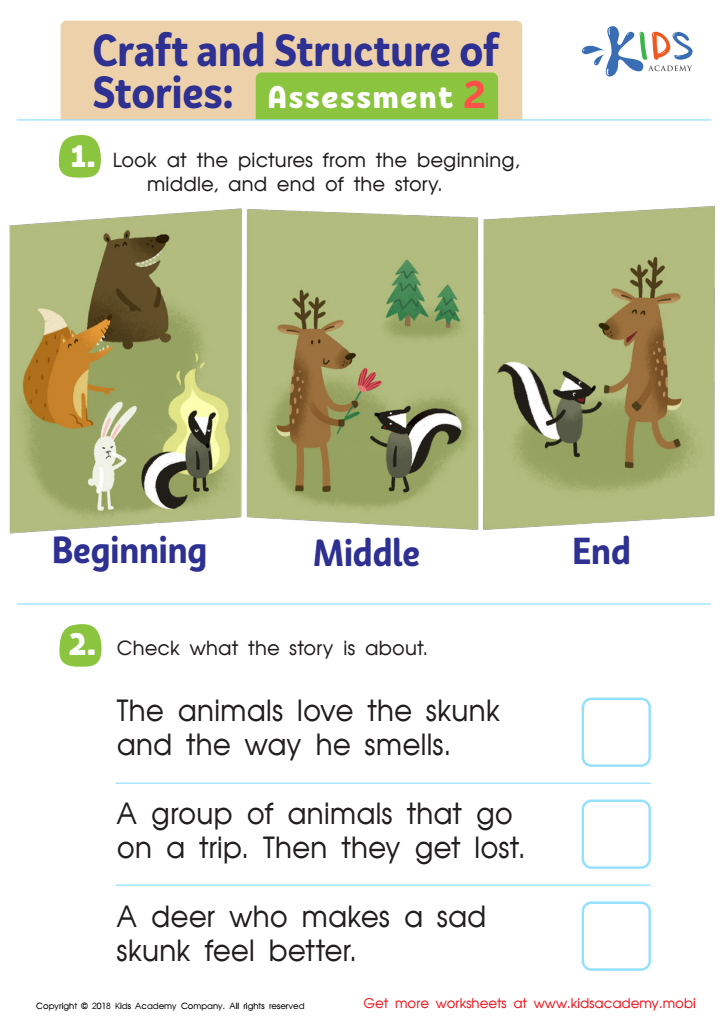
Craft and Structure of Stories: Assessment 2 Worksheet
Help your child assess their story sequencing and reading comprehension skills using this cute worksheet! It encourages them to look at the three pictures on the page, each representing a scene from the beginning, middle and end. Ask them what the story is about, then let them check the box next to the correct answer. This is a great way to ensure they understand the main events of a story.
Craft and Structure of Stories: Assessment 2 Worksheet
Worksheet
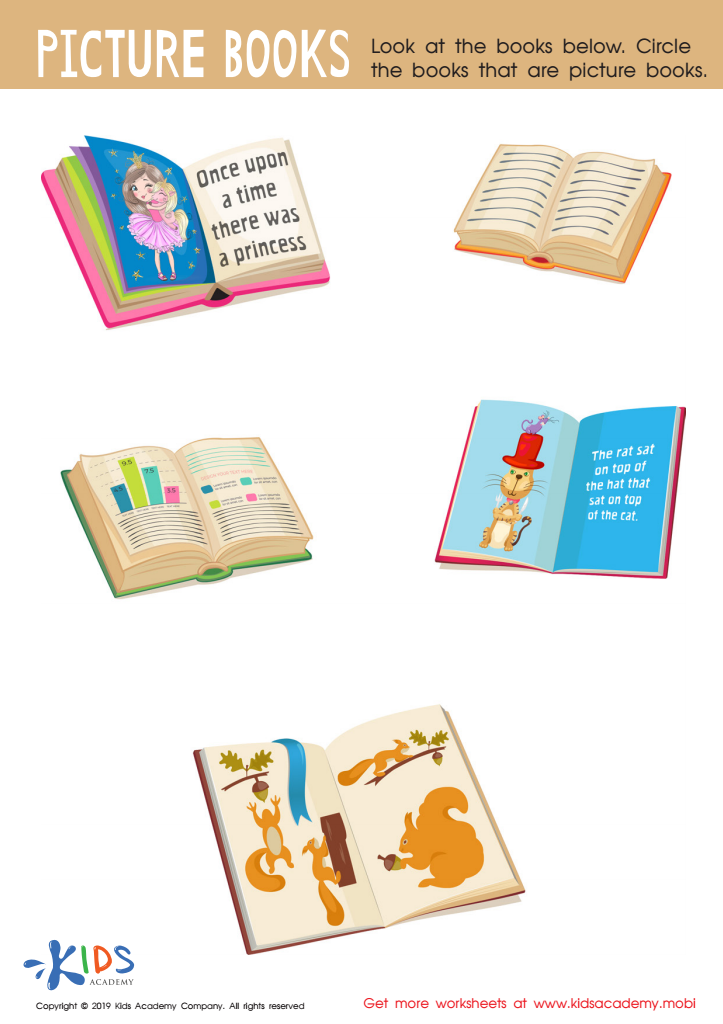
Picture Books Worksheet
Kids will love this exercise! Get their imaginations going with five colorful picture books. Ask them to circle the books that are picture books and have them enjoy the exciting stories, along with the colorful images. Reading can become that much more enjoyable!
Picture Books Worksheet
Worksheet
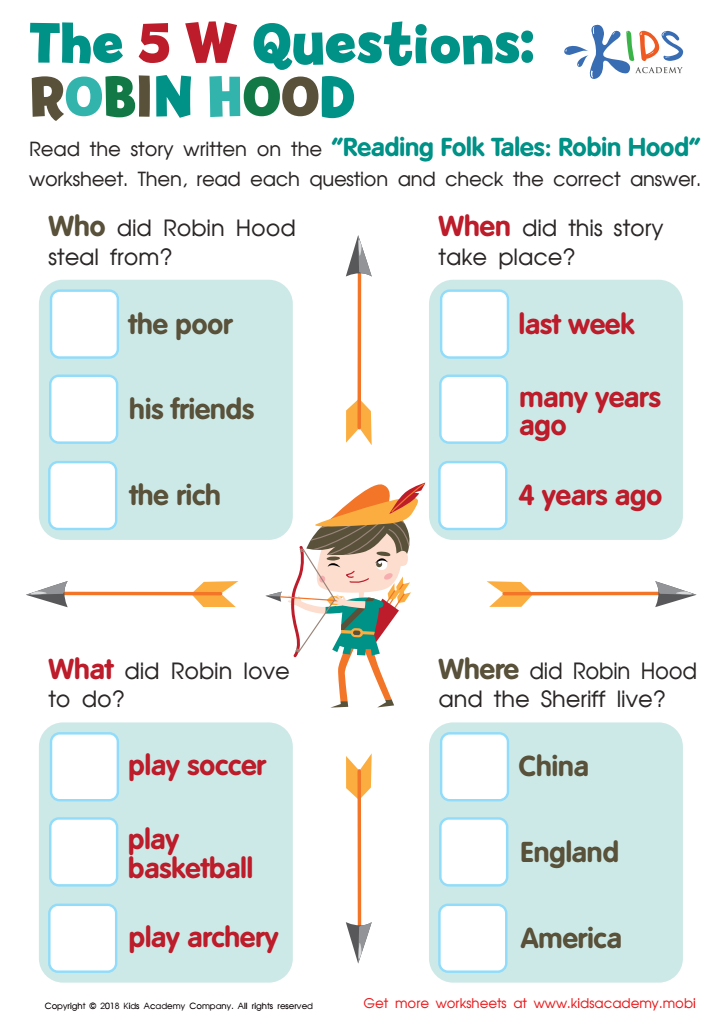
The 5 W Questions: Robin Hood Worksheet
Before embarking on this Robin Hood adventure, ensure your child reads and comprehends the 'Reading Folk Tales: Robin Hood' worksheet. Have them consider the story's lessons, and observe the details. Read the questions and help your kids select the correct answers.
The 5 W Questions: Robin Hood Worksheet
Worksheet
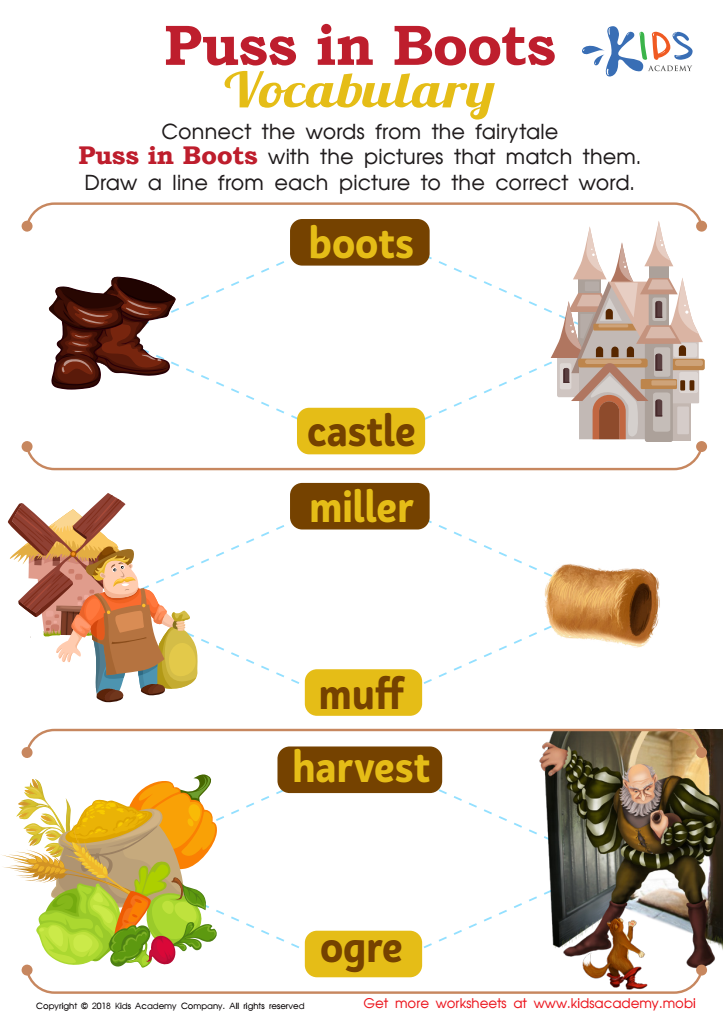
Puss in Boots Vocabulary Worksheet
Let your kids enjoy story-telling while learning at the same time. Help them learn from the fairytale, Puss in Boots, by connecting words from the worksheet with the matching pictures. Ask them to draw a line between each picture and corresponding word to build their vocabulary.
Puss in Boots Vocabulary Worksheet
Worksheet
Join Kids Academy for Free
Who is primarily going to use this learning content?







Story analysis in children aged 3-9 is vital for several reasons. Firstly, it enhances comprehension skills, allowing young learners to understand narratives and identify key elements like characters, settings, and plots. This skill is foundational for their overall literacy development; being able to analyze stories aids in better reading comprehension as they progress through school.
Additionally, story analysis encourages critical thinking. As children engage with stories, they learn to ask questions, make predictions, and draw connections to their own experiences. These practices boost cognitive development and creativity, enabling kids to think beyond the text.
Furthermore, story analysis helps in building emotional intelligence. By exploring characters’ emotions and motivations, children develop empathy and understanding of different perspectives, which are essential interpersonal skills.
For parents and teachers, fostering these abilities early on promotes a love for reading and learning. Early engagement in story analysis prepares children for academic challenges ahead, setting a positive tone for their educational journey. By prioritizing story analysis, adults can nurture well-rounded, critical thinkers equipped to navigate both literature and life.








