Understanding perspectives Normal Reading Worksheets for Ages 3-9
3 filtered results
-
From - To
Unlock the joy of reading with our "Understanding Perspectives" worksheets, specially designed for children ages 3-9. These engaging resources help young learners develop essential comprehension skills by exploring diverse viewpoints within various texts. Each worksheet encourages creativity and critical thinking through fun activities that foster curiosity and empathy. With vibrant illustrations and age-appropriate content, kids will enjoy connecting with different characters and their stories. Perfect for preschoolers and early readers, our worksheets enhance literacy skills and encourage a love for reading. Join us in nurturing confident readers who appreciate varied perspectives, making reading an exciting adventure for little minds!
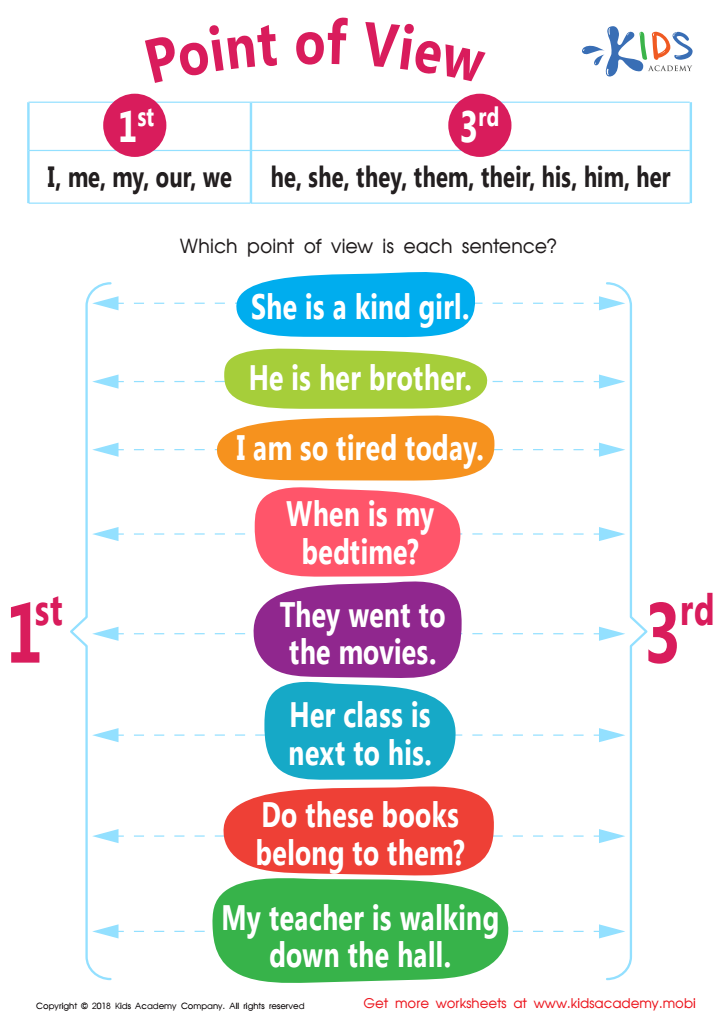
Point of View Worksheet
 Assign to My Students
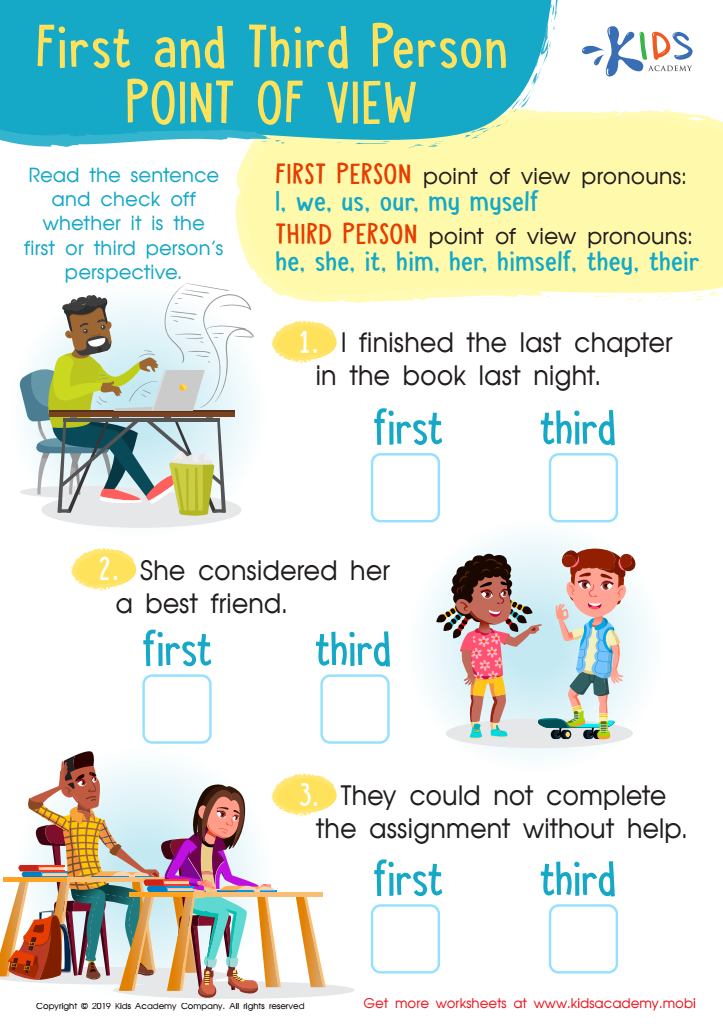
First and Third Person Point of View Worksheet
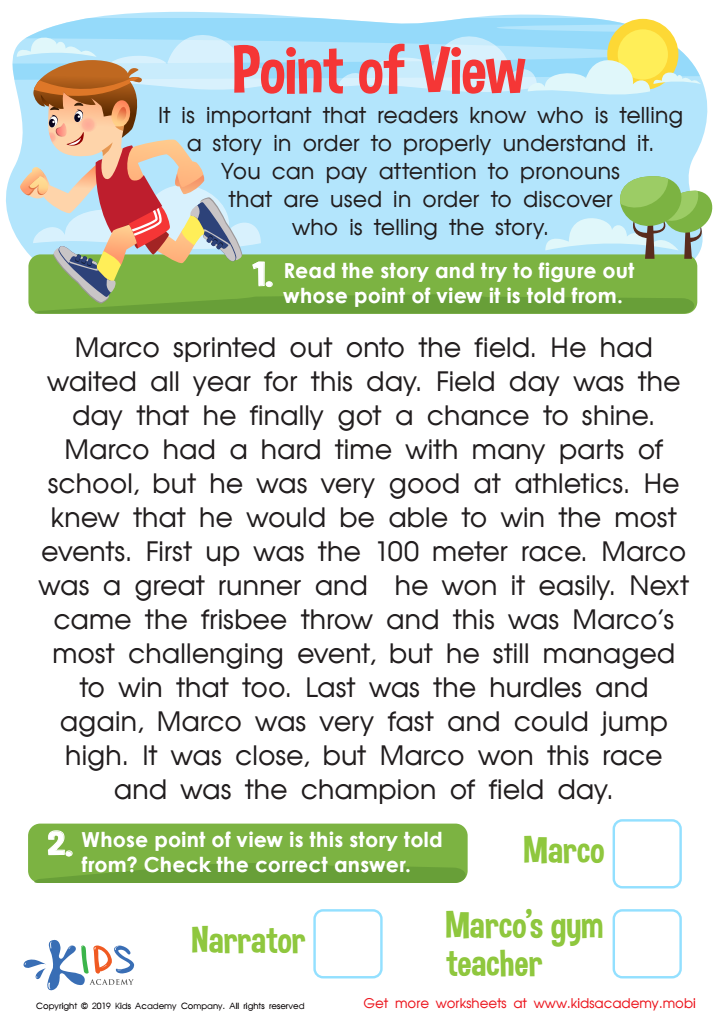
Point of View Worksheet







Understanding perspectives is a crucial skill for children aged 3-9, and parents and teachers should prioritize its development. At this age, children are rapidly learning about the world around them, and grasping different viewpoints helps foster empathy, critical thinking, and communication skills. When children learn to understand perspectives, they become better equipped to interact with their peers, resolve conflicts, and build profound relationships.
Early reading activities that incorporate diverse perspectives encourage children to consider characters’ thoughts and feelings, promoting emotional intelligence. Engaging with stories that feature various cultural, social, and personal backgrounds enhances children's ability to appreciate differences and embrace diversity. This foundational skill supports inclusivity and prepares them to navigate a complex, interconnected world.
Moreover, understanding perspectives leads to improved comprehension and analytical skills in reading. It encourages discussions, allowing children to articulate their viewpoints while respecting others. As parents and teachers model and reinforce perspective-taking, they instill values of kindness and open-mindedness.
Ultimately, fostering an understanding of different perspectives in young readers cultivates a balanced, empathetic, and socially aware generation poised to engage positively in their communities. It is vital for parents and educators to nurture this development for complete and holistic growth.








