Understanding Sequences Normal Reading Worksheets for Ages 3-9
3 filtered results
-
From - To
Discover how to enhance your child’s reading skills with our "Understanding Sequences Normal Reading Worksheets" for ages 3-9. These engaging and interactive worksheets are designed to help young learners grasp the concept of sequences in stories, promoting critical thinking and comprehension. Each worksheet offers fun illustrations and relatable scenarios that assist children in recognizing the order of events, fostering their ability to retell stories accurately. Ideal for both home and classroom use, these resources encourage language development while making learning enjoyable. Visit our website to access these valuable tools and support your child's early literacy journey today!
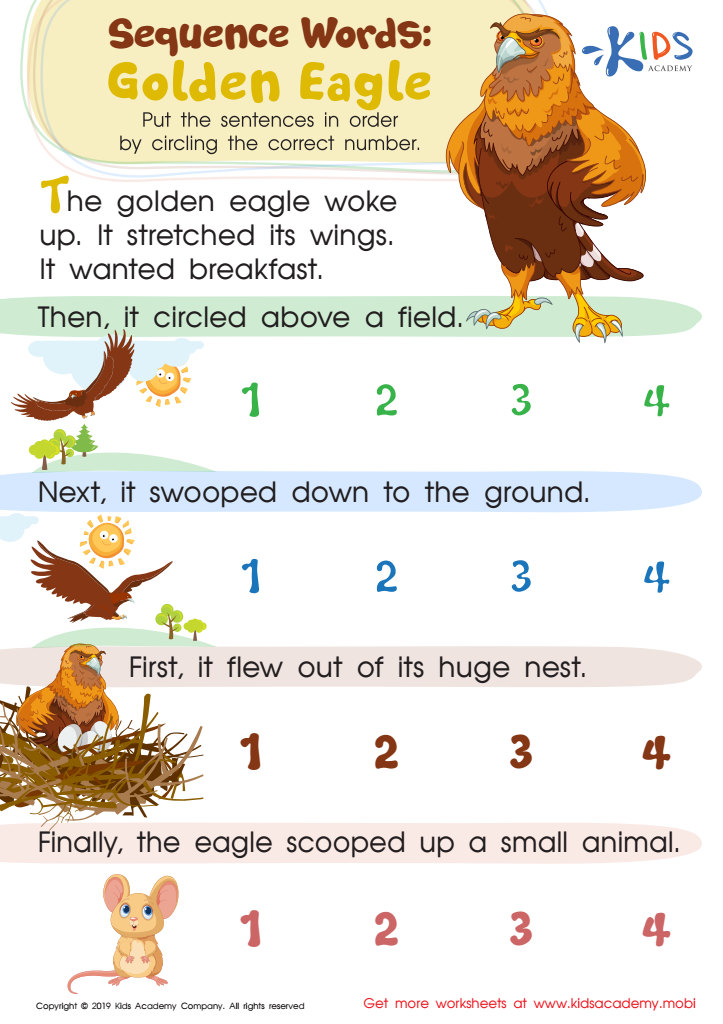
Sequence Word Eagle Worksheet
 Assign to My Students
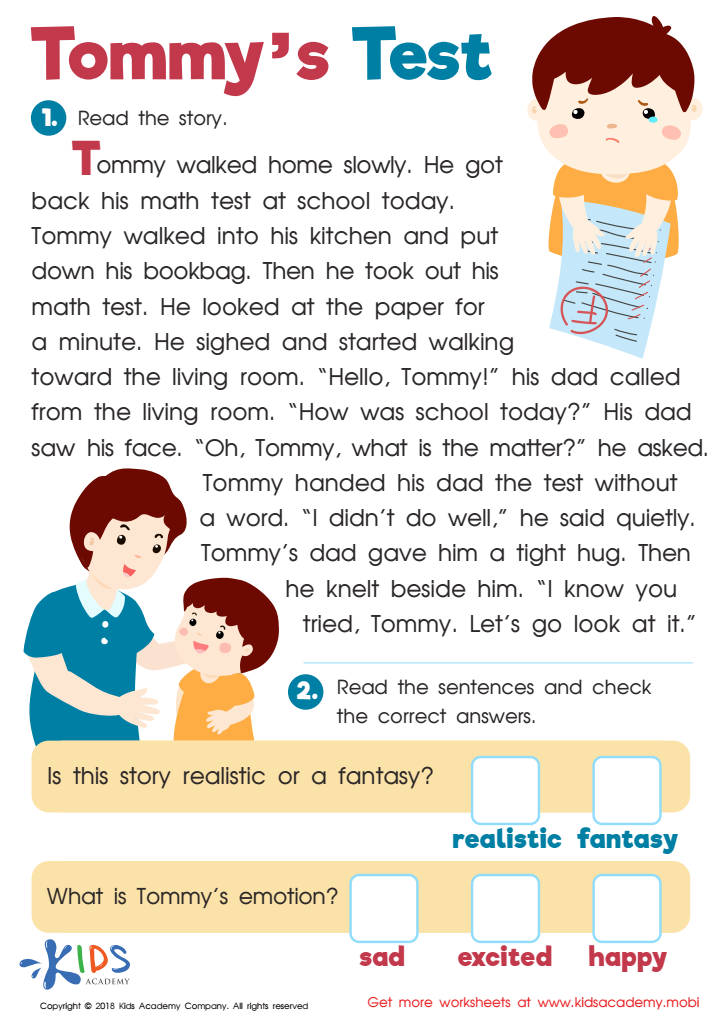
Tommys Test Worksheet
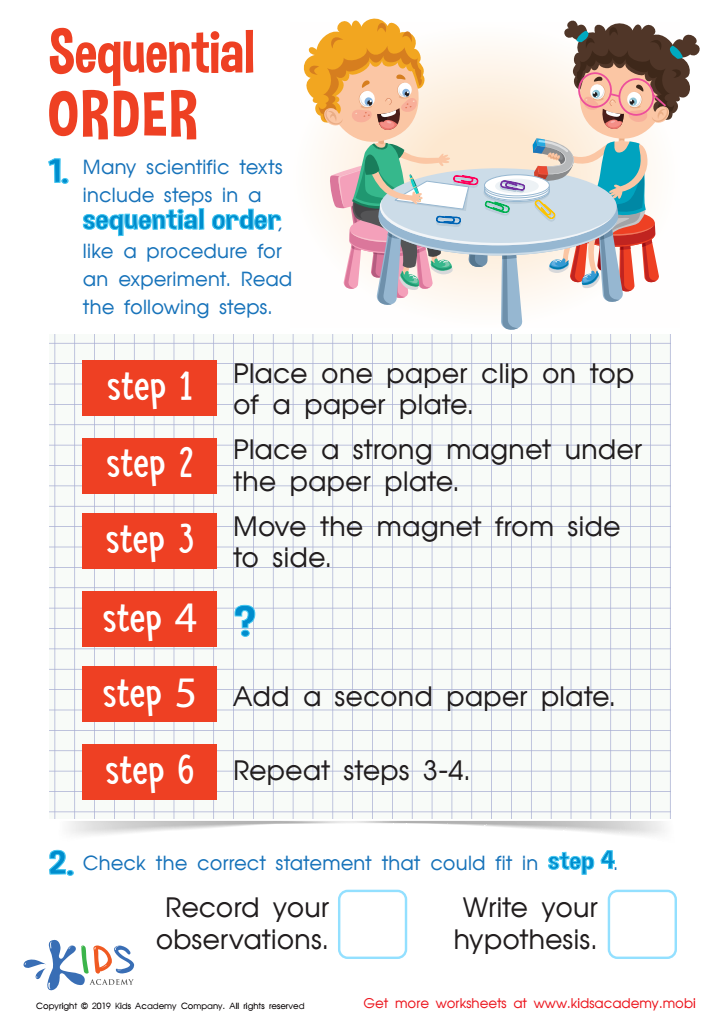
Sequencential Order Worksheet







Understanding sequences is crucial for children aged 3 to 9 as it lays the foundation for reading comprehension, critical thinking, and cognitive development. Recognizing and predicting patterns in stories enhances a child's ability to grasp narrative structures, making it easier for them to follow plots and understand character motivations.
Parents and teachers play a vital role in this process. By engaging children in discussions around sequencing during reading activities—such as identifying the beginning, middle, and end of a story—they promote analytical skills that transcend literacy. Activities like retelling stories or using visual aids help reinforce these concepts, making learning interactive and fun.
Moreover, mastering sequences helps build problem-solving abilities, allowing children to make connections across subjects, from math to science. When children understand how events unfold logically, they become more effective communicators and learners.
It’s essential for educators and parents to foster an environment where sequences are highlighted, as this early literacy skill significantly influences overall academic success and lifelong learning. By prioritizing this concept, they empower children with tools to analyze information critically and navigate the world around them.