Story analysis Normal Reading Comprehension Worksheets for Ages 3-9
4 filtered results
-
From - To
Discover our engaging Story Analysis Normal Reading Comprehension Worksheets designed for children ages 3-9. These worksheets promote essential reading skills through interactive story exploration, enabling young learners to enhance their comprehension and analytical abilities. Each activity encourages kids to reflect on characters, plots, and settings, fostering their creativity and critical thinking. Tailored for various age groups, our resources make reading fun and educational, helping children develop a love for books while mastering key literacy skills. Perfect for home or classroom use, these worksheets will prepare your child for advanced reading tasks ahead. Start their reading journey today!
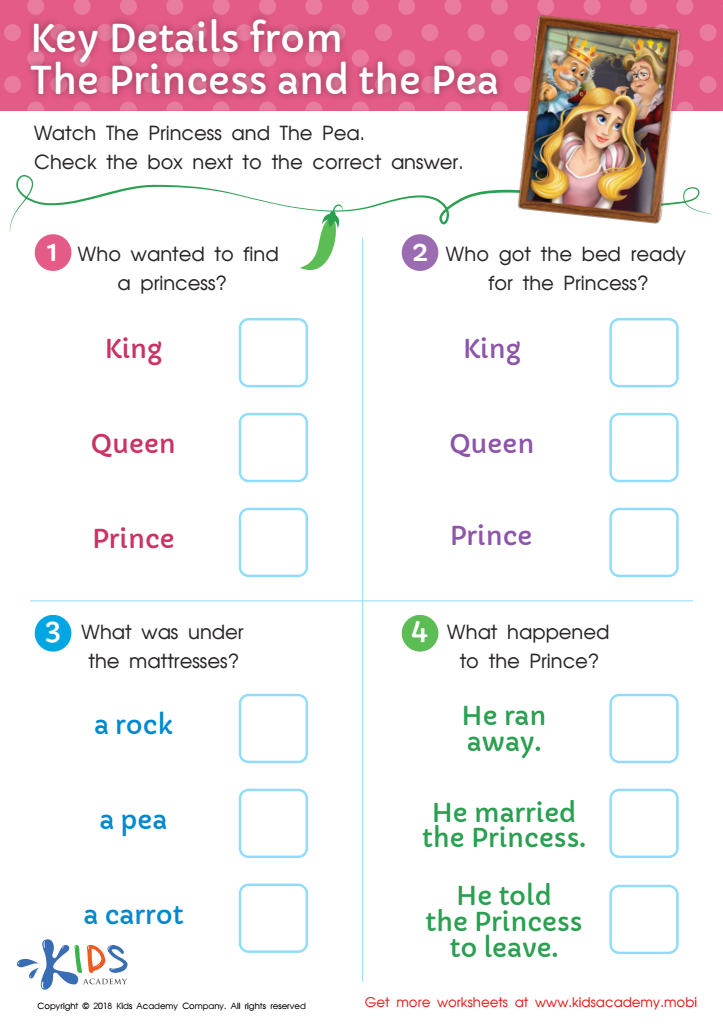
Key Details from the Princess and the Pea Worksheet
 Assign to My Students
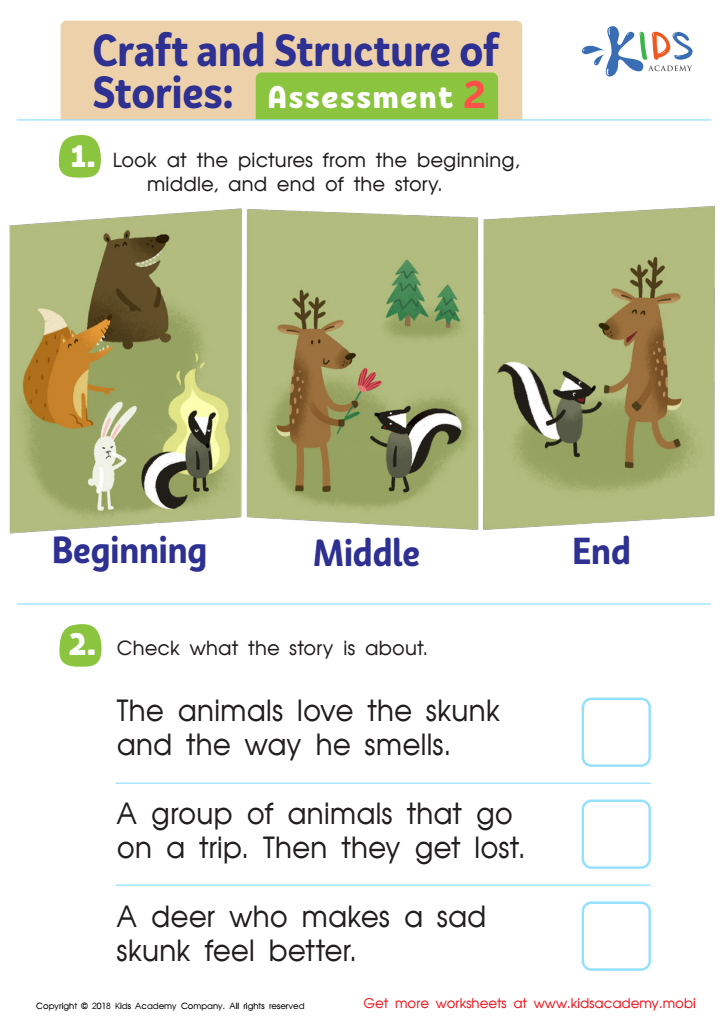
Craft and Structure of Stories: Assessment 2 Worksheet
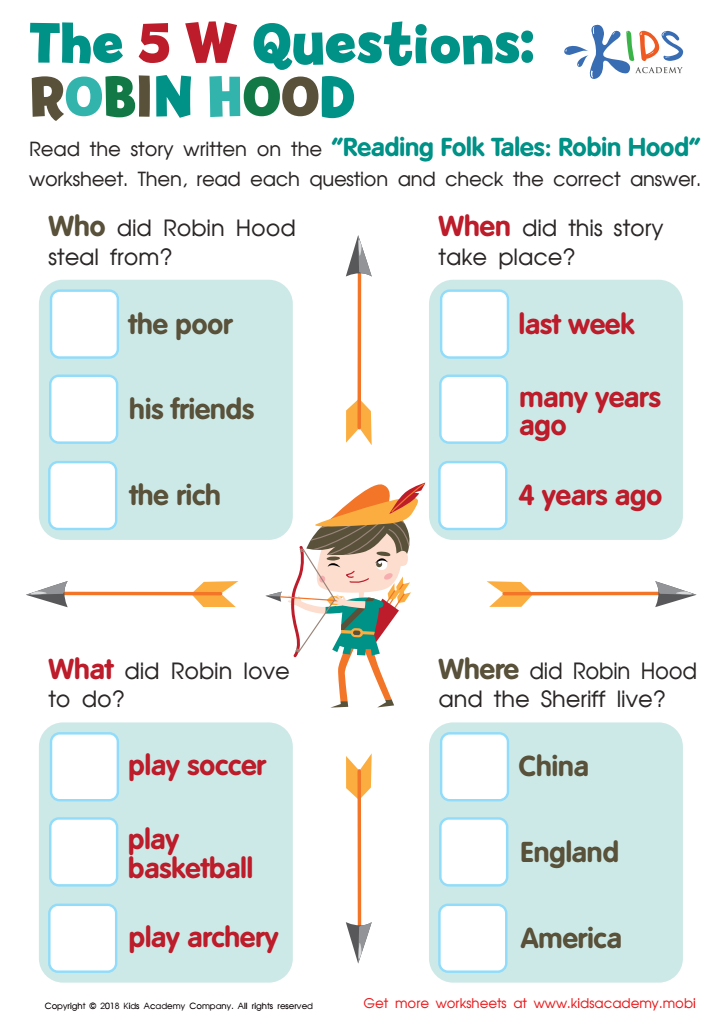
The 5 W Questions: Robin Hood Worksheet
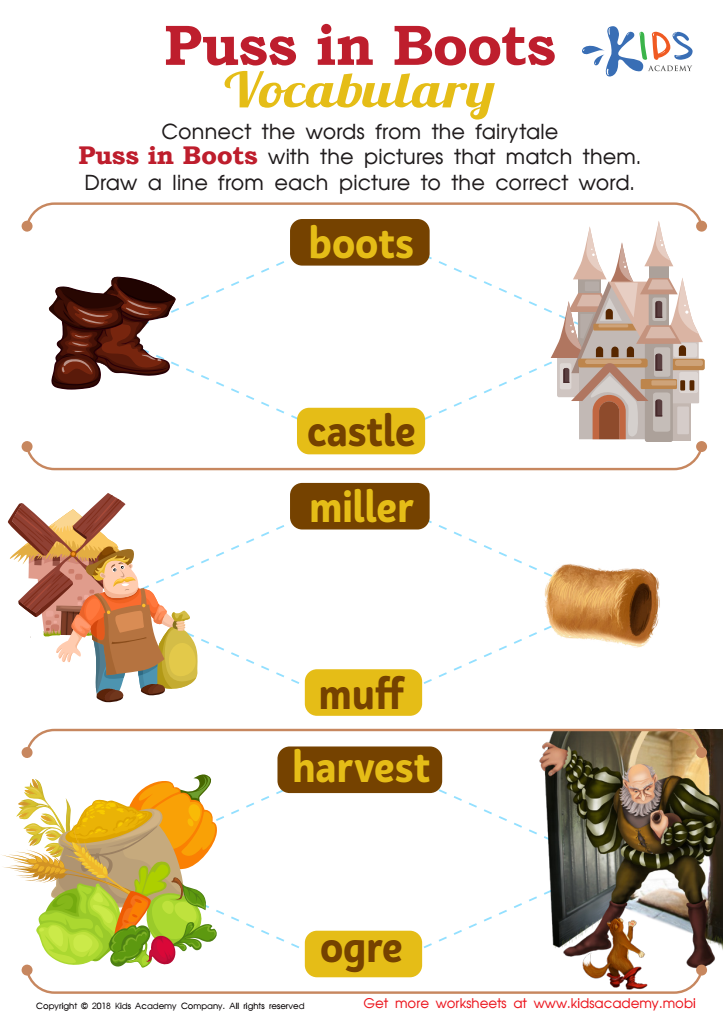
Puss in Boots Vocabulary Worksheet







Story analysis and normal reading comprehension are essential elements in the developmental journey of children aged 3-9. Parents and teachers should care about these aspects because they are foundational to a child's literacy and cognitive growth. Engaging in story analysis helps children understand narrative structure, character development, and thematic elements, fostering critical thinking skills. As they explore stories, children learn to make connections, predict outcomes, and draw inferences, which are vital components of comprehension.
Additionally, strong reading comprehension skills are linked to academic success across subjects. Children who can comprehend what they read are better equipped to engage in discussions, express their thoughts clearly, and develop a love for literature. Early exposure to story analysis enhances vocabulary, boosts creativity, and instills a sense of empathy as they relate to different characters and perspectives.
Moreover, parents and teachers play a crucial role in modeling and facilitating this learning. By engaging children in conversations about stories, asking open-ended questions, and allowing them to express their ideas and feelings, adults can make reading a dynamic, interactive experience. Focusing on normal reading comprehension not only prepares children for future educational challenges but also nurtures a lifelong love for reading and learning.








