Understanding Sequences Normal Reading Comprehension Worksheets for Ages 3-9
3 filtered results
-
From - To
Our "Understanding Sequences Normal Reading Comprehension Worksheets for Ages 3-9" are specially designed to enhance young readers' grasp of sequencing. Tailored for kids from preschool through Grade 3, these engaging worksheets focus on helping children understand the order of events, a crucial aspect of reading comprehension. With a variety of fun exercises, students can develop critical thinking and logical reasoning skills. Each worksheet features colorful, age-appropriate content that makes learning interactive and enjoyable. By mastering sequences, children lay the foundation for improved reading abilities and greater academic success. Perfect for both classroom use and at-home practice!
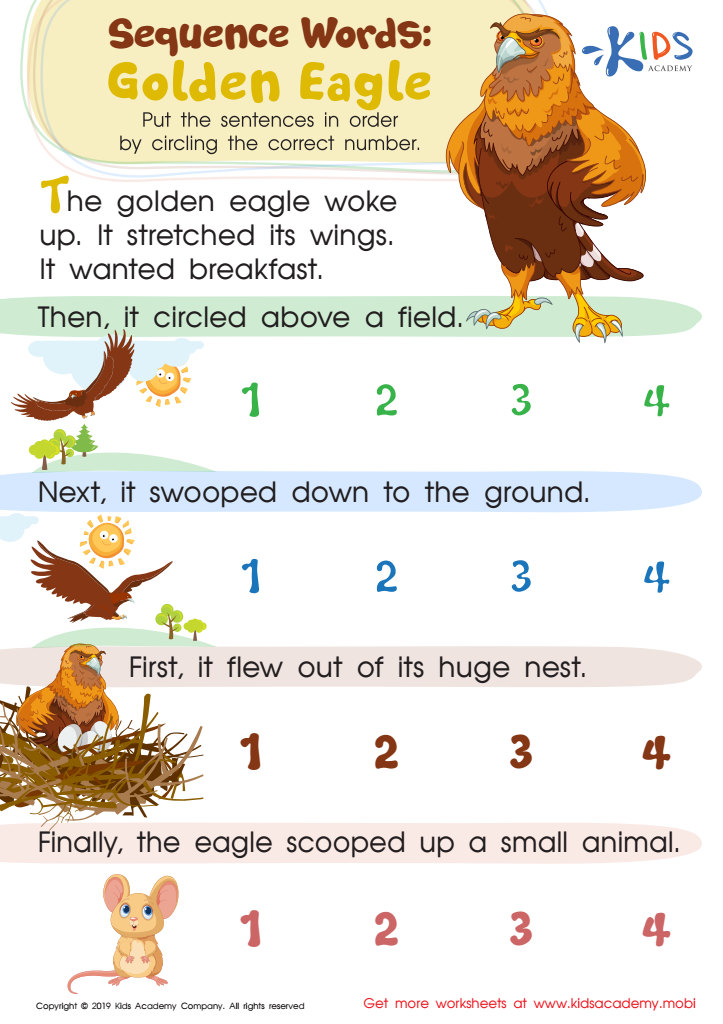
Sequence Word Eagle Worksheet
 Assign to My Students
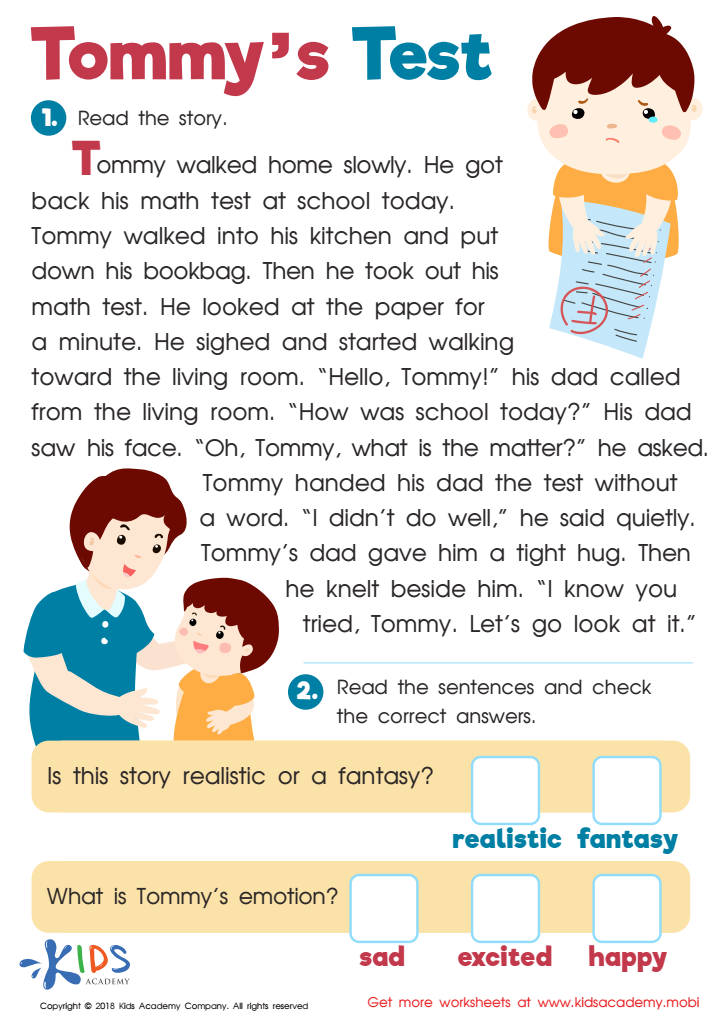
Tommys Test Worksheet
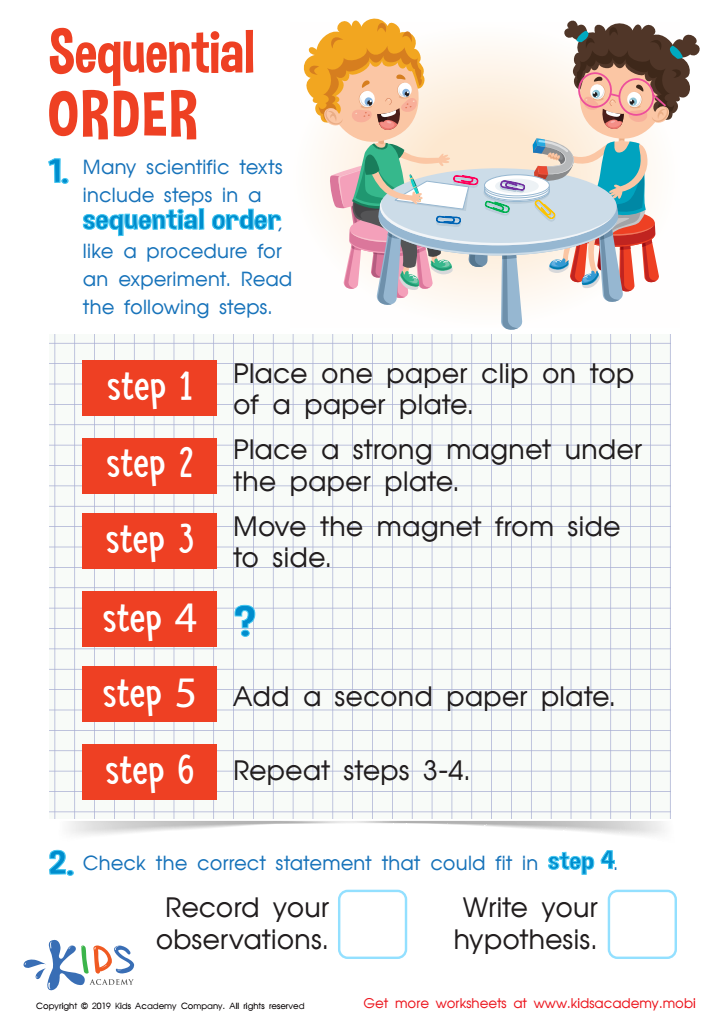
Sequencential Order Worksheet








Understanding sequences is crucial for early reading comprehension, and parents and teachers should prioritize it in young children aged 3-9. Firstly, sequences help kids grasp the order of events, an essential skill for both language and cognitive development. By recognizing patterns in stories, children can better understand cause-effect relationships, predict outcomes, and improve their comprehension.
Early mastery leads to stronger language skills. Preschoolers who comprehend sequencing find it easier to narrate experiences and express themselves clearly. This foundation aids in more complex language tasks later, like writing essays or understanding advanced texts.
Moreover, learning sequences offer a sense of structure and routine. When children know what to expect, they feel more secure and confident, facilitating other areas of learning. Sequencing activities, such as arranging picture cards or following multi-step instructions, also improve attention and memory, which are vital for all academic subjects.
For parents and teachers, implementing sequencing activities can make learning fun and interactive, promoting a positive attitude towards reading. Simple actions like discussing daily routines or retelling simple stories reinforce sequence comprehension. Overall, emphasizing sequences nurtures a key skill that enhances comprehension, critical thinking, and lifelong learning in children.








