Understanding perspectives Normal Reading Fiction Worksheets for Ages 3-9
3 filtered results
-
From - To
Unlock the joy of reading with "Understanding Perspectives Normal Reading Fiction Worksheets" designed for young learners aged 3-9! These engaging worksheets help children explore diverse viewpoints within stories, fostering critical thinking and empathy. Ideal for early grade educators and parents, our activities encourage meaningful discussions about characters' feelings, motivations, and actions. By examining different perspectives, children enhance their comprehension skills and ability to connect with narratives. Interactive exercises include illustrations and thought-provoking questions that spark curiosity and creativity. Download these worksheets now to inspire little readers while reinforcing essential literacy skills in a fun and engaging way!
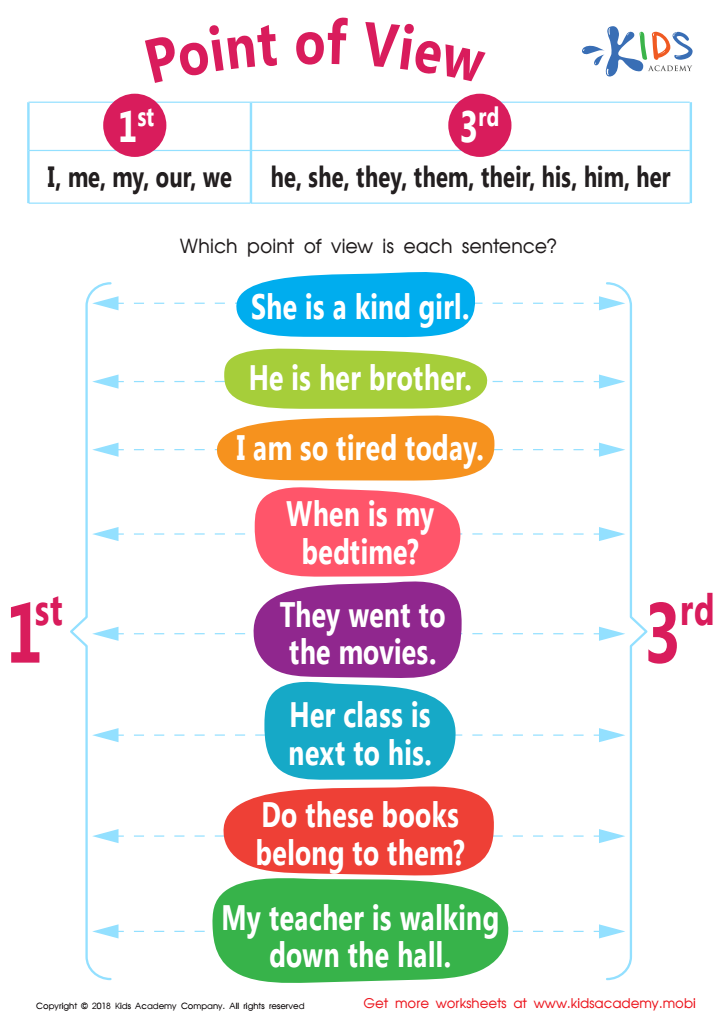
Point of View Worksheet
 Assign to My Students
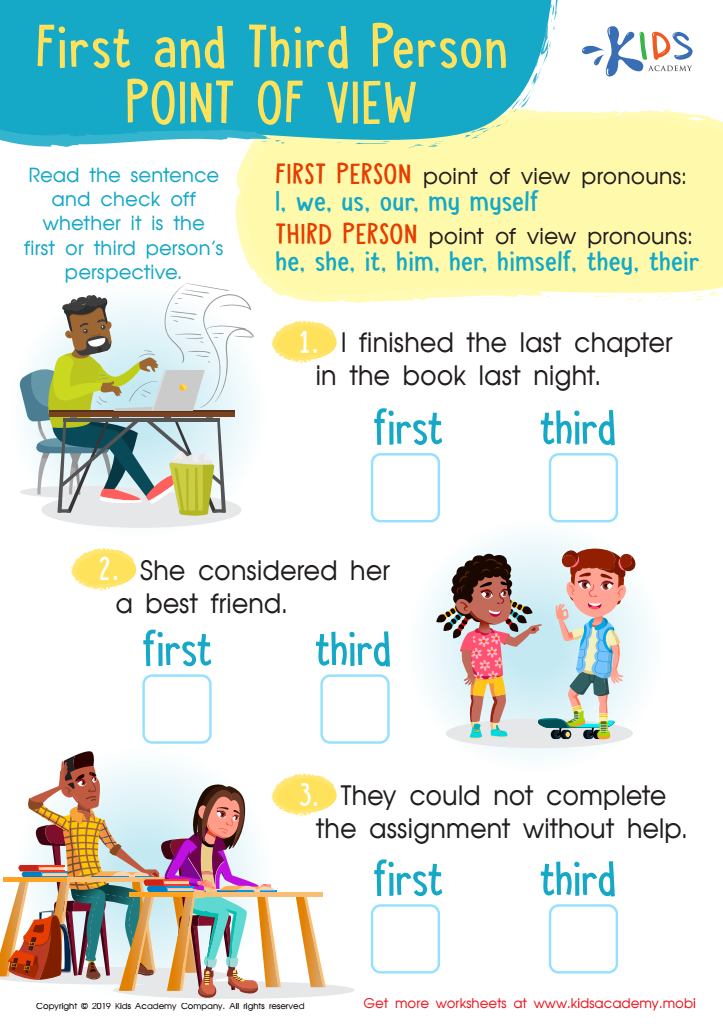
First and Third Person Point of View Worksheet
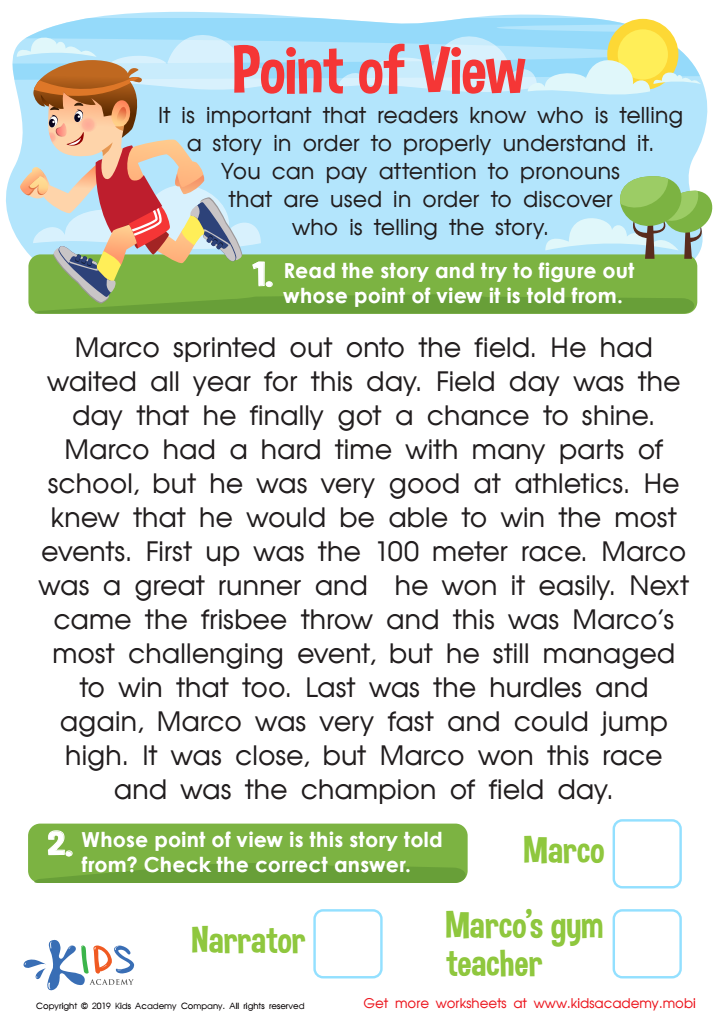
Point of View Worksheet


.jpg)





Understanding perspectives in literature, particularly in normal reading fiction for children aged 3 to 9, is crucial for developing empathy and critical thinking skills. Engaging with diverse characters and narratives helps young learners recognize that others may have different feelings, experiences, and viewpoints. As children read stories, they gain insight into the complexities of life and relationships, fostering emotional intelligence from an early age.
Moreover, understanding perspectives enhances communication skills. Kids who practice identifying and articulating different viewpoints learn to express their thoughts and feelings more effectively. This mastery can create a solid foundation for resolving conflicts and promoting collaboration among peers.
Additionally, developing an appreciation for varied perspectives enriches a child's imagination and creativity. Young readers are encouraged to explore not only what happens in a story but also why it might happen from someone else's viewpoint. This exploration spurs innovative thinking and problem-solving skills, which are pivotal as they navigate their educational journeys.
For parents and teachers, nurturing this understanding through age-appropriate fiction is a vital step in preparing children to be compassionate and thoughtful individuals in a diverse world. Engaging with stories provides the perfect platform to cultivate this important aspect of human connection.







