Animal identification Normal Reading Non-Fiction Worksheets for Ages 3-9
3 filtered results
-
From - To
Discover engaging "Animal Identification Normal Reading Non-Fiction Worksheets for Ages 3-9" tailored to enhance young learners’ reading skills and knowledge about animals. Perfect for children aged 3 to 9, these worksheets provide exciting activities to identify and learn about various animals through non-fiction texts. Boost your child's reading comprehension, vocabulary, and critical thinking with visually appealing and interactive materials. Ideal for at-home learning or classroom use, these worksheets make education fun and effective. Explore our collection to support your child's early reading journey and foster a lifelong love for learning about the animal kingdom.
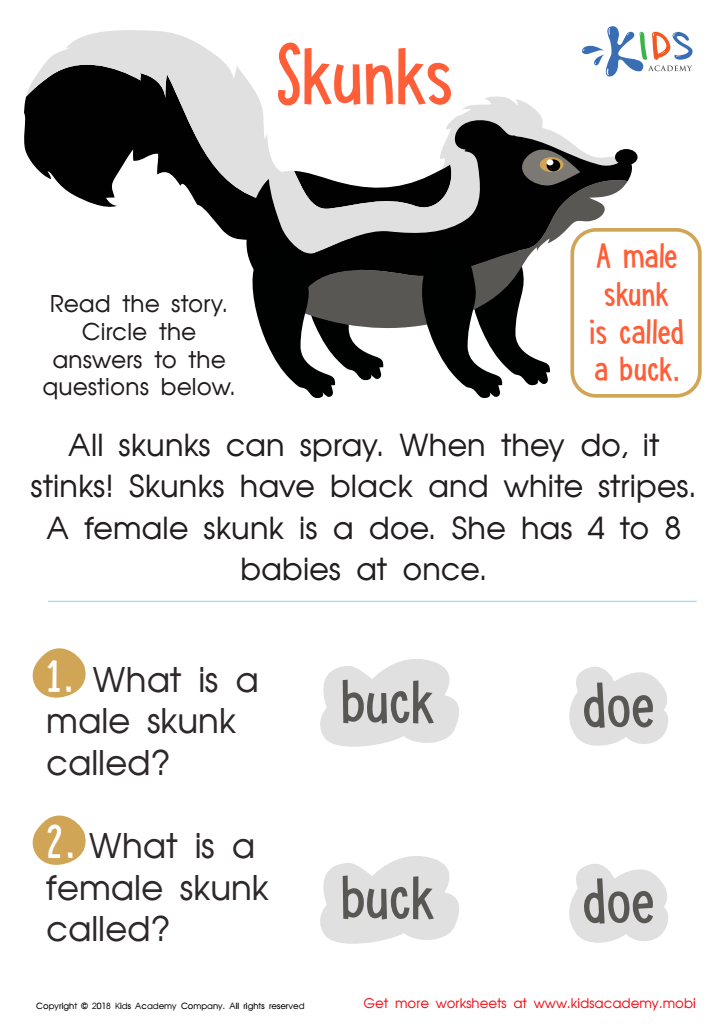
Skunks Worksheet
 Assign to My Students
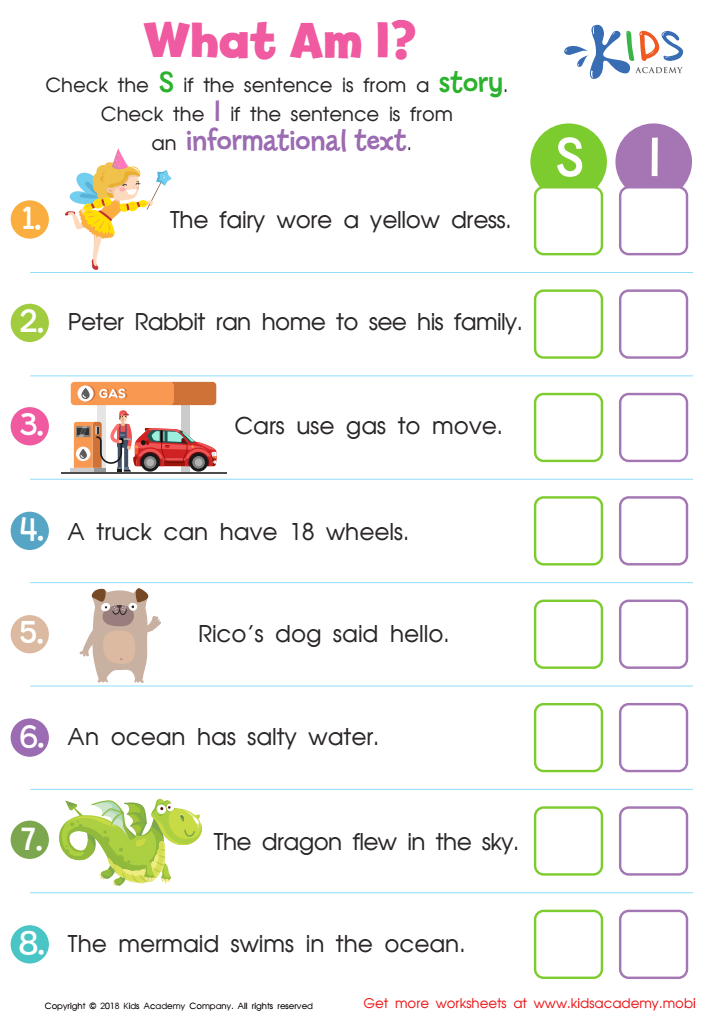
What Am I? Worksheet
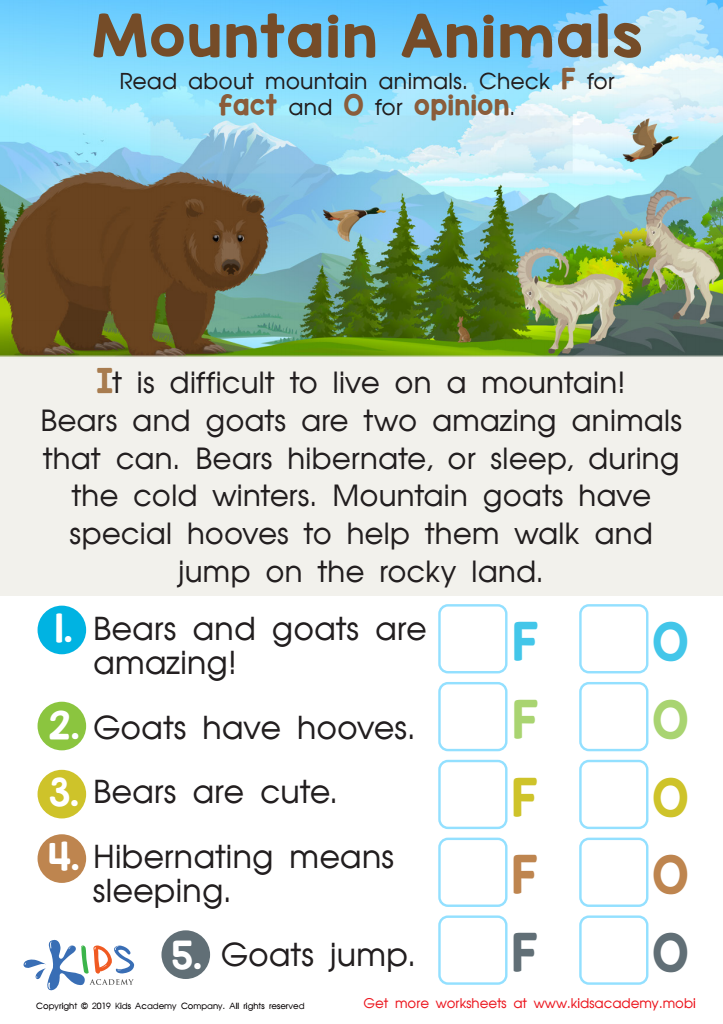
Mountain Animals Worksheet








Encouraging animal identification through normal reading of non-fiction books for young children ages 3-9 holds significant educational and developmental benefits. Animal identification enhances children's understanding of the natural world, fostering a connection to the environment and igniting curiosity about different species and their habitats. This foundational knowledge inculcates basic biology concepts, stimulating cognitive development.
For parents and teachers, engaging children in such content nurtures a love for reading by making learning exciting and relatable. Non-fiction books about animals are often richly illustrated, captivating young minds and aiding in visual literacy. By learning to identify animals, children also enhance their vocabulary and language skills, mastering descriptive words and phrases related to various animals and their characteristics.
Furthermore, animal identification promotes observational skills, attention to detail, and critical thinking, as children learn to notice subtle differences and similarities among species. It also fosters empathy and a sense of responsibility, as children understand the importance of animal conservation and environmental stewardship.
Incorporating animal-themed non-fiction in reading routines ensures a balanced and diverse exposure to varied topics, beyond fictional narratives, supporting well-rounded developmental learning. Overall, it can significantly contribute to a child’s personal growth, academic readiness, and lifelong appreciation for wildlife and nature.