Filters

7 filtered results

Clear all filters
Favorites
With answer key
Interactive

7 filtered results

Difficulty Level

Grade


Discover engaging Reading Comprehension Rhyming Words Worksheets designed for children aged 3-9. Kids Academy offers a variety of fun and educational printable worksheets that enhance reading skills through the recognition of rhyming words. These thoughtfully crafted activities aid in vocabulary building, phonemic awareness, and overall reading comprehension. Perfect for early learners, each worksheet encourages young minds to explore language and develop crucial literacy foundations in an enjoyable way. Visit Kids Academy to access our excellent resources and support your child's educational journey with our comprehensive, skill-enhancing rhyming words worksheets.

Check out this FREE Trial Lesson on Rhyming Words for age 3-9!

Recognize Words that Rhyme

Favorites
With answer key
Interactive
  • 3-9
  • Reading comprehension
  • Rhyming Words
  • Normal
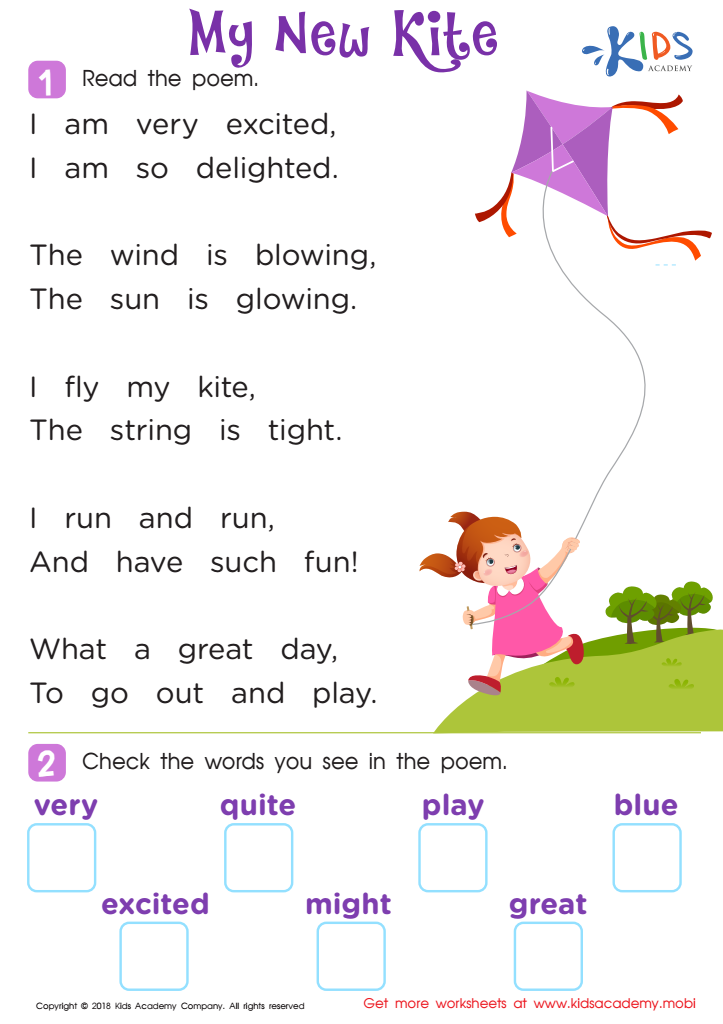
Poem: My New Kite Worksheet

Poem: My New Kite Worksheet

Read a cheerful poem with your child and have them check the boxes next to the words that appear. Then, ask them to identify rhyming words, noting that these won't appear at the bottom of the page. This is a delightful reading activity to help your child remember what they read.
Poem: My New Kite Worksheet
Worksheet
Poem: The Swing Worksheet

Poem: The Swing Worksheet

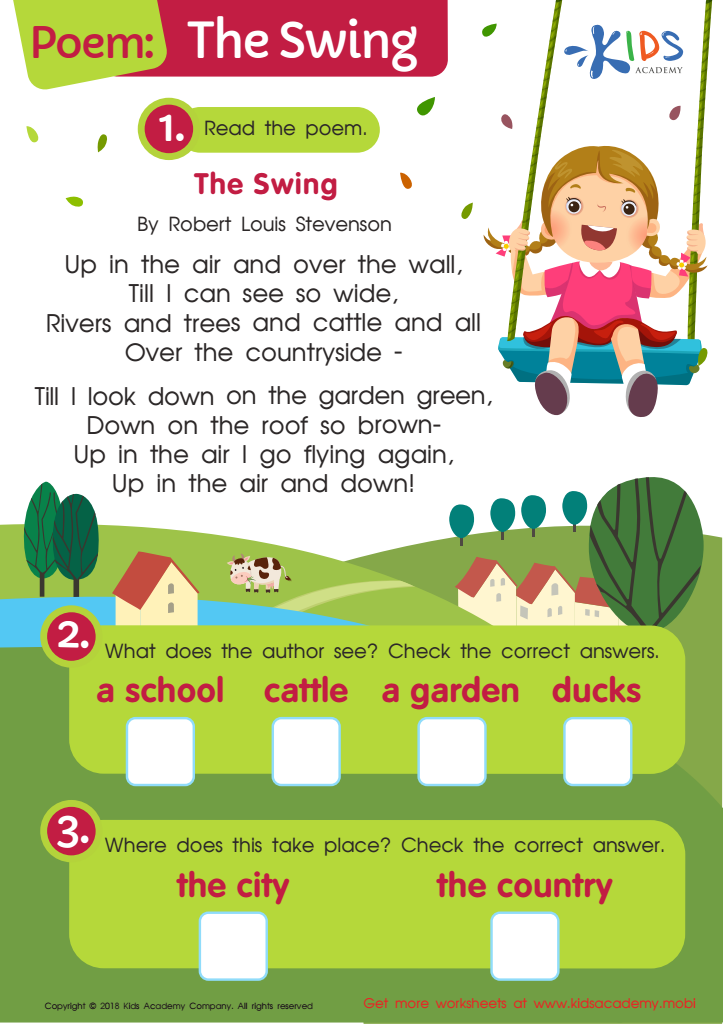
Encourage your child's love of writing by displaying their poems on the fridge or walls. This worksheet focuses on a swing, something your child enjoys, and contains questions to help your child think more deeply about the poem. Read it together, then answer the questions and watch as your child's creativity and writing skills blossom!
Poem: The Swing Worksheet
Worksheet
Rhyming Words Worksheet PDF

Rhyming Words Rhyming Worksheet

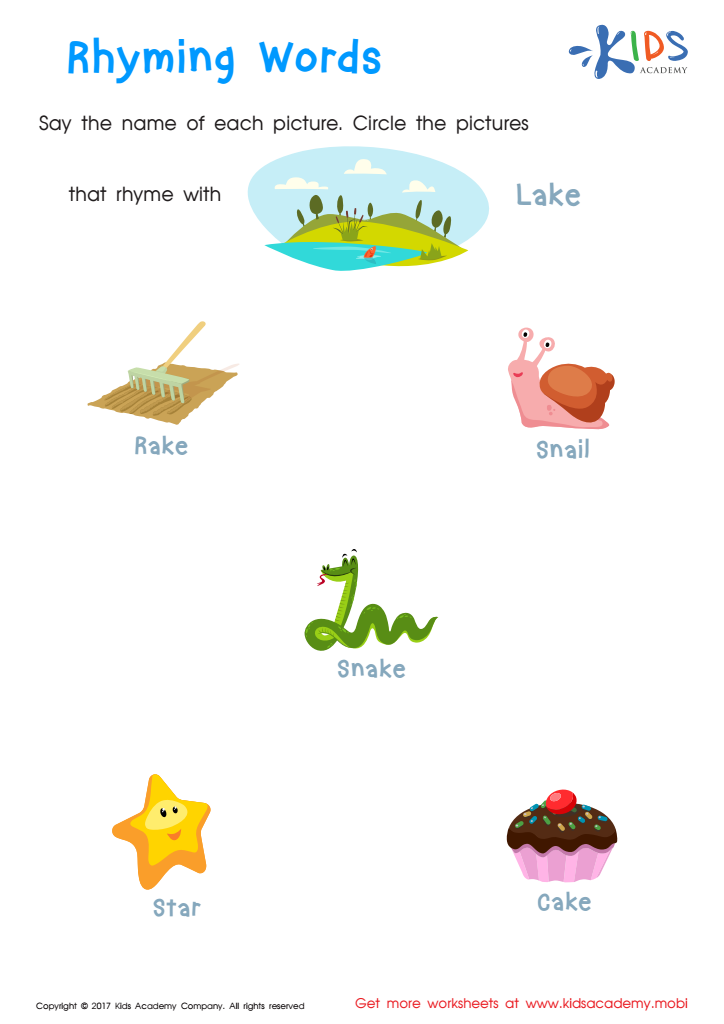
This worksheet is great for honing pre-reading skills. It helps kids make connections between pictures and written words, use problem-solving, and recognize sounds and words that rhyme. Have fun exploring rhyming words with your child, and they'll be rhyming in no time!
Rhyming Words Rhyming Worksheet
Worksheet
Picture Rhymes Printable

First Words: Picture Rhymes Worksheet
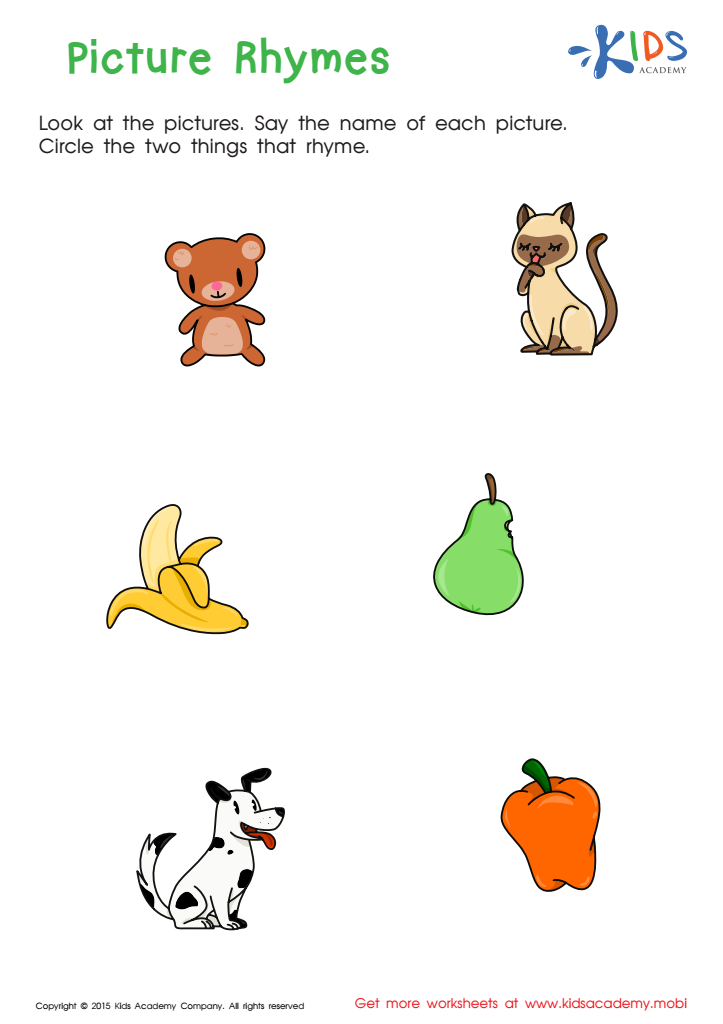
Rhyming helps kids understand language, read and write better. This printable worksheet boosts problem-solving and cognitive skills with vibrant pictures. It teaches kids to identify words, recognize rhymes, complete mental tasks and write words. An extra activity: show them how rhyming words share some of the same letters.
First Words: Picture Rhymes Worksheet
Worksheet
Rhyming Words Worksheet for Kindergarten

Time to Rhyme Rhyming Worksheet

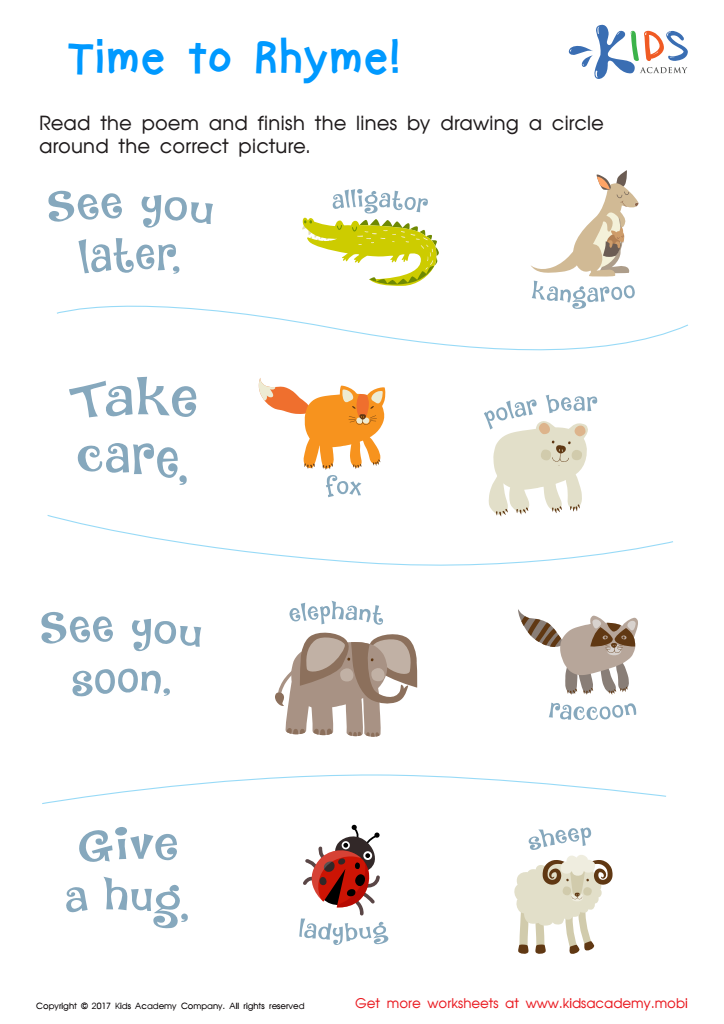
This worksheet helps kids learn catchy sayings with rhymes, notice words and sounds that rhyme, and use problem solving to solve expressions. By using these expressions in everyday talk, kids gain the repetition needed to internalize the skills they've learned. Check out our nursery rhymes to further support them!
Time to Rhyme Rhyming Worksheet
Worksheet
Rhyming Words in Poems Worksheet

Rhyming Words in Poems Worksheet

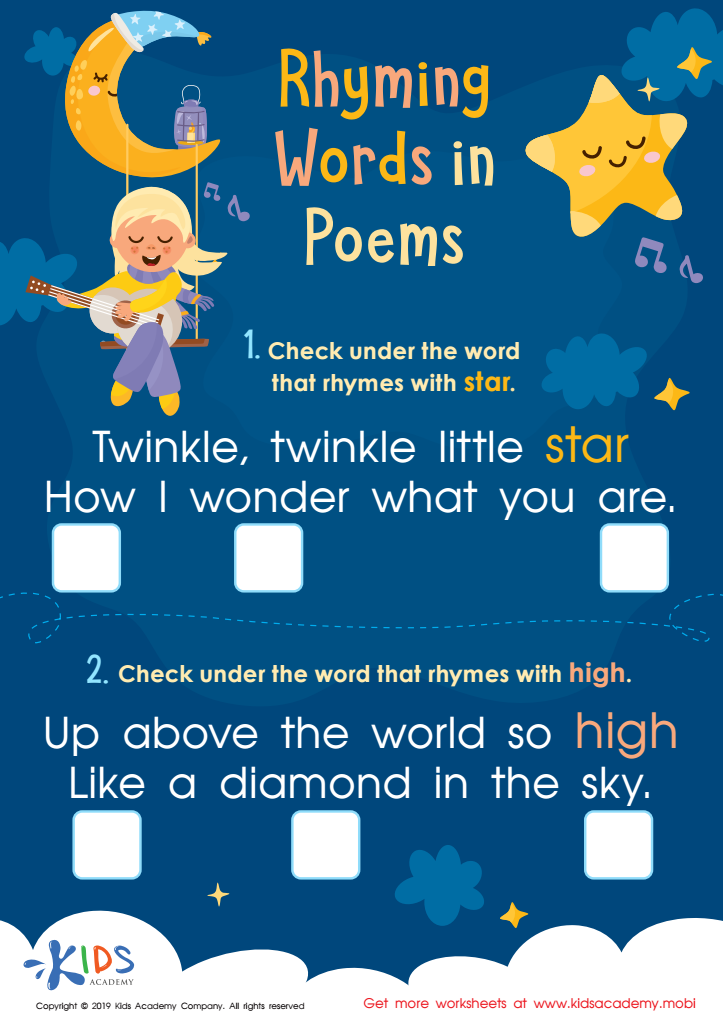
If your kids love poems, get them to recite some to you or have them write their own. Use this worksheet to help them find words that rhyme. Read the short poems and have them check the highlighted words for rhyming.
Rhyming Words in Poems Worksheet
Worksheet
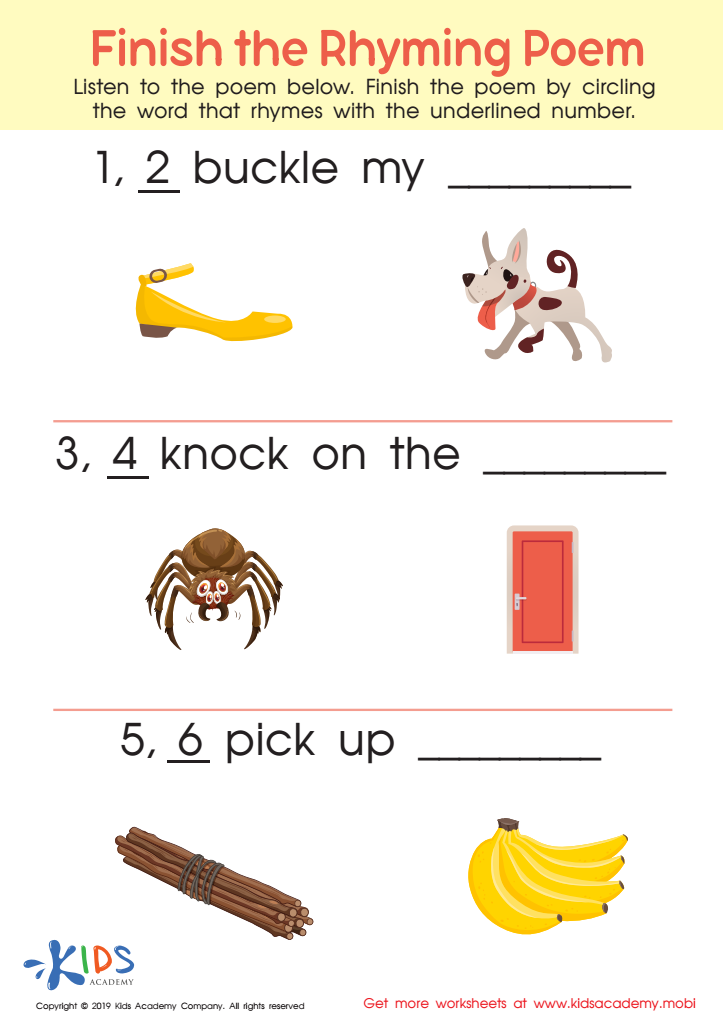
Finish Rhyming Poem Worksheet


Finish Rhyming Poem Worksheet

Poems are a great way to express emotions and spark imagination. Does your child enjoy poetry and even have their own creations? If so, they'll love this worksheet. It's a great way to develop their rhyming skills. Challenge them to find and circle the words that rhyme with the ones underlined.
Finish Rhyming Poem Worksheet
Worksheet


Reading comprehension is a crucial skill for children ages 3-9, as it forms the foundation for their future academic success and lifelong learning. Introducing children to normal rhyming words plays an essential role in developing their reading abilities. Rhymes help young learners recognize sound patterns and phonemic structures in language, making it easier for them to decode words and understand sentence structures.

For parents and teachers, incorporating rhyming words into reading activities can bolster a child’s memory and retention skills. Rhymes are more engaging and easier to remember, turning the learning process into an enjoyable experience. This type of learning has the added benefit of enhancing vocabulary, as children are repeatedly exposed to similar-sounding words in different contexts, promoting better word recognition and usage.

Furthermore, rhyming activities encourage auditory discrimination, helping children differentiate between similar sounds, which is a critical step in phonetic development. This auditory skill is foundational for effective literacy and can mitigate future reading difficulties.

Overall, caring about reading comprehension using rhyming words sets children on a path towards greater academic achievement. It fosters a love for reading, enhances linguistic skills, and equips young learners with the tools they need for proficient, confident communication. Early investment in these skills pays off significantly, benefiting cognitive development and lifelong education.