
Enhancing observation skills Normal Animals Worksheets for Ages 3-9
3 filtered results
Difficulty Level
Grade
Age
-
From - To
Subject
Activity
Standards
Enhance your child's observation skills with our engaging Normal Animals Worksheets designed for ages 3-9. These printable resources encourage young learners to closely examine animal characteristics and behaviors, fostering a deeper understanding of the natural world. Each worksheet is thoughtfully crafted to promote critical thinking and observational proficiency, making learning fun and interactive. Kids will explore various animals through exciting activities that include identifying features, matching, and discussion prompts. Perfect for classroom settings or at-home learning, these worksheets provide an excellent opportunity to nurture curiosity and analytical skills in your little ones. Start observing the wonders of wildlife today!
Favorites
With answer key
Interactive
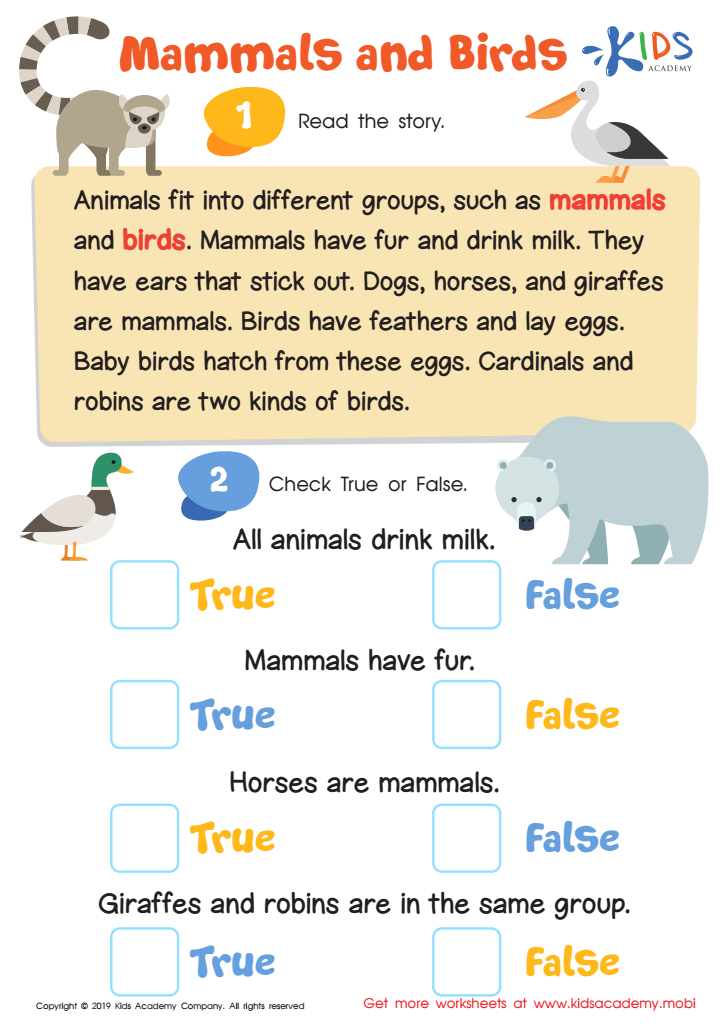
Mammals and Birds Worksheet
This worksheet challenges kids to read an informational text and review science facts about mammals and birds. Have them read the passage then mark statements true or false. Remind them to go back to the text if they get stuck! Get started now and help your child enhance multiple skills in one go!
 Assign to My Students
Mammals and Birds Worksheet
Worksheet
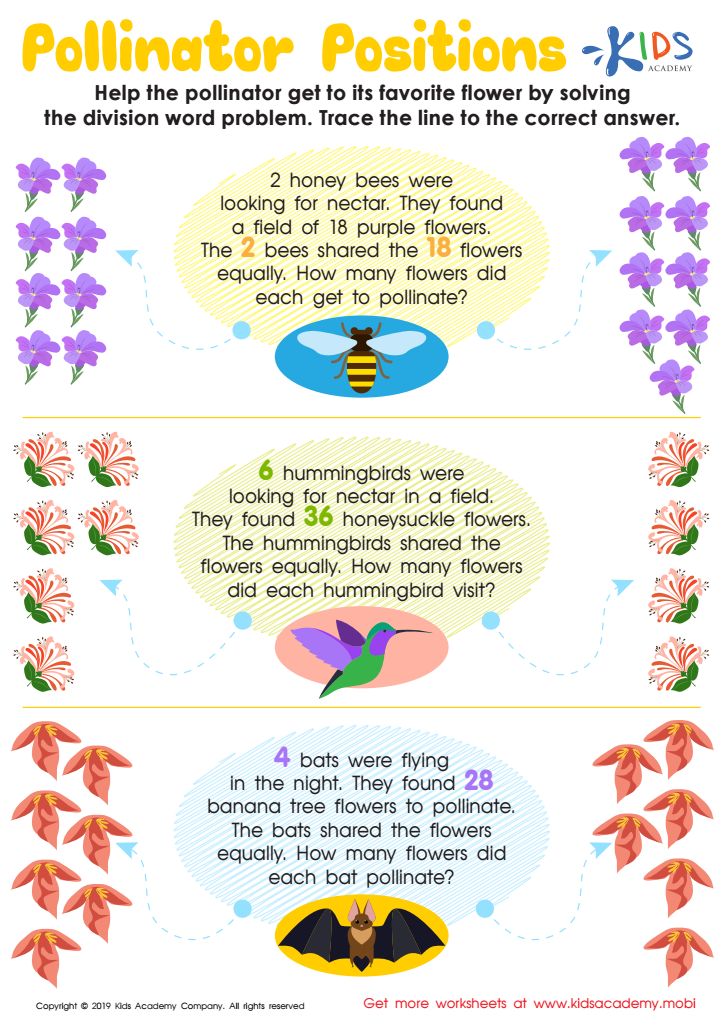
Pollinator Positions Worksheet
Kids will love learning about pollinators and how vital they are. Help their favorite friends get to the right flowers with this fun PDF. Children can solve the problems without even knowing they're doing division; just read the word problems and use the highlighted numbers. Finish by tracing the lines to the correct quotient!
Pollinator Positions Worksheet
Worksheet
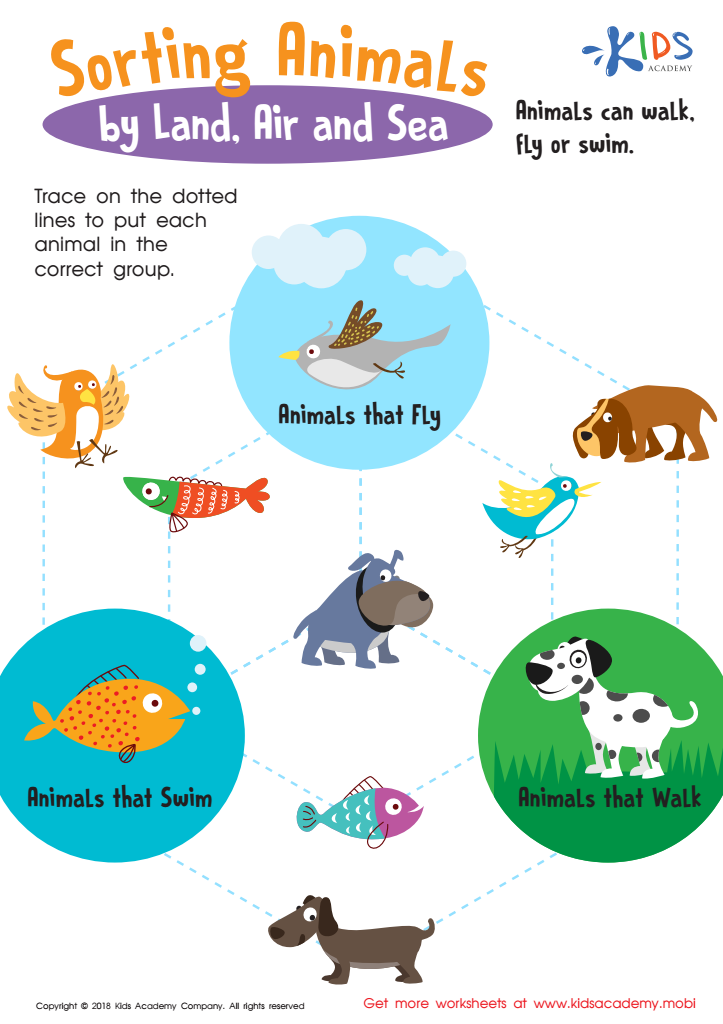
Sorting Animals by Land, Air and Sea Worksheet
Kids will use critical thinking and fine motor skills with this worksheet! They'll analyze animal traits and draw lines to sort them into groups of those that fly, swim, or walk. It's a fun way to hone skills and have a great time!
Sorting Animals by Land, Air and Sea Worksheet
Worksheet
Join Kids Academy for Free
Who is primarily going to use this learning content?



%20(1).jpg)


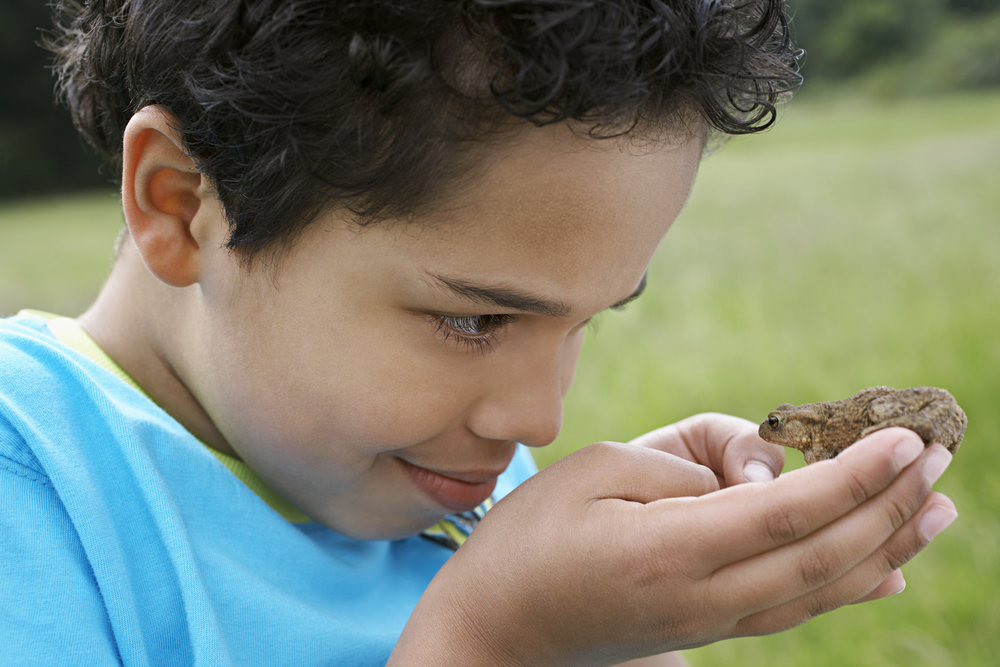
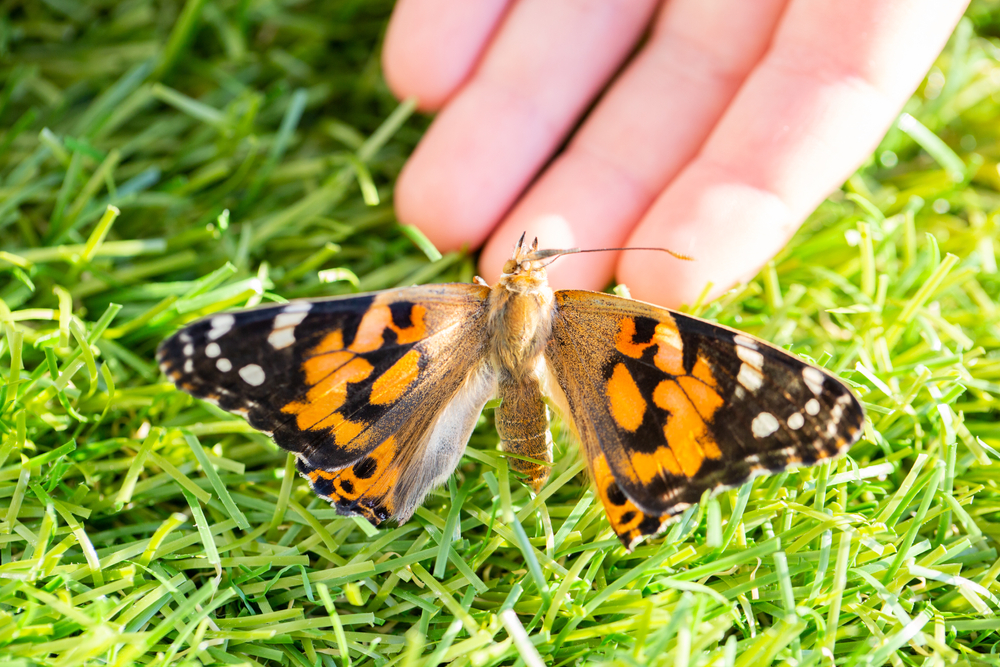
Enhancing observation skills in young children, particularly regarding normal animals, is essential for their cognitive and emotional development. For parents and teachers, fostering these skills helps facilitate a deeper understanding of the natural world, which is fundamental for comprehensive learning. By observing animals, children cultivate critical thinking skills, strengthen their ability to make connections, and learn to ask questions, which ultimately builds curiosity and a lifelong love of learning.
Furthermore, observing animals teaches empathy and ethical awareness. When children notice behaviors and interactions within animals, they begin to understand emotions and social structures that parallel their own lives. This helps in developing social skills and emotional intelligence.
Developing observation skills also encourages children to engage in hands-on exploration and experiential learning, which are vital at this age. It promotes observation of details, such as an animal’s patterns, movement, and habitat, leading to improved focus and attention span. These skills are foundational not only for subjects such as science and math but also enhance literacy as children describe what they see. Ultimately, fostering keen observation of normal animals enriches educational experiences, nurtures creativity, and helps build resilient, compassionate learners prepared for diverse life challenges.








