Animal identification Normal Science Worksheets for Ages 3-9
6 filtered results
-
From - To
Discover engaging Animal Identification Normal Science Worksheets designed for ages 3-9 at Kids Academy! These expertly crafted resources help young learners develop essential science skills through fun and interactive activities. Each worksheet offers captivating exercises that encourage kids to identify various animals, understand their characteristics, and learn about their habitats. Perfect for early years science education, these worksheets blend creativity with learning by featuring colorful illustrations and age-appropriate tasks. Whether at home or in the classroom, these materials support children's curiosity and knowledge about the natural world, fostering a lifelong love for science. Explore now and boost your child's learning adventure!
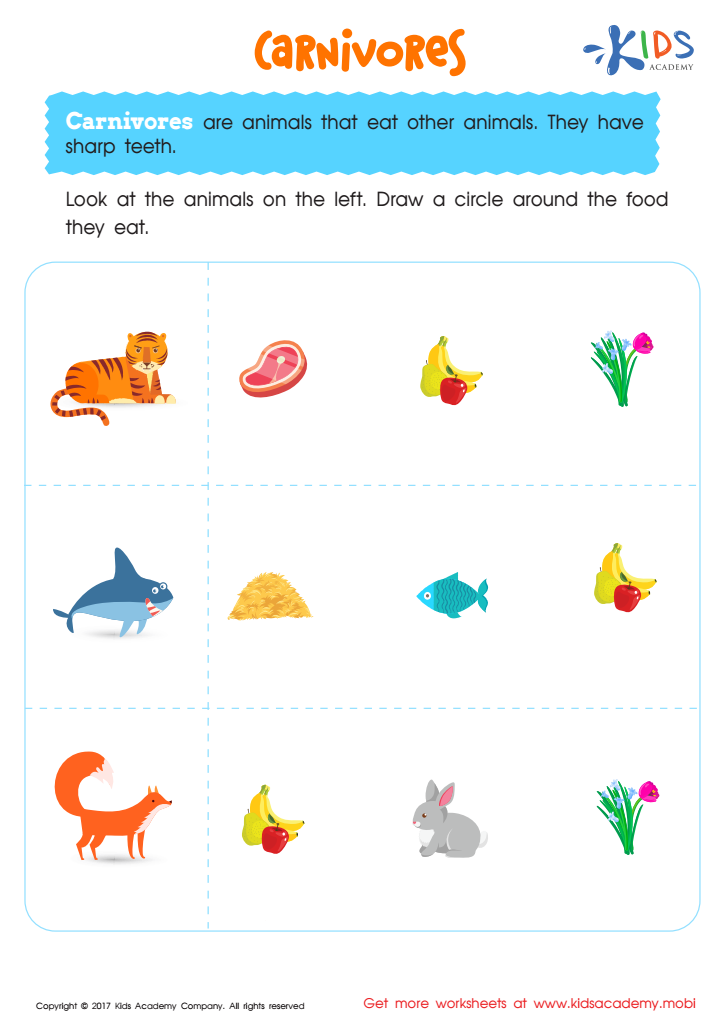
Carnivores Worksheet
 Assign to My Students
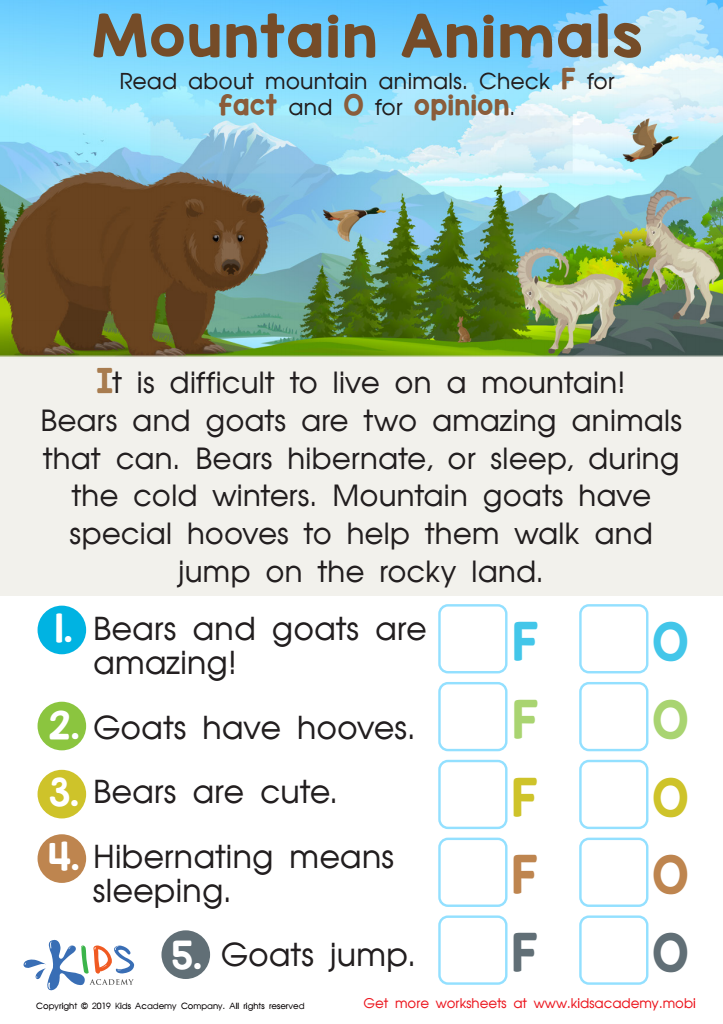
Mountain Animals Worksheet
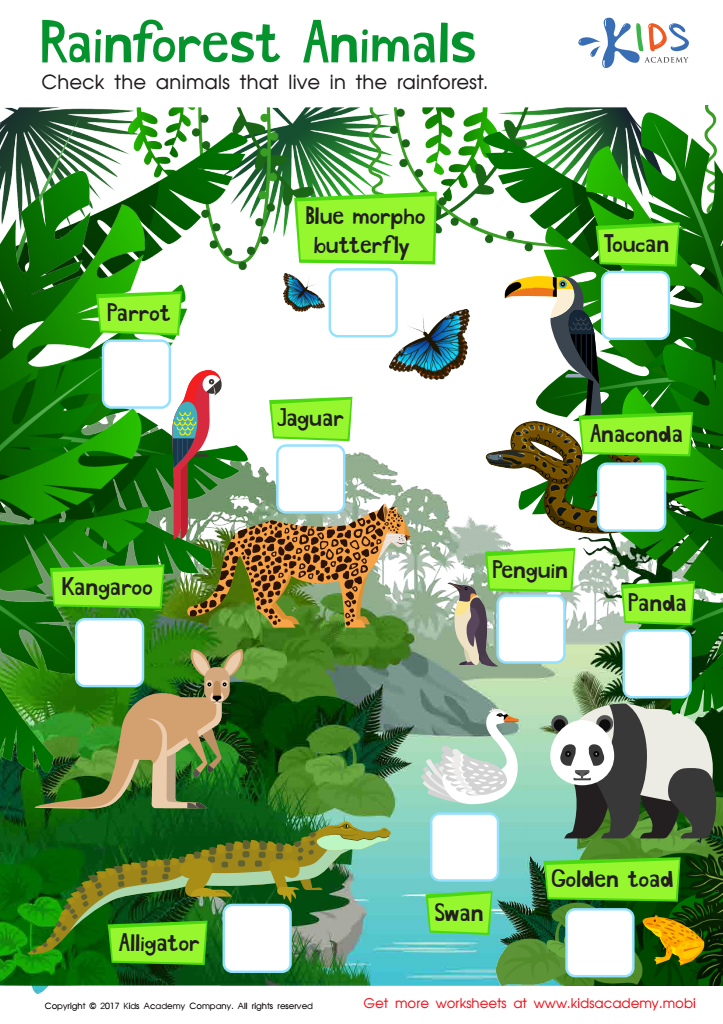
Rainforest Animals Worksheet
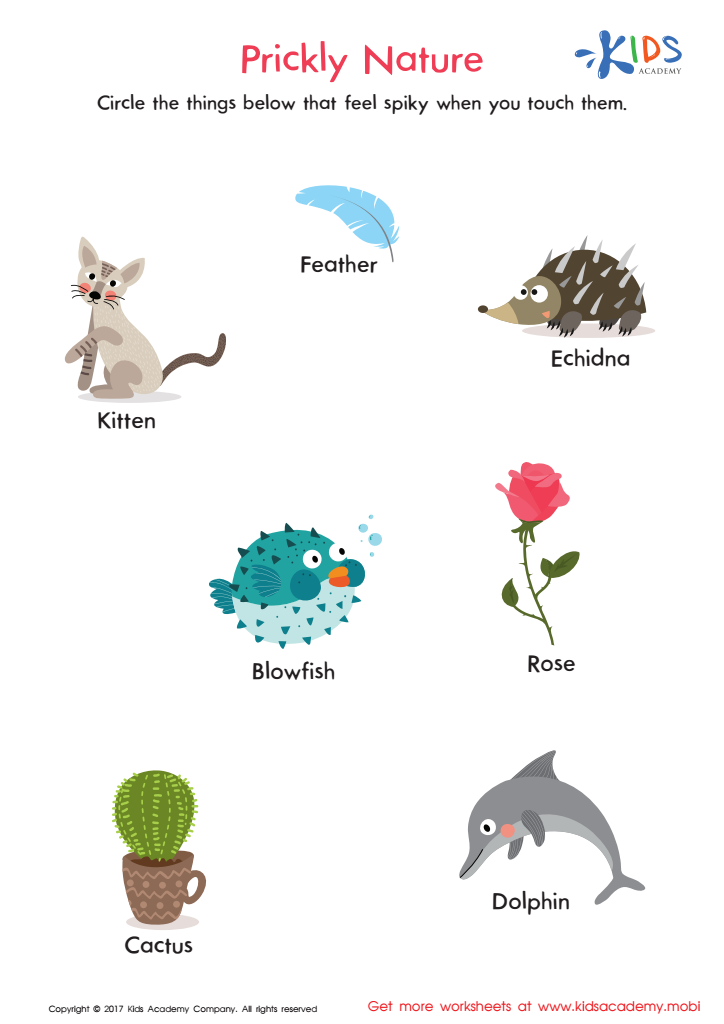
Prickly Nature Worksheet
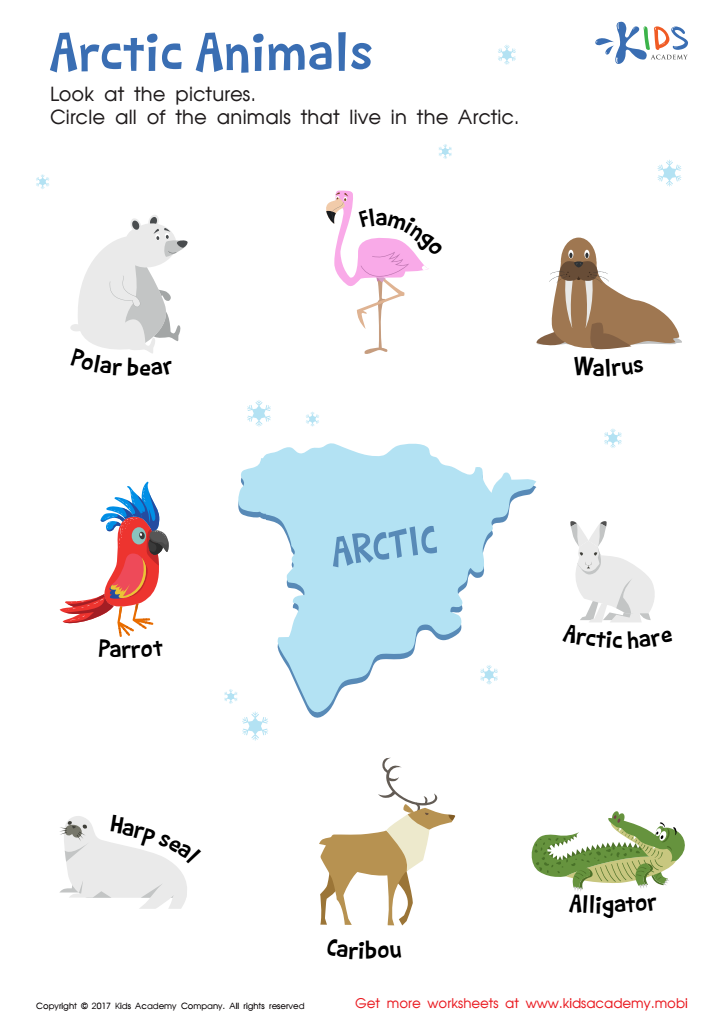
Arctic Animals Worksheet
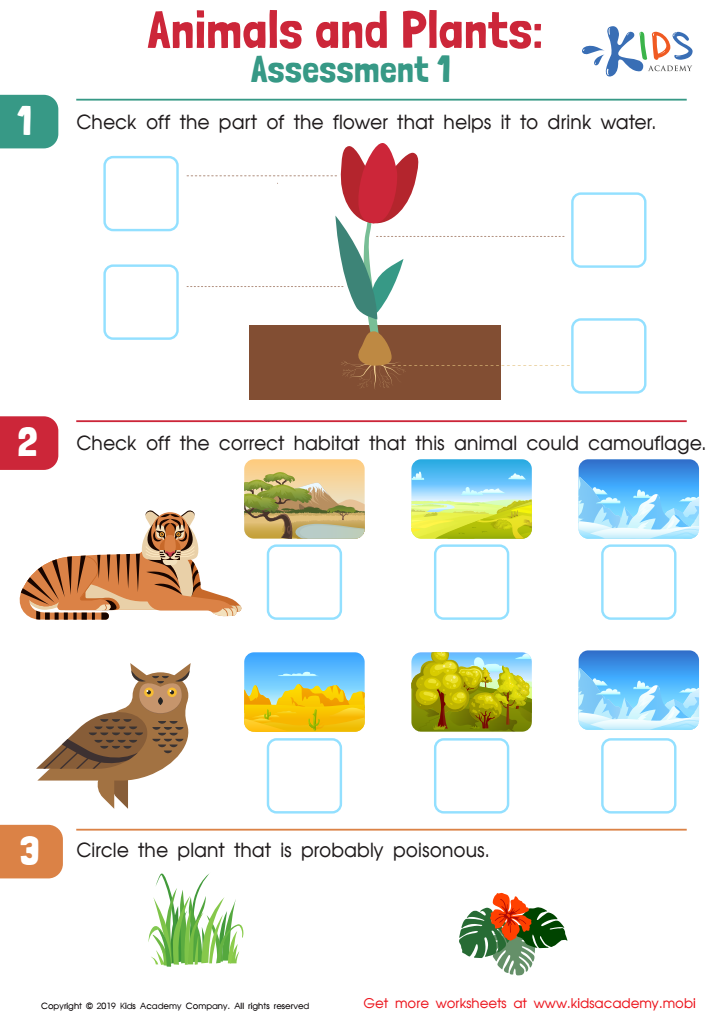
Animals and Plants: Assessment 1 Worksheet


.jpg)





Understanding and identifying animals is a fundamental aspect of fostering early scientific curiosity and literacy among children aged 3-9. Firstly, learning about different animal species enhances cognitive development by improving skills such as observation, classification, and categorization. These skills are foundational for science and other key areas of learning.
Moreover, recognizing animals and their environments teaches children about biodiversity and ecosystems. They learn to appreciate the interdependence between various forms of life and their habitats, nurturing a sense of environmental stewardship and empathy toward living creatures.
Animal identification also interconnects with other areas of education. It aids language development by expanding vocabulary with names, characteristics, and behaviors of animals. For younger children, this knowledge can be introduced through engaging stories, songs, and games, making learning fun and memorable.
Parents and teachers who emphasize animal identification help instill a lifelong interest in nature and science. This early exposure can stimulate curiosity, leading to more profound scientific inquiries and hobbies. Ultimately, fostering a love for animals and nature enhances a child's holistic development—emotionally, intellectually, and morally.
By emphasizing animal identification, we prepare children to become informed, compassionate, and curious individuals with a deeper understanding and respect for the natural world.







