Developing observation skills Normal Science Worksheets for Ages 3-9
3 filtered results
-
From - To
Enhance your child's observation skills with our engaging Normal Science Worksheets designed for ages 3-9. These thoughtfully crafted worksheets promote critical thinking and ignite curiosity about the world around them. Through fun activities, children will learn to notice details, make connections, and develop a scientific mindset. Our resources encourage exploration, helping young learners to observe, compare, and analyze their surroundings. With vibrant visuals and age-appropriate tasks, these worksheets provide a perfect platform for interactive learning. Foster a love for science and nurture foundational skills in your child as they embark on an exciting journey of discovery with our observation-focused materials!
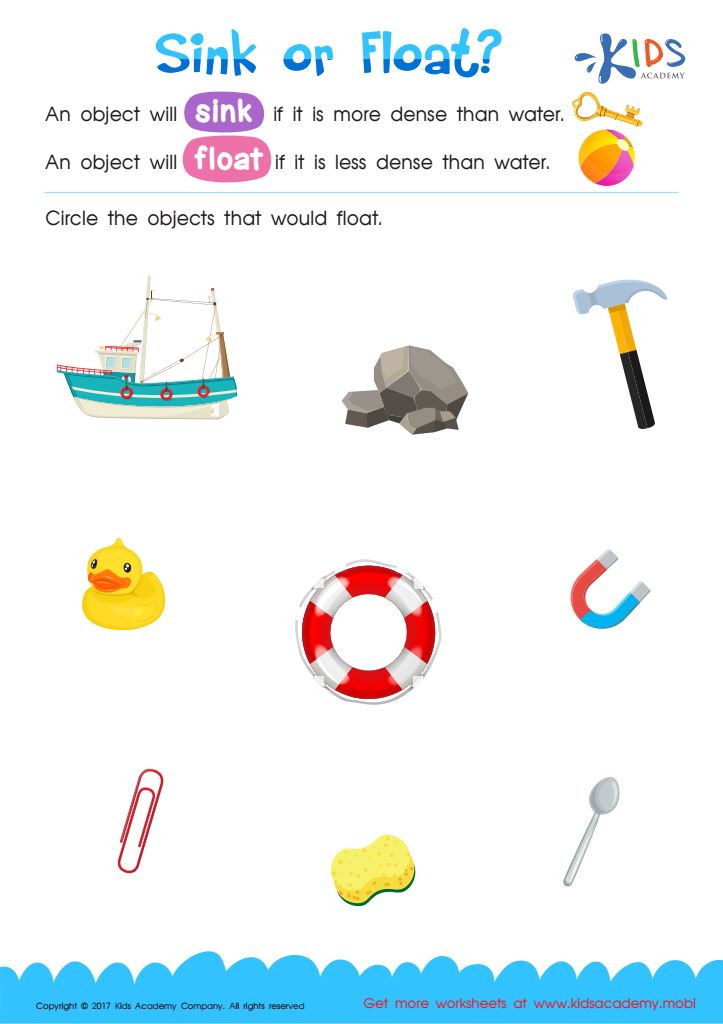
Sink or Float Printable
 Assign to My Students
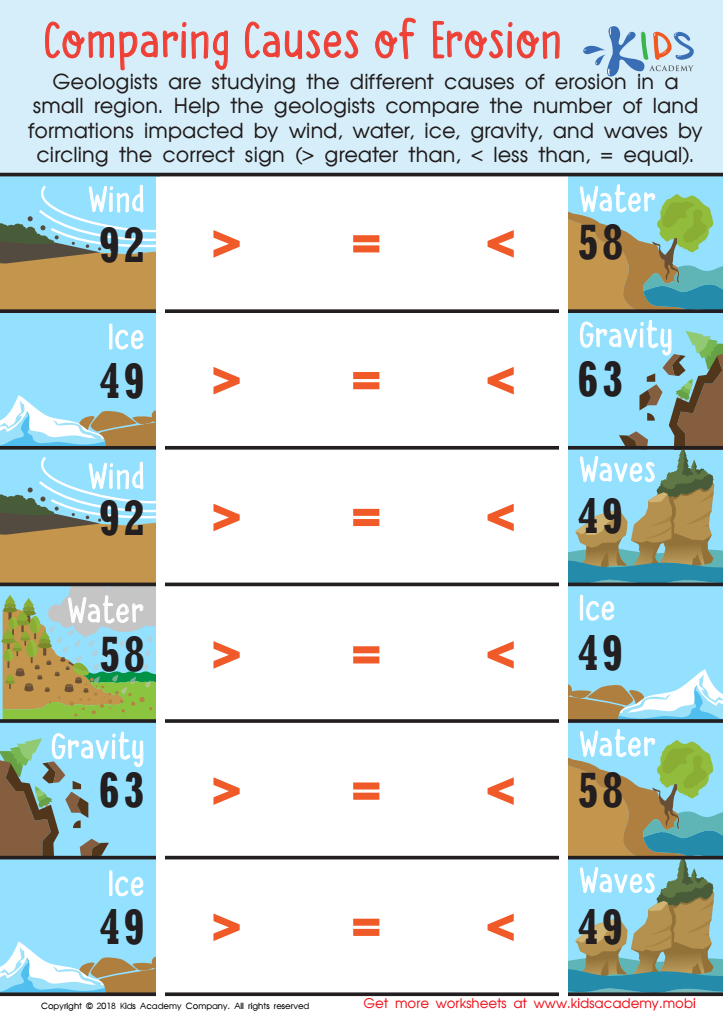
Comparing Causes of Erosion Worksheet
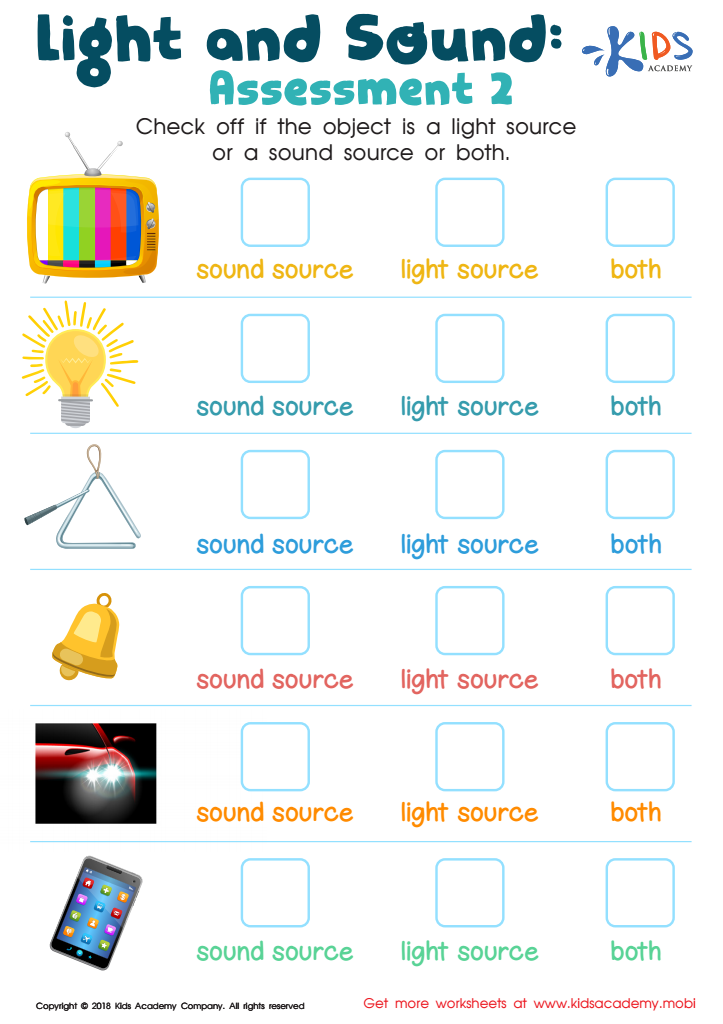
Light and Sound: Assessment 2 Worksheet






Developing observation skills in children aged 3-9 is vital for fostering their cognitive and emotional growth. For parents and teachers, encouraging careful observation helps children become more attentive and engaged learners. At this age, children are naturally curious and inclined to explore their environment. By honing their observation skills, they learn to notice details, patterns, and relationships, which is foundational for critical thinking and problem-solving.
Improved observation skills enhance children's scientific understanding, encouraging them to ask questions and seek explanations about the world around them. This inquiry-based learning develops a sense of wonder and motivates them to explore further, establishing a love for science early on.
Moreover, observation skills directly contribute to language development, as children articulate their thoughts and discoveries, enriching their vocabulary and communication abilities. Socially, strong observation enables children to better understand their peers' emotions and behaviors, fostering empathy and cooperation.
In a world driven by information, robust observation skills empower children to become informed, analytical individuals who are better prepared to navigate complex challenges in the future. As advocates for children's education and well-being, parents and teachers play a crucial role in nurturing these essential skills.







