Space knowledge Normal Science Worksheets for Ages 3-9
5 filtered results
-
From - To
Welcome to our "Space Knowledge Normal Science Worksheets for Ages 3-9" page! Dive into the wonders of the universe with our carefully crafted worksheets designed to ignite curiosity and foster learning in young explorers. From identifying planets to understanding space science concepts, our engaging activities cater to the developmental stages of children aged 3 to 9. Each worksheet is thoughtfully designed to be both educational and fun, encouraging hands-on learning and critical thinking. Inspire a lifelong love for science right here with our interactive and visually appealing resources. Start your space adventure now!
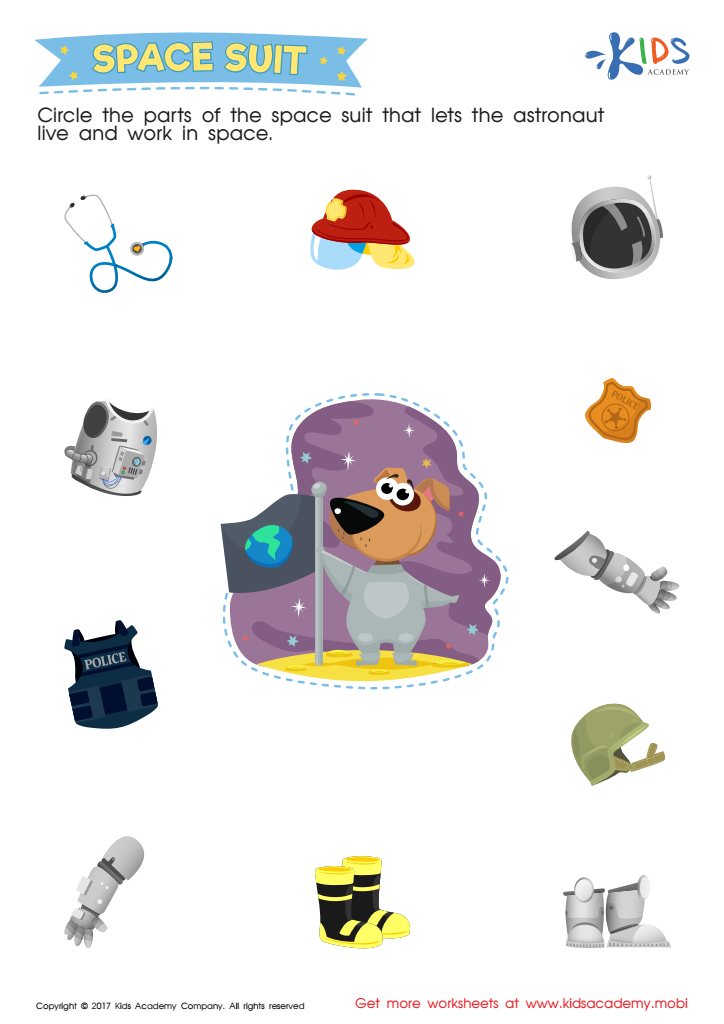
 Assign to My Students
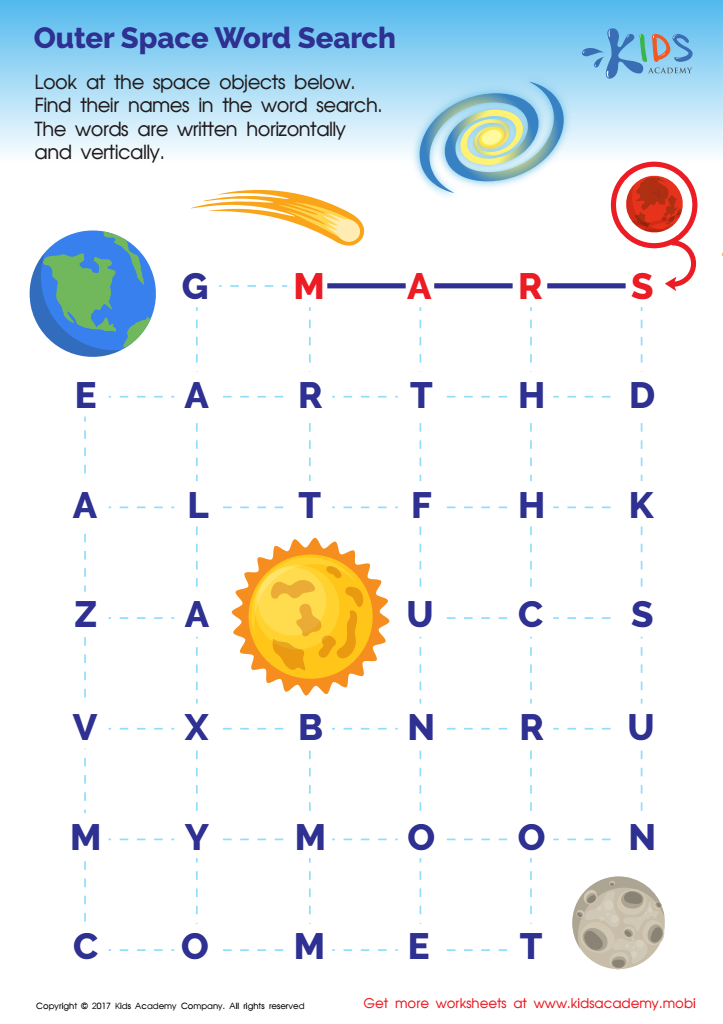
Outer Space Word Search Printable
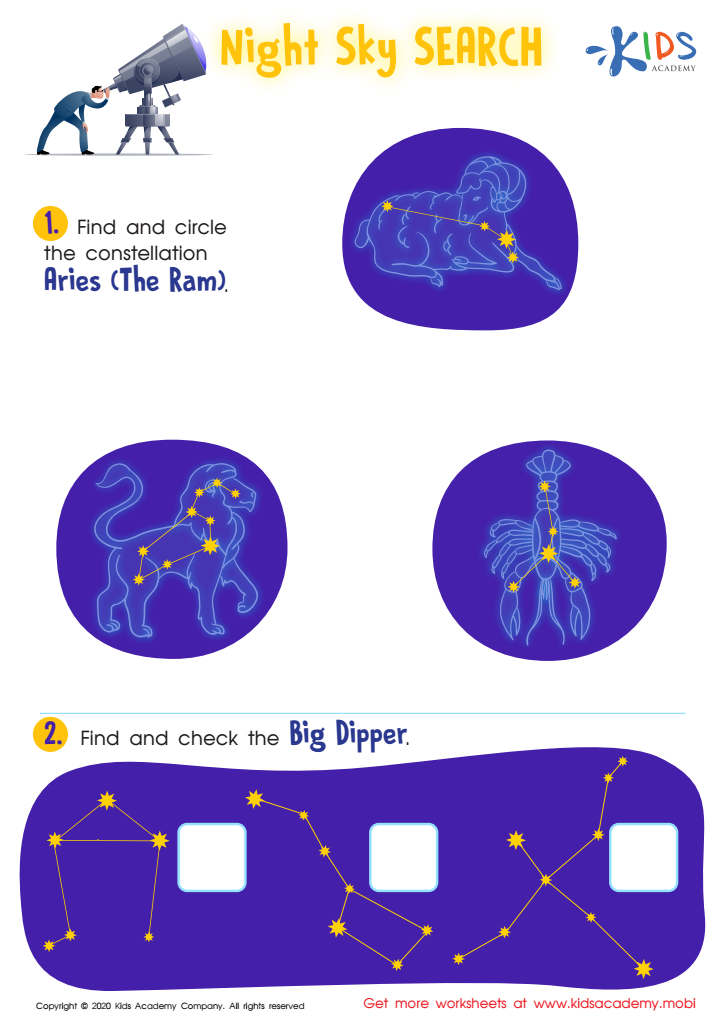
Night Sky Search Worksheet
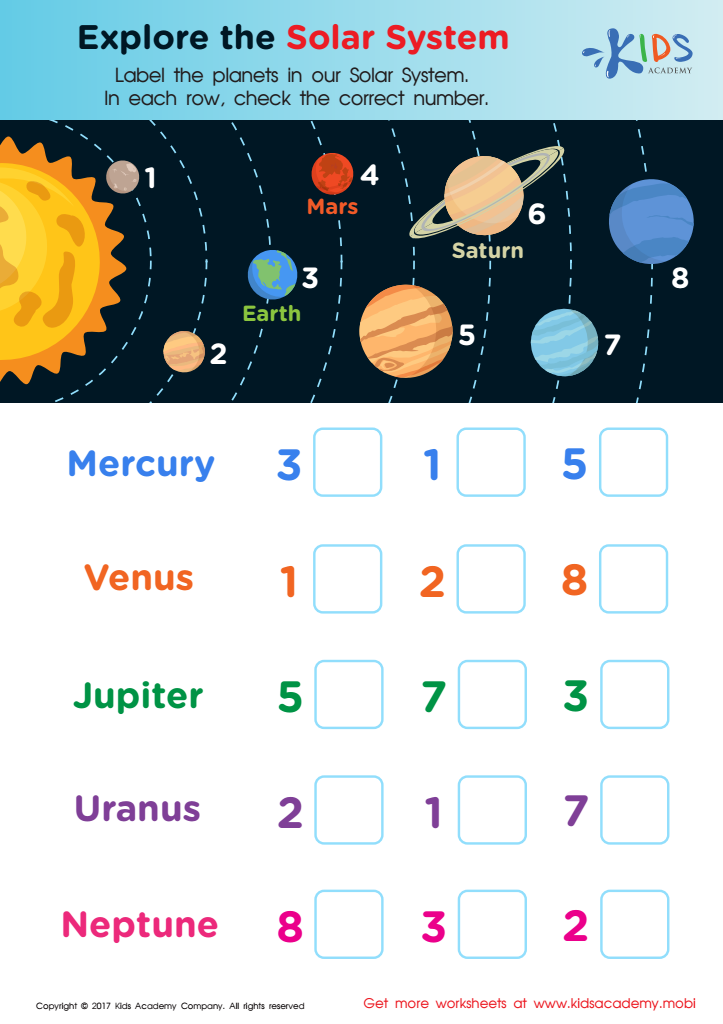
Solar System Planets Worksheet
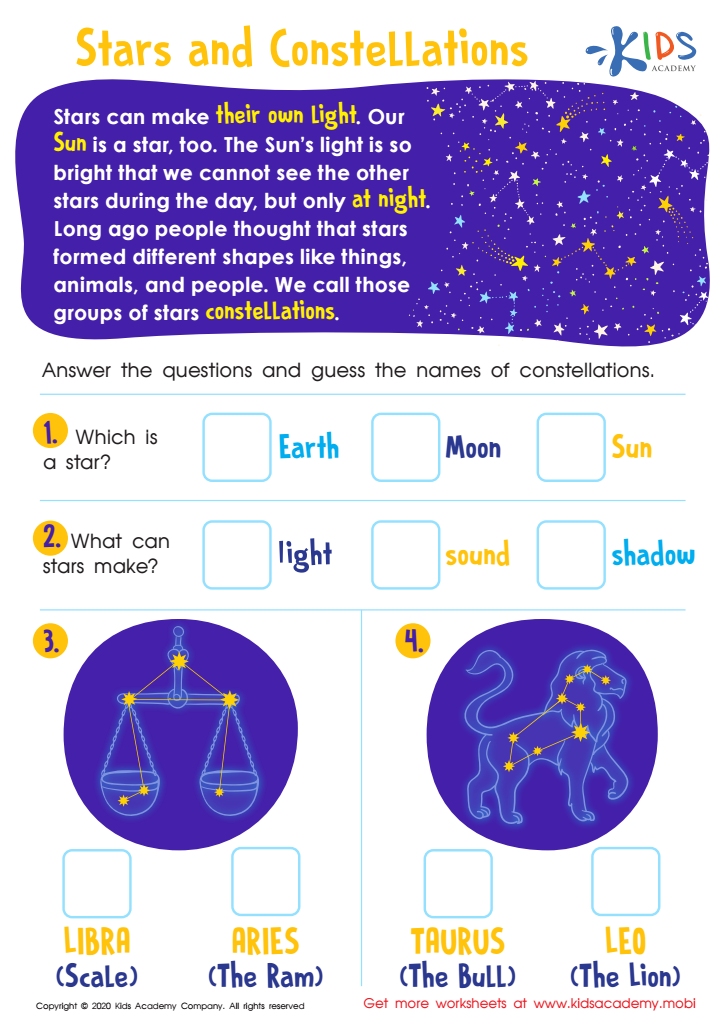
Stars and Constellations Worksheet






%20(1).jpg)
Understanding space and normal science concepts holds significant importance for children aged 3-9 as it lays a robust foundation for future learning and curiosity.
First, introducing space knowledge engages children's natural fascination with the stars, planets, and vast universe, sparking curiosity and nurturing a passion for exploration and learning. By exploring space, children develop critical thinking skills and the ability to ask questions and seek answers, which are essential for their cognitive development.
Furthermore, learning about the solar system, gravity, and basic physics fosters an interest in science and technology. This early exposure can motivate children to pursue STEM (Science, Technology, Engineering, and Mathematics) subjects, which are vital in an increasingly tech-driven world.
Space education also supports the development of problem-solving and analytical skills. When children learn about the movement of planets or why the moon changes shape, they start to think logically and understand cause-and-effect relationships.
Additionally, comprehending basic science helps children appreciate earth sciences and environmental issues. It enables them to understand the importance of our planet's preservation and the impact of human activities on our world's ecosystem.
For parents and teachers, nurturing an early interest in space and science means cultivating inquisitive minds that are better prepared for complex learning in later stages. Moreover, it can be a shared, exciting journey of discovery, building a sense of wonder and respect for the intricacies of our universe.







