
Critical Thinking Normal Our Planet and Environment Worksheets for Ages 3-9
4 filtered results
Difficulty Level
Grade
Age
-
From - To
Subject
Activity
Standards
Explore our engaging collection of Critical Thinking Worksheets focused on Our Planet and Environment, specifically designed for children ages 3-9. These interactive worksheets encourage young learners to question, analyze, and develop a deeper understanding of ecological topics. Through fun activities and thought-provoking questions, kids will enhance their critical thinking skills while discovering the importance of sustainability and environmental care. Perfect for classroom or home use, our worksheets foster curiosity and knowledge about the world around them. Let's inspire a new generation of eco-conscious thinkers committed to protecting our planet!
Favorites
With answer key
Interactive
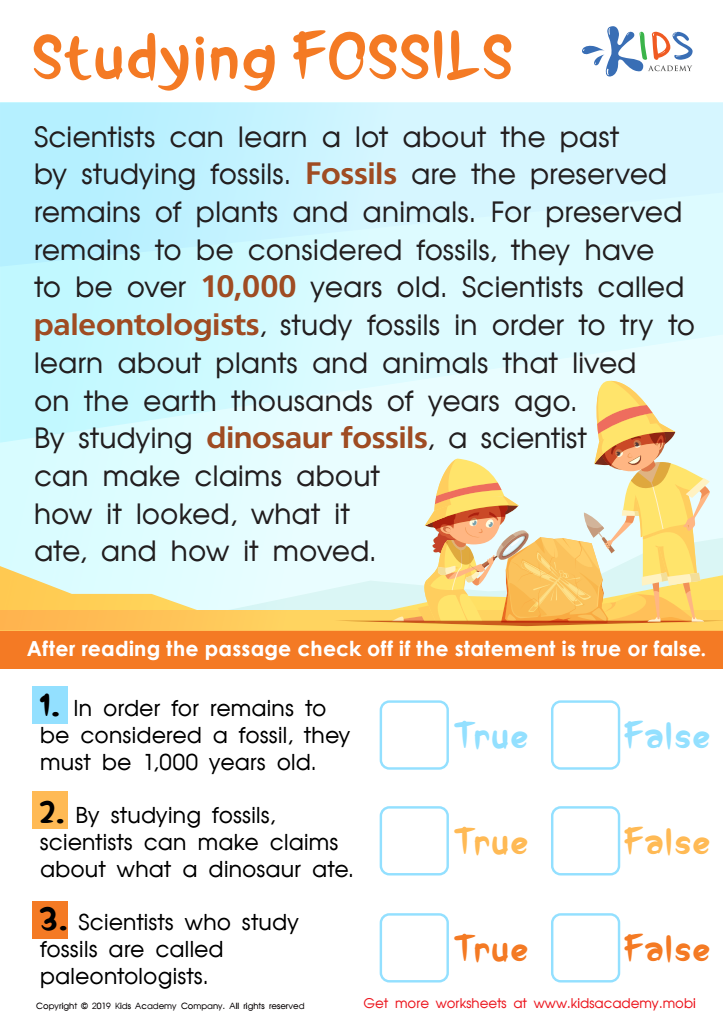
Studying Fossils Worksheet
Fossils captivate children! It's no wonder why; when we learn about them, we are getting a glimpse into history and uncovering old mysteries! With this free download, kids will understand what a paleontologist is and how they use fossils to learn about long-gone plants and animals. They'll discover that old bones are priceless and that exploring ancient history can be exciting!
 Assign to My Students
Studying Fossils Worksheet
Worksheet
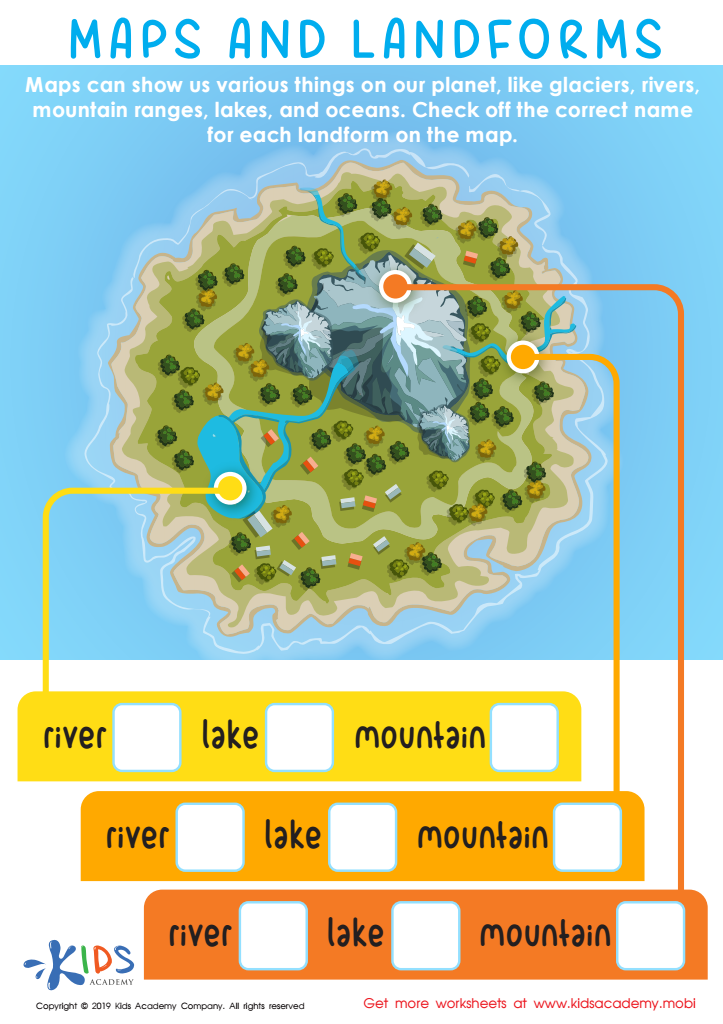
Maps and Landforms Worksheet
We can educate our kids on the world and its landforms by showing them a map. Point out mountains, rivers, and oceans, and help them identify each correctly. With this knowledge, they will better understand our planet.
Maps and Landforms Worksheet
Worksheet
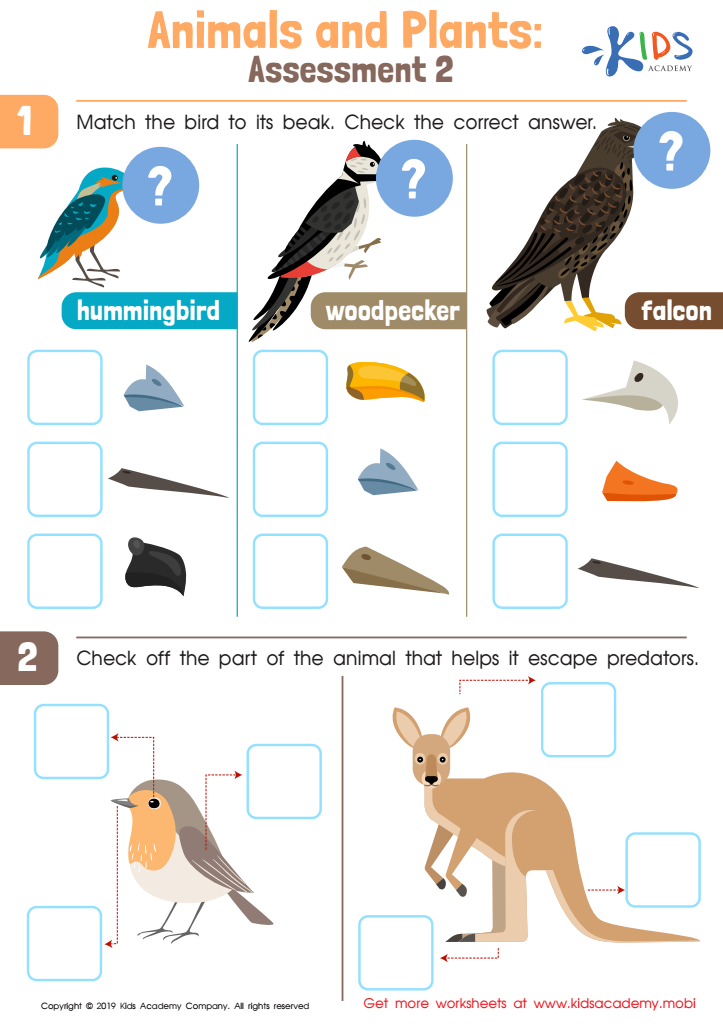
Animals and Plants: Assessment 2 Worksheet
This free PDF is ideal to quickly test your child's knowledge of animal adaptations. They'll select the right beak patterns for hummingbird, woodpecker and falcon, and identify which parts of animals help them escape predators. It's easy to assess your kid's understanding.
Animals and Plants: Assessment 2 Worksheet
Worksheet
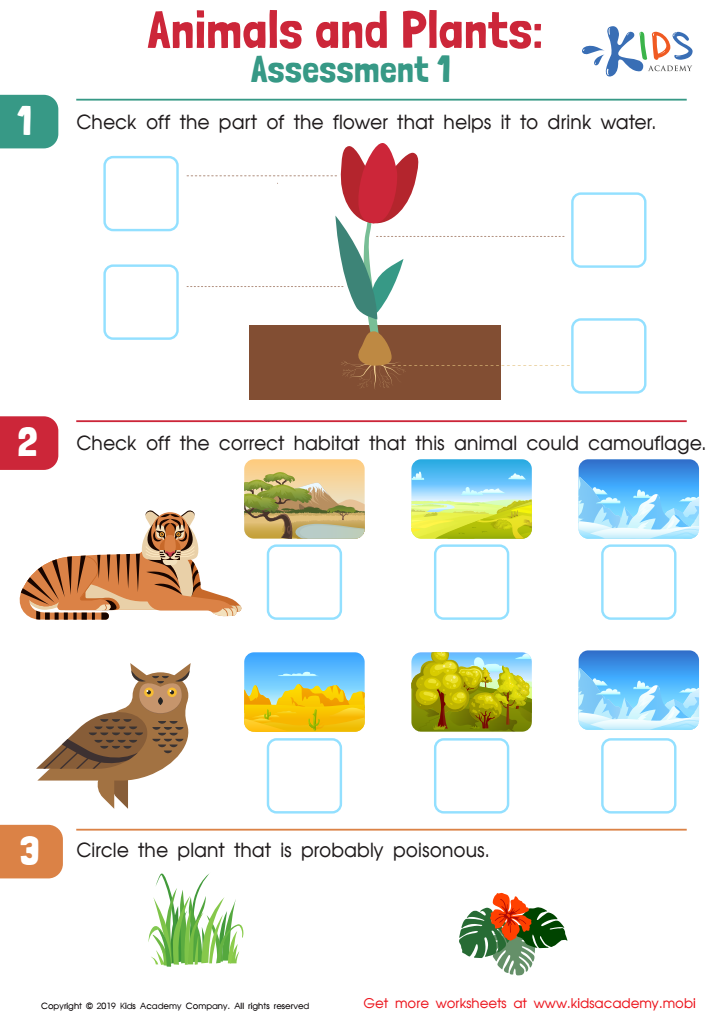
Animals and Plants: Assessment 1 Worksheet
Do you want to easily assess your child's understanding of basic science concepts? This colorful PDF offers a free opportunity for them to test their knowledge about parts of a flower, poisonous plants, animal habitats and more! Bright pictures make it fun and easy for you to see what they know.
Animals and Plants: Assessment 1 Worksheet
Worksheet
Join Kids Academy for Free
Who is primarily going to use this learning content?




Critical thinking about our planet and environment is essential for children aged 3-9 because this foundational skill cultivates their ability to understand and engage with the world around them. At this age, children are naturally curious, and fostering critical thinking helps them ask questions, analyze information, and develop solutions to pressing environmental issues.
Introducing environmental topics in a way that promotes critical thinking encourages children to make connections between their actions and their impact on the planet. Discussions about recycling, wildlife conservation, and sustainable living empower them to reason through problems and think independently. This skillset is vital as they grow, equipping them to navigate choices that affect both their immediate community and the broader world.
Moreover, integrating environmental education into critical thinking activities encourages collaboration, creativity, and responsibility. Parents and teachers who prioritize this approach not only nurture knowledgeable individuals but also inspire future advocates for environmental stewardship. Lastly, such initiatives can imbue a sense of agency within children, motivating them to become proactive caretakers of the earth as they understand their role in sustainable practices. Emphasizing critical thinking around environmental issues leads to informed, compassionate citizens who can contribute positively to society.







