Vocabulary expansion Normal Our Planet and Environment Worksheets for Ages 3-9
5 filtered results
-
From - To
Unlock the world of environmental science for children aged 3-9 with our "Vocabulary Expansion: Our Planet and Environment" worksheets. These expertly crafted resources are designed to introduce young minds to essential ecological terms and concepts in an engaging and age-appropriate manner. With a variety of fun activities that include colorful illustrations, matching games, and simple definitions, these worksheets help children build a strong vocabulary foundation. Ideal for early grade teachers and parents alike, these tools support kids in understanding the importance of our planet, fostering a love for Earth's environment and promoting sustainable awareness from a young age.
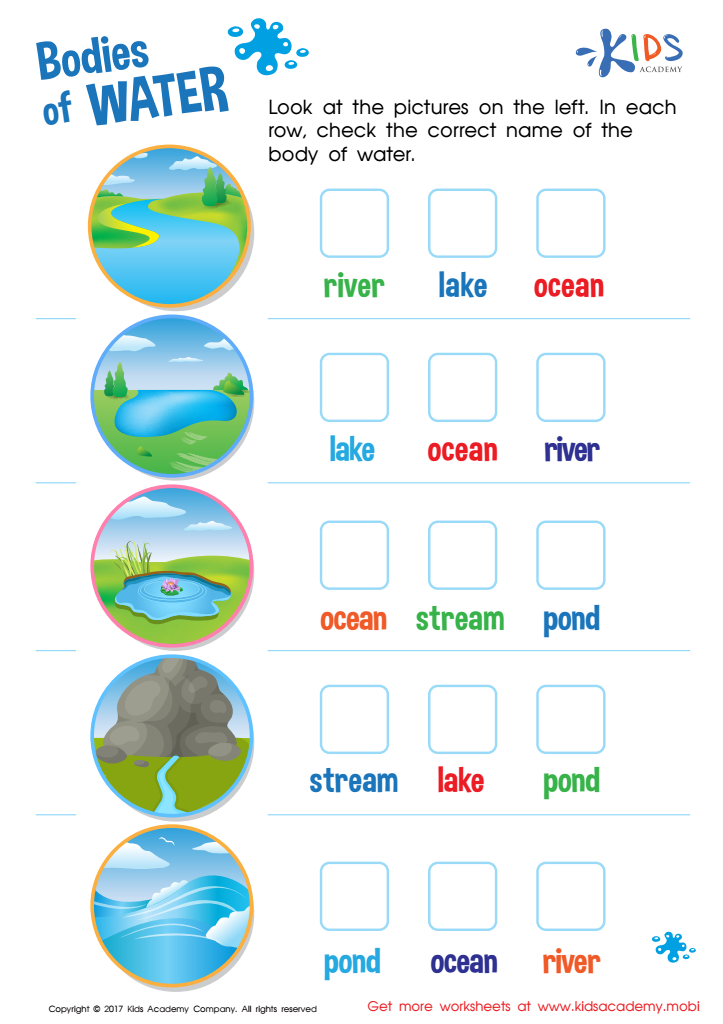
Bodies of Water Worksheet
 Assign to My Students
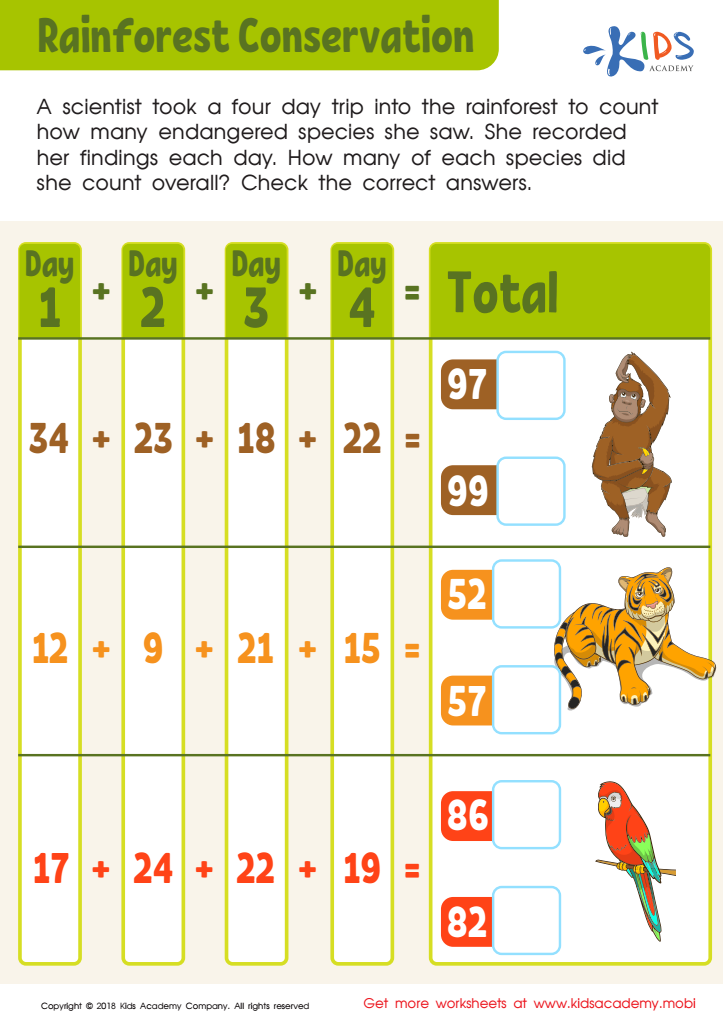
Rainforest Conservation Worksheet
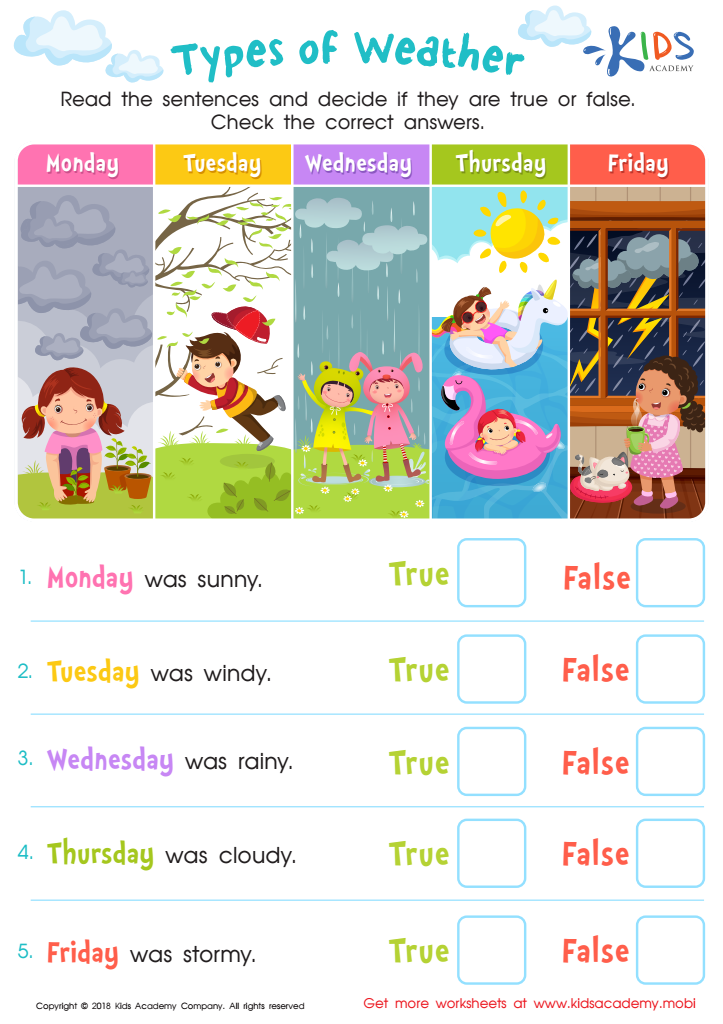
Types of Weather Worksheet
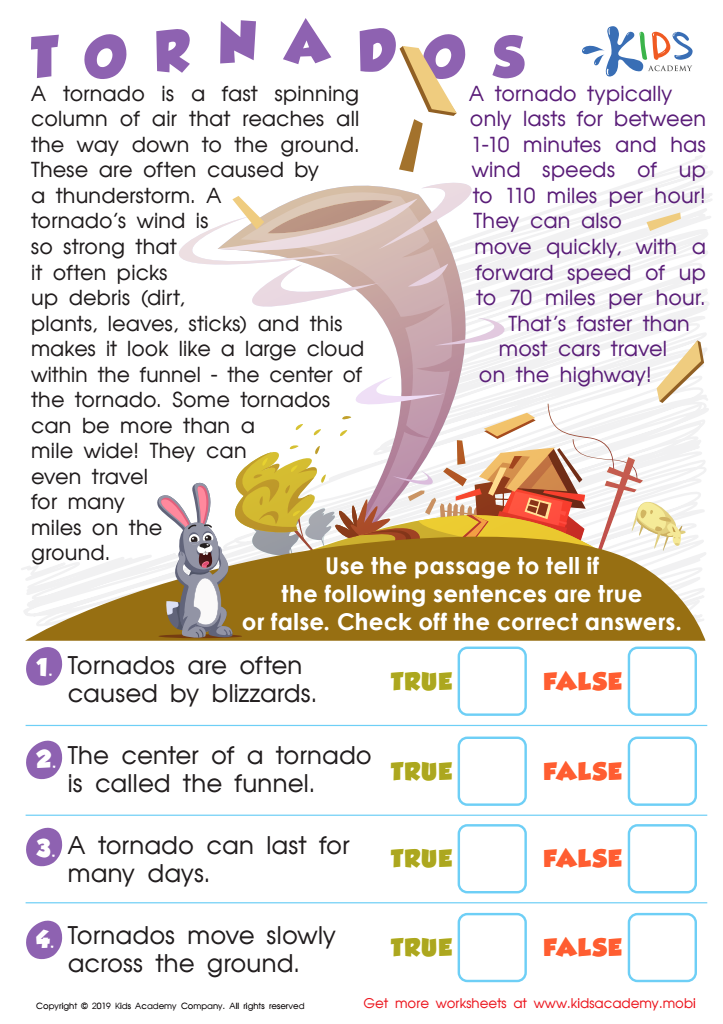
Tornados Worksheet
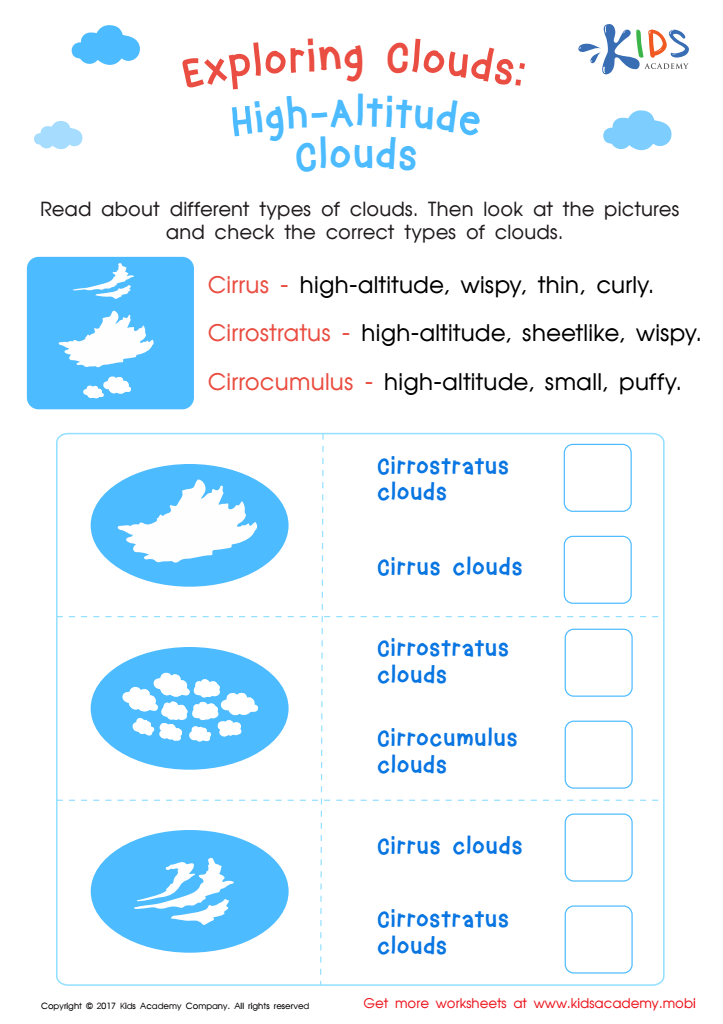
Exploring Clouds: High Altitude Clouds Worksheet





Expanding vocabulary in young children (ages 3-9) is crucial for their overall development, especially when it comes to the topics of our planet and environment. During these formative years, children's brains are highly receptive to new information, making it an ideal period for instilling critical concepts. Here’s why parents and teachers should care:
First, a robust vocabulary enhances language and cognitive skills. When children learn new words, their ability to communicate effectively and understand complex ideas improves. This sets a strong foundation for future academic success and interpersonal relationships.
Second, teaching vocabulary related to our planet and environment fosters early environmental awareness. Children learn to appreciate nature and understand the importance of sustainability. These early lessons can inspire lifelong eco-friendly habits and shape their attitudes towards protecting our planet.
Lastly, discussing environmental issues encourages curiosity and critical thinking. Children ask questions and seek answers, cultivating investigative and problem-solving skills. This proactive quest for knowledge further enhances their learning experience and prepares them for future challenges.
In conclusion, prioritizing vocabulary expansion around the environment not only fortifies language skills but also promotes environmental stewardship and intellectual growth, creating well-rounded, conscious individuals ready to contribute to a better world.







