Categorizing objects Normal Physical Science Worksheets for Ages 3-9
3 filtered results
-
From - To
Unlock the world of discovery for your young scientist with our "Categorizing Objects: Normal Physical Science Worksheets for Ages 3-9". These engaging and educational worksheets are designed to develop essential skills in sorting, classifying, and understanding various physical properties. Perfect for children ages 3 to 9, our worksheets stimulate curiosity and enhance learning through fun activities. Each page provides hands-on challenges that help kids differentiate between objects based on size, shape, color, and more. Ideal for home or classroom use, our worksheets promote critical thinking and are tailored to foster a love for science from an early age. Explore now!
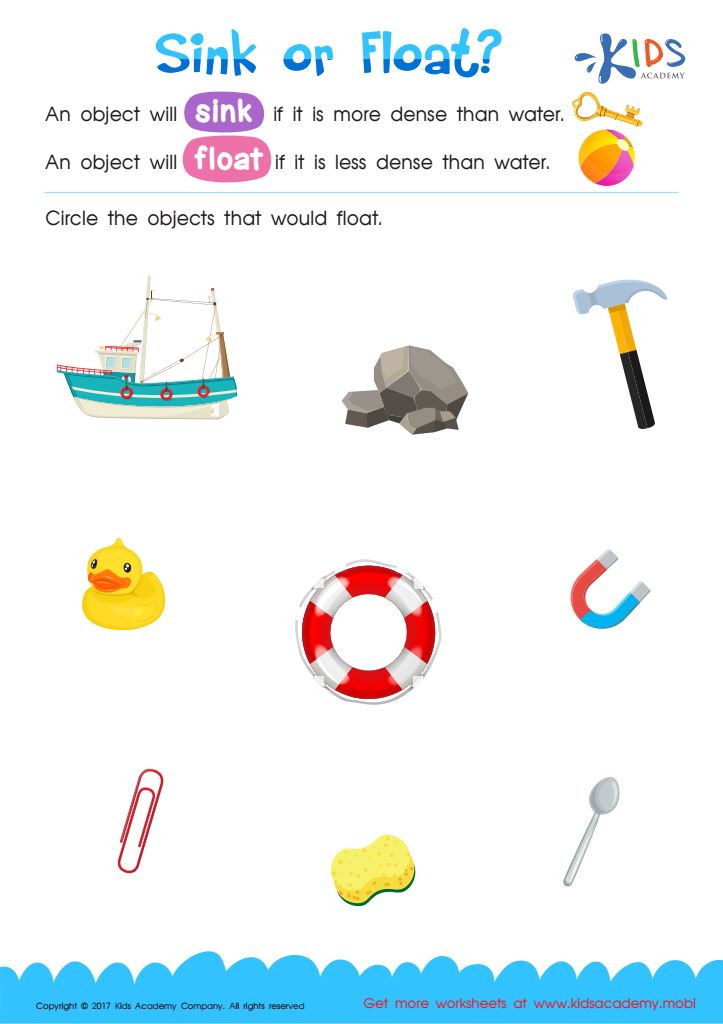
Sink or Float Printable
 Assign to My Students
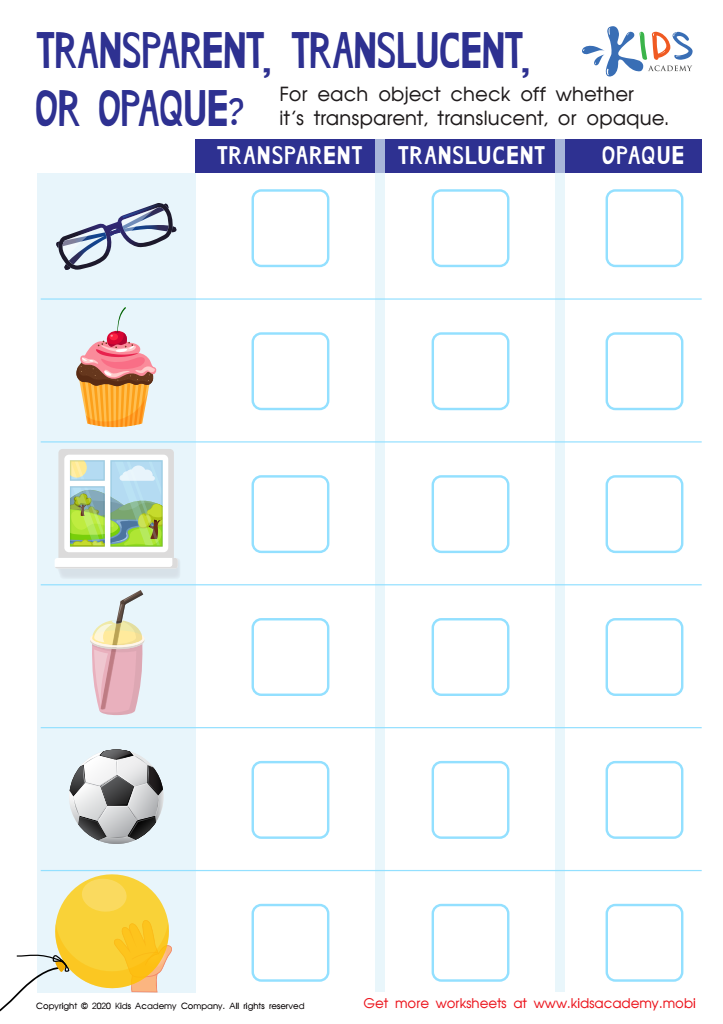
Transparent, Translucent, or Opaque Worksheet
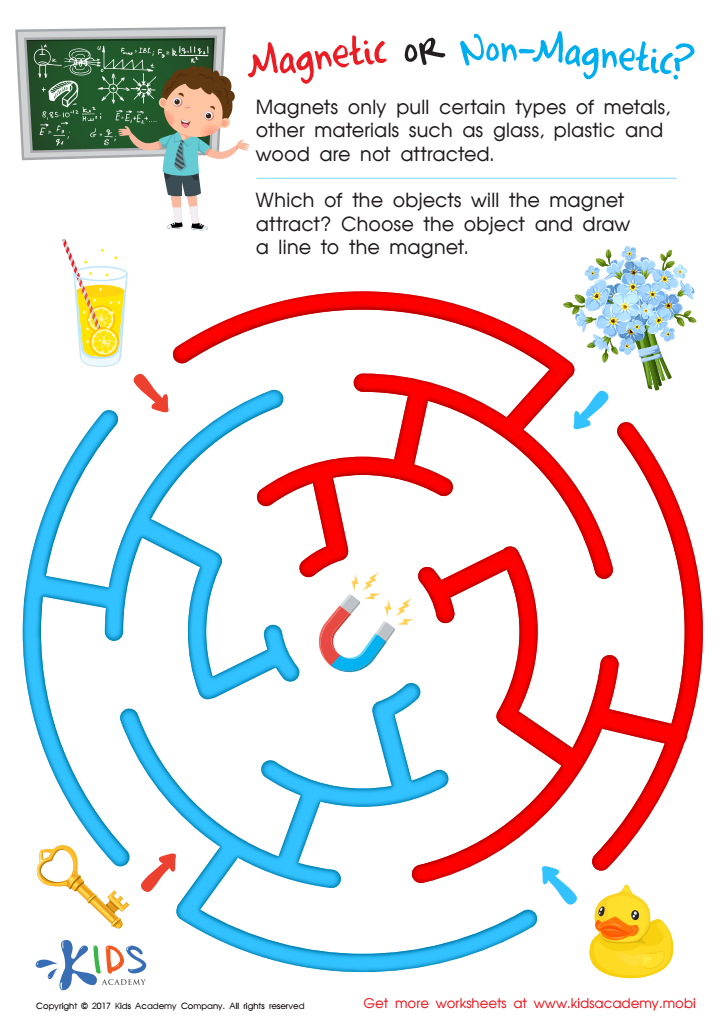
Magnetic or Non–Magnetic Worksheet






Categorizing objects in early childhood helps lay a strong foundation for cognitive development and scientific understanding. For children aged 3-9, this skill is crucial as it enhances their ability to organize information, recognize patterns, and make sense of the world around them. Parents and teachers should prioritize this activity because it fosters critical thinking and problem-solving skills, which are essential for academic success and everyday life.
In the context of normal physical science, categorizing objects can include sorting items by size, shape, color, material, or function. This practice nurtures observational skills and helps children develop a systematic approach to learning. For example, a child who categorizes rocks based on texture and color begins to grasp the basic principles of geology, even if they don't yet understand the specific terminology.
Moreover, categorizing objects can aid in language development, as it encourages the use of descriptive words and comparative language. This ability to articulate observations not only improves vocabulary but also enhances communication skills.
Finally, categorizing fosters a sense of order and discipline, which can be psychologically comforting for young children. It helps them make predictable decisions in an unpredictable world, boosting their confidence and independence. Thus, emphasizing categorizing activities enriches a child's educational journey and overall development.







