Critical Thinking Normal Physical Science Worksheets for Ages 3-9
3 filtered results
-
From - To
Enhance your child's learning experience with our Critical Thinking Normal Physical Science Worksheets designed for ages 3-9! These engaging worksheets promote essential skills, encouraging young learners to think critically as they explore fascinating science concepts. Each activity is crafted to challenge their reasoning and problem-solving abilities, making learning fun and interactive. Ideal for educators and parents, our printable resources foster creativity and innovation while reinforcing key physical science principles. Explore a wide range of topics tailored to various age groups, ensuring that your child develops a strong foundation in both critical thinking and scientific knowledge. Start your journey today!
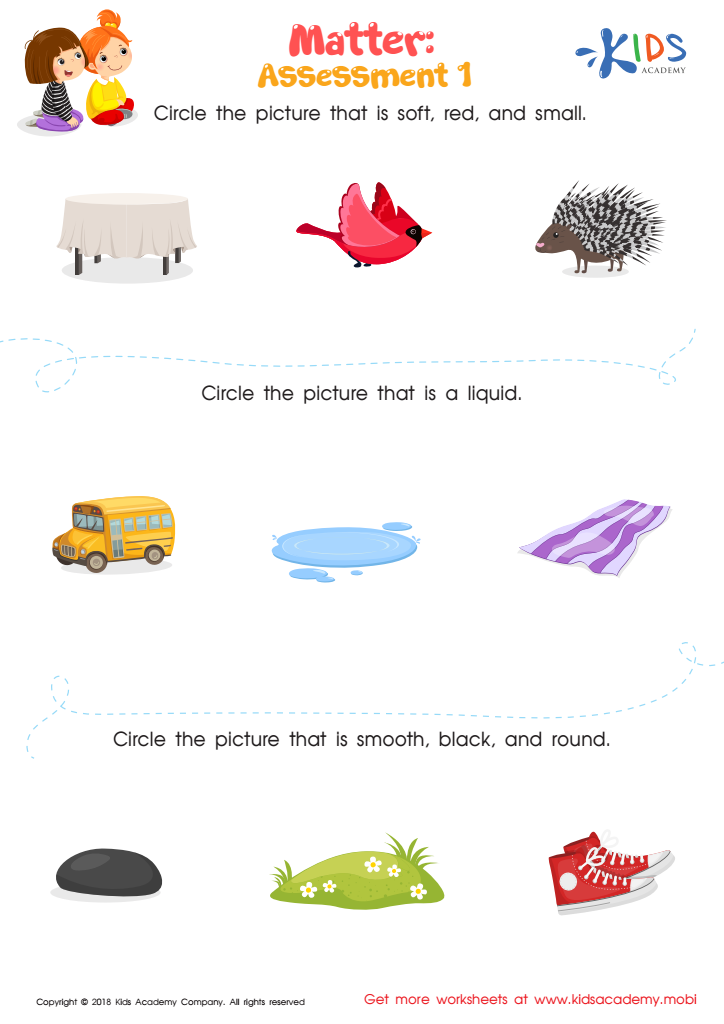
Matter: Assessment 1 Worksheet
 Assign to My Students
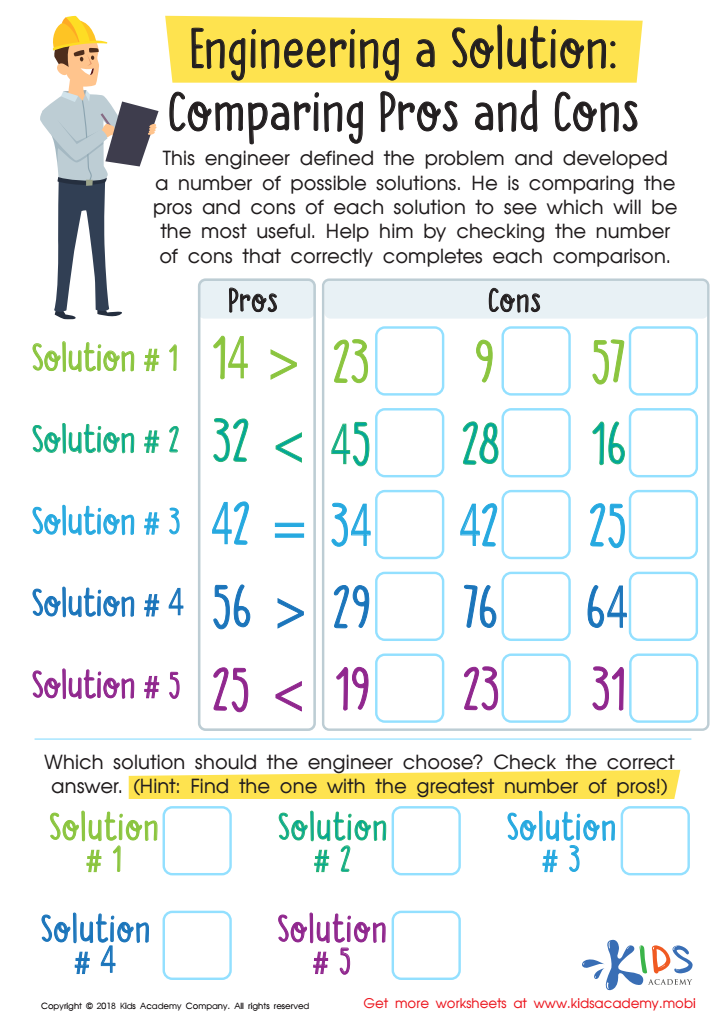
Engineering a Solution: Comparing Pros and Cons Worksheet
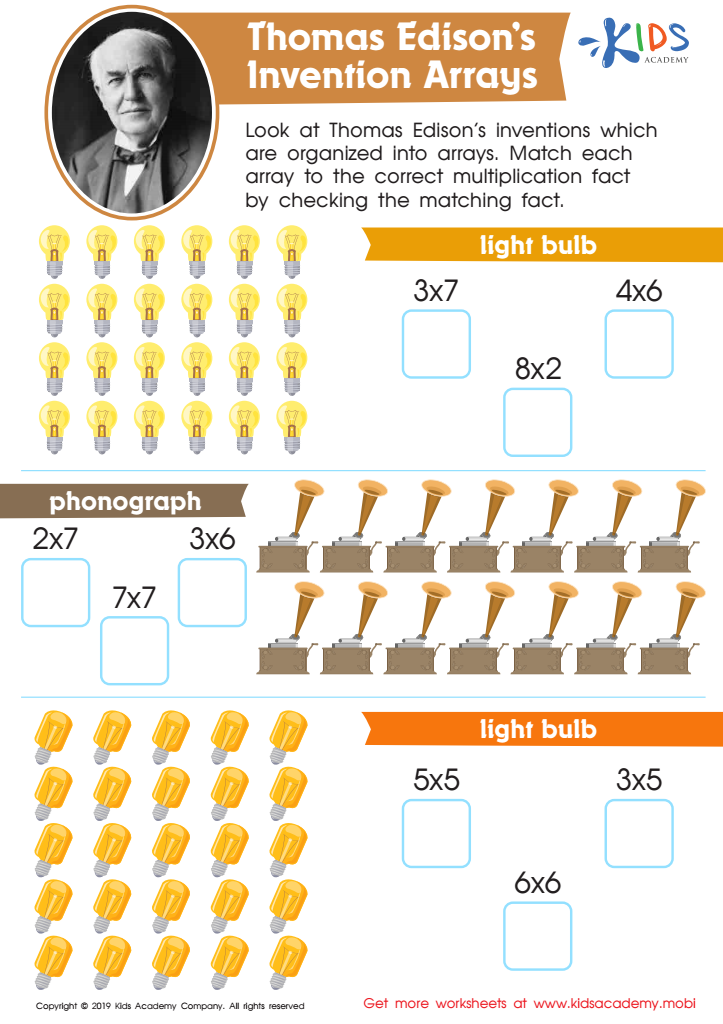
Thomas Edison’s Invention Arrays Worksheet








Critical thinking is essential for children, particularly in the realm of physical science for ages 3-9. During these formative years, kids are naturally curious, asking questions about the world around them. By fostering critical thinking through normal physical science, parents and teachers can guide children to explore concepts like matter, force, and energy in an engaging way. This approach encourages kids to think independently, analyze information, and solve problems creatively—from basic experiments to understanding environmental impacts.
Engaging children in hands-on activities promotes inquiry and exploration, allowing them to develop observational skills and comprehend scientific principles effectively. For instance, simple experiments using everyday materials become avenues for hypothesis formation and testing, enriching their learning experience.
Furthermore, imparting critical thinking skills in science sets a robust foundation for future academic pursuits. Children learn to approach challenges with an analytical mindset, which enhances their decision-making abilities across all subject areas. Ultimately, prioritizing critical thinking in physical science allows children not only to grasp scientific concepts but also to build a lifelong passion for learning, curiosity, and intellectual curiosity that benefits them academically and personally throughout their lives. This holistic development nurtures successful, thoughtful future citizens.







