Animal identification Normal Plants and Animals Worksheets for Ages 3-9
3 filtered results
Difficulty Level
Grade
Age
-
From - To
Subject
Activity
Standards
Discover engaging Animal Identification Worksheets for children aged 3-9 at Kids Academy! These expertly crafted resources help young learners differentiate between common plants and animals, fostering a deeper understanding of nature's wonders. Our printable worksheets ensures enjoyable learning through fun activities like matching, coloring, and identifying various species. Designed by educators, these activities support foundational science skills, encouraging curiosity and knowledge retention. Ideal for parents, teachers, and homeschoolers, our worksheets provide an interactive way to boost animal recognition, promote cognitive development, and ignite a passion for the natural world. Explore our collection and watch your child's love for animals grow!
Favorites
With answer key
Interactive
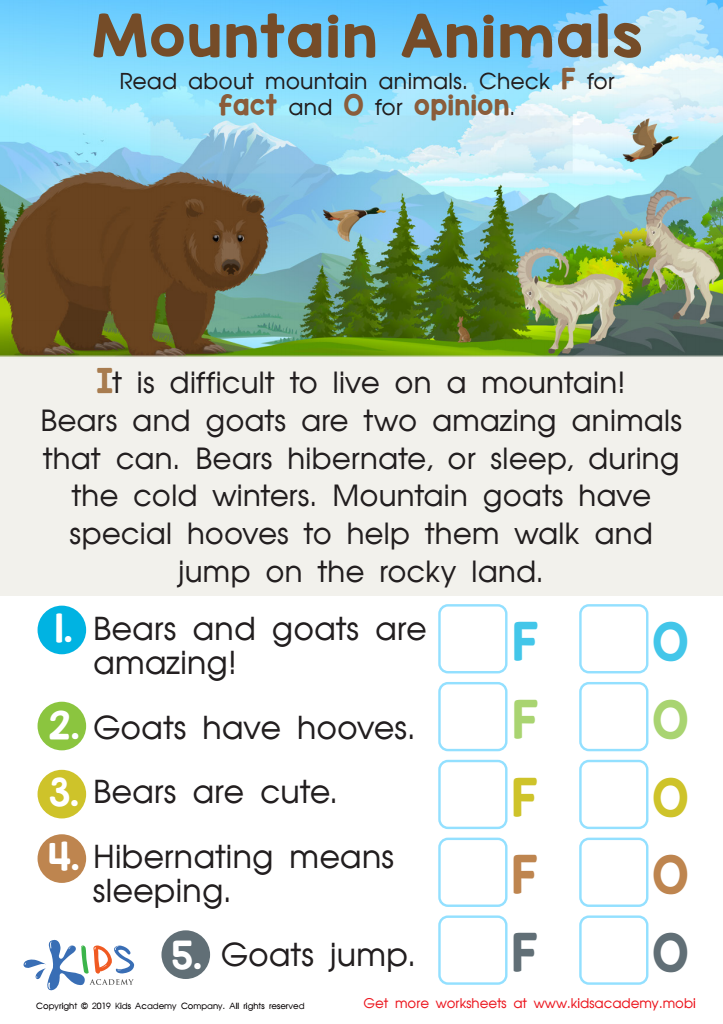
Mountain Animals Worksheet
Is mountain wildlife amazing? Fact or fiction? Help your child sharpen critical-thinking skills with this engaging worksheet. Featuring a fun nonfiction passage about animals like bears and goats, your child will read through the text and identify each statement as fact or fiction. Perfect for boosting reading comprehension and analytical abilities!
 Assign to My Students
Mountain Animals Worksheet
Worksheet

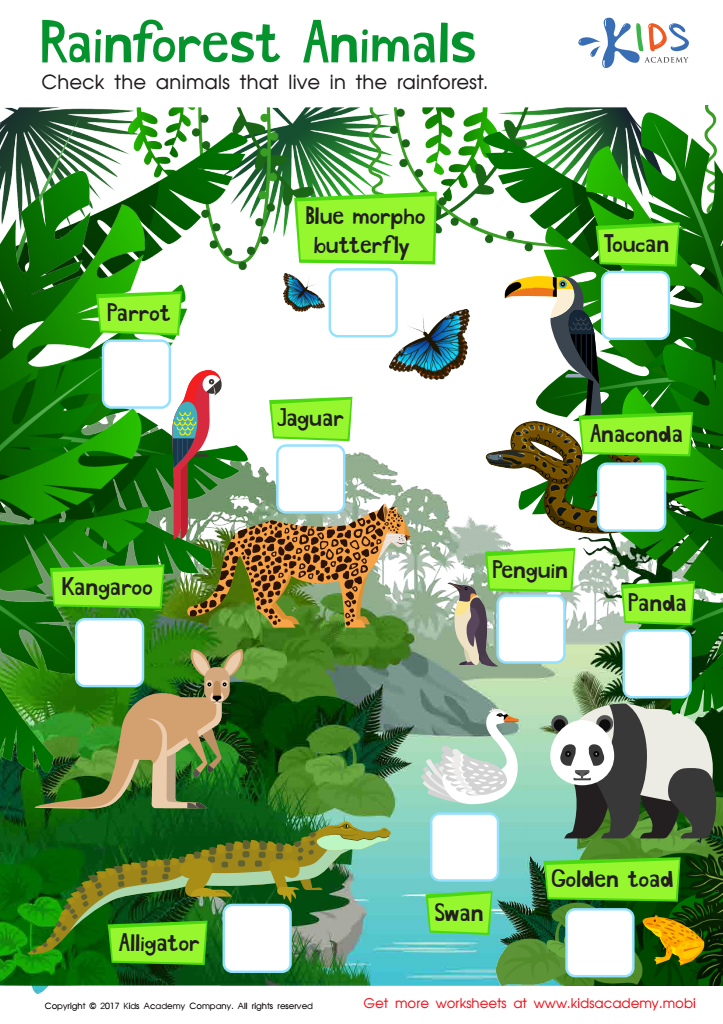
Rainforest Animals Worksheet
Kids love the bright, vivid pics of rainforest animals in this worksheet. It fuels their interest in life science and brings joy to their learning. It encourages them to study these animals in detail.
Rainforest Animals Worksheet
Worksheet
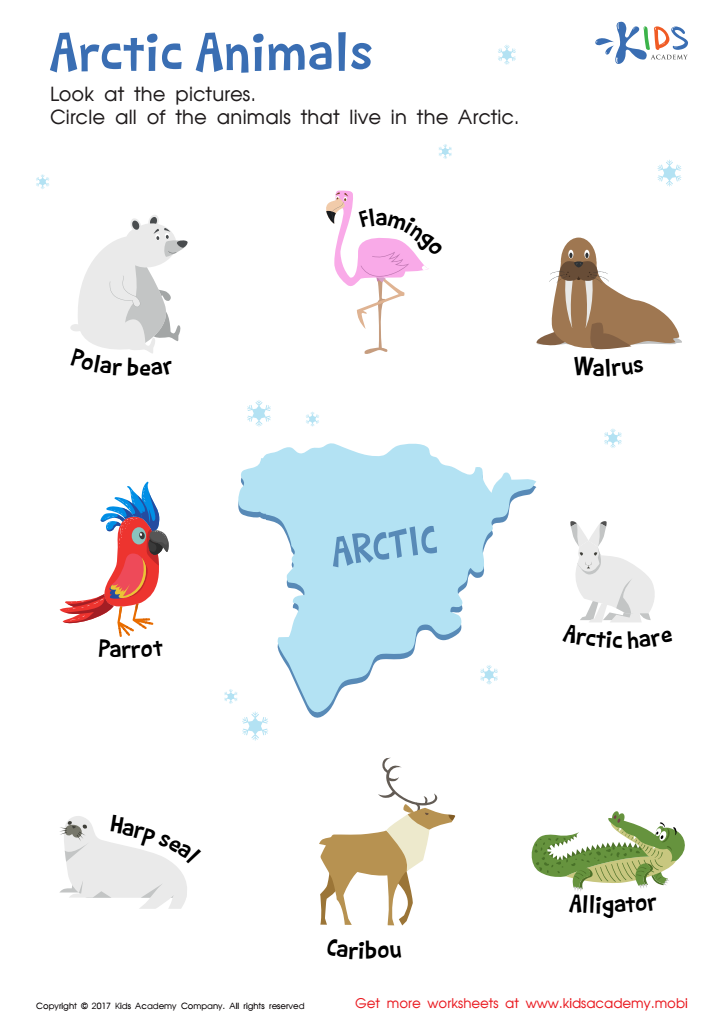
Arctic Animals Worksheet
Kids love animals and this worksheet is a great way to teach them where they live. It reinforces classification skills and introduces new animals, like the Arctic hare. Use it to discuss the Arctic climate and how these animals live, then ask your child where other animals live to keep the conversation going.
Arctic Animals Worksheet
Worksheet
Join Kids Academy for Free
Who is primarily going to use this learning content?







Understanding animal and plant species during early childhood (ages 3-9) serves as a cornerstone for developing curiosity, empathy, and environmental stewardship. When young children learn to identify different plants and animals, they gain a sense of appreciation and respect for the natural world, forming a foundation for lifelong environmental awareness.
Moreover, this activity fosters cognitive development by enhancing observation skills, critical thinking, and attention to detail. Children’s ability to compare and contrast various species improves their classification skills, an essential component of early scientific learning. Emotional and social skills also benefit, as kids can express their excitement and findings with peers, leading to collaborative learning experiences.
Teachers and parents can use these identification lessons to introduce foundational science concepts in an engaging way, encouraging outdoor activities that support physical health. Additionally, early exposure to biodiversity can influence sustainable habits and attitudes. Realizing the interconnectedness of life helps foster a responsible mindset, essential for addressing ecological challenges.
Thus, teaching animal and plant identification to young children is not merely academic; it’s about nurturing well-rounded, informed individuals who value and actively contribute to preserving our environment for future generations.